 Save to Pinterest
 My kitchen smelled like toasted nuts and bright citrus the afternoon a friend dropped off a bundle of arugula from her garden, and I suddenly found myself unwilling to make the usual salad. Instead, I grabbed quinoa from the pantry, chopped vegetables with purpose, and blended that peppery green into something sauce-like. What emerged was this bowl—layered, colorful, and impossible to eat without feeling like you'd made a genuinely good decision for yourself.
I made this for my sister's surprise visit, and she sat at my kitchen counter watching the vegetables caramelize, asking why this wasn't already on a restaurant menu. By the time we ate, the house smelled so good that my neighbor actually knocked to ask what I was cooking. That's when I realized this bowl had crossed from weeknight dinner into something worth talking about.
Ingredients
- Quinoa (1 cup uncooked): Rinse it thoroughly under cold water, or you'll taste a bitter film that no amount of pesto can mask. It fluffs beautifully and holds the pesto without falling apart.
- Water (2 cups) and salt (½ teaspoon): Don't skip salting the cooking water—this is where the grain learns to taste like something.
- Cherry tomatoes (1 cup, halved): Choose ones that feel heavy for their size, not the pale, mealy ones sitting at the back of the produce section.
- Zucchini (1 medium, sliced): Cut them thick enough that they won't disappear in the oven, about a quarter-inch.
- Red bell pepper (1, chopped): The sweetness balances the peppery arugula perfectly, and it gets almost candy-like when roasted.
- Olive oil (for roasting, 1 tablespoon): Use your everyday oil here, save the good stuff for the pesto.
- Fresh arugula (2 cups packed): Buy it the day you plan to use it; wilted arugula makes sad pesto.
- Walnuts or pine nuts (¼ cup): Pine nuts are traditional but taste a bit more buttery; walnuts are earthier and honestly more forgiving if you're watching your budget.
- Garlic (1 clove): One is enough—arugula is already assertive, and garlic should whisper, not shout.
- Parmesan cheese (½ cup grated plus ¼ cup shaved): Buy a block and grate it yourself; pre-grated cheese coats itself in cellulose and never blends smoothly.
- Lemon juice (1 tablespoon): Fresh lemon, squeezed by your own hand, makes an actual difference in brightness.
- Fresh arugula for assembly (2 cups): This raw layer underneath keeps everything from feeling too heavy.
Tired of Takeout? 🥡
Get 10 meals you can make faster than delivery arrives. Seriously.
One email. No spam. Unsubscribe anytime.
Instructions
- Warm the oven and start the grain:
- Heat your oven to 400°F. Meanwhile, rinse the quinoa under cold water until the water runs clear, then combine it with fresh water and salt in a saucepan. Bring to a boil, then reduce the heat and cover tightly; it'll simmer for about 15 minutes until the water disappears and you see those tiny curled sprouts.
- Prepare and roast the vegetables:
- Toss your cherry tomatoes, zucchini slices, and red bell pepper pieces with olive oil and black pepper, then spread them in a single layer on a baking sheet. Roast for 18 to 20 minutes, shaking the pan halfway through, until the edges caramelize and the tomatoes collapse slightly.
- Make the pesto while vegetables roast:
- Add packed arugula, nuts, garlic, and Parmesan to a food processor and pulse until it looks like rough sand. With the motor running, drizzle in olive oil and lemon juice slowly, letting everything transform into a sauce that's creamy but still has texture. Taste it and season with a pinch of salt.
- Bring it together:
- Fluff the cooked quinoa with a fork, then toss it in a large bowl with the roasted vegetables and half of your pesto, stirring gently so nothing breaks apart. The warm grain will loosen the pesto slightly, coating everything evenly.
- Build the bowls:
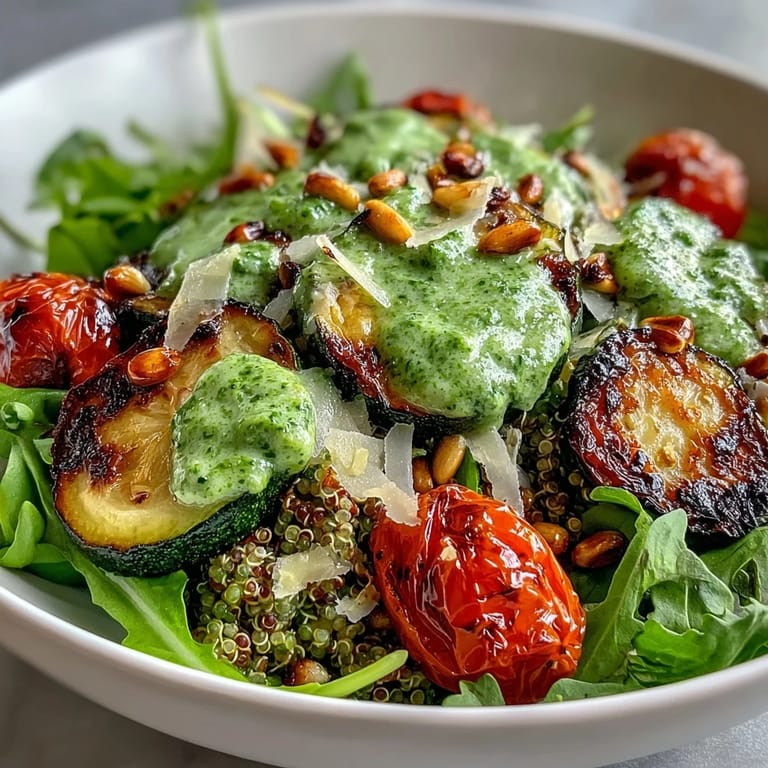
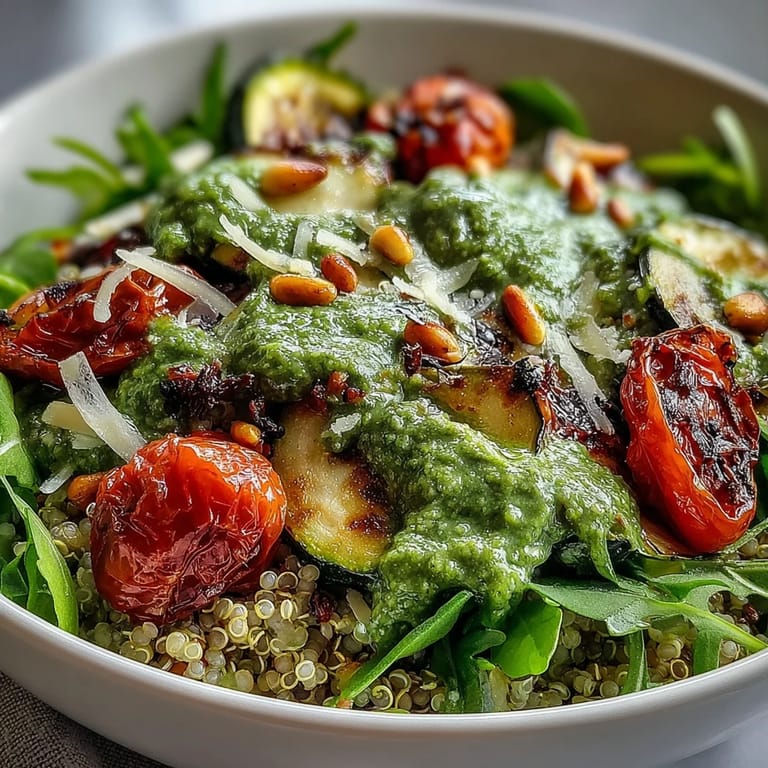
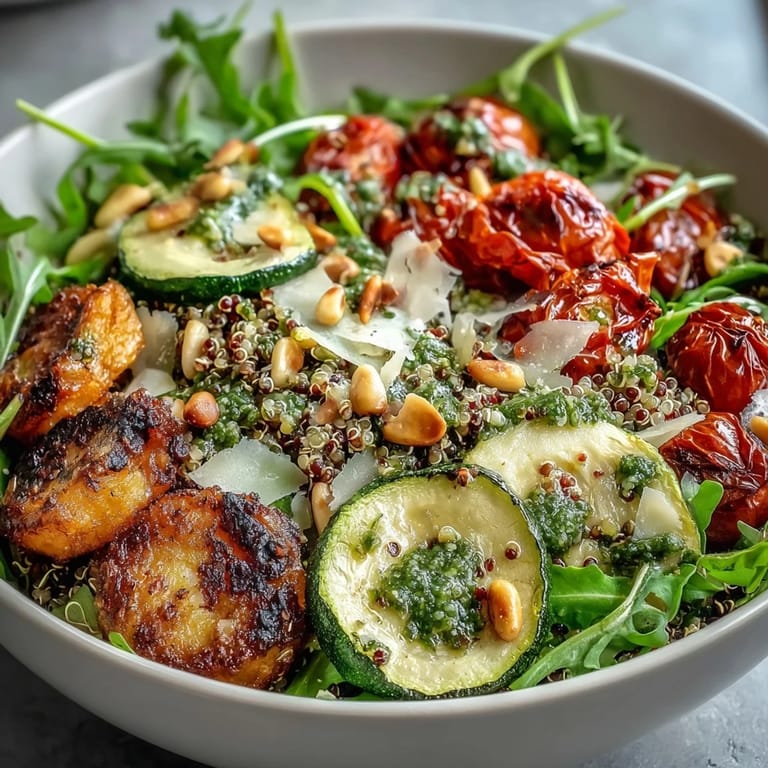
- Divide the fresh raw arugula among four bowls or plates as your base, then spoon the warm quinoa mixture on top. Drizzle with the remaining pesto, then garnish with shaved Parmesan and toasted pine nuts if you have them.
 Save to Pinterest
 There's a moment when you first taste this, when the peppery arugula hits your tongue alongside the warm grain and sweet caramelized tomato, and you realize you've made something that doesn't feel like obligation but like celebration. That's the moment I understood why my friend kept saying yes whenever I offered to cook.
Variations Worth Trying
Grain bowls are forgiving templates, not rigid recipes. I've swapped the quinoa for farro when I wanted something chewier, used brown rice when I was out of quinoa, and even stretched it with couscous one night when I was hungry and impatient. Each grain absorbs the pesto differently, but they all work.
Making It Your Own
The first time I made this strictly vegan, I used nutritional yeast instead of Parmesan and honestly couldn't tell the difference in the pesto; the umami is there either way. If you want protein beyond the quinoa, grilled chicken strips, cubed tofu, or a handful of chickpeas tossed right in works beautifully.
Storage and Serving Notes
This is best eaten immediately, while the roasted vegetables still have warmth and the raw arugula hasn't started to wilt into the pesto. However, you can build each component ahead: the pesto keeps refrigerated for three days, the cooked quinoa stays good for five days, and roasted vegetables last about four days. Assemble just before eating.
- If you're meal prepping, keep the raw arugula separate and add it when you're ready to eat so it stays crisp.
- The pesto may separate slightly as it sits; just give it a quick stir and it comes back together.
- Leftover pesto freezes beautifully in ice cube trays for up to three months, though the flavor softens slightly.
 Save to Pinterest
 This bowl taught me that simple food becomes memorable not through complexity but through attention—to how ingredients taste together, to how they look on the plate, to the pleasure of eating something that's both nourishing and genuinely delicious. Make it once, and you'll understand why it keeps appearing on my table.
Recipe FAQs
- → Can I make the arugula pesto ahead of time?
Absolutely. The pesto stores beautifully in an airtight container in the refrigerator for up to one week. You can also freeze it in ice cube trays for longer storage—just thaw and use whenever you need a quick, flavorful sauce.
- → What other grains work well in this bowl?
Farro adds a chewy, nutty texture, while brown rice provides hearty substance. Couscous offers a lighter, quicker-cooking alternative. Even barley or wheat berries would complement the roasted vegetables and pesto beautifully.
- → How can I add more protein to this dish?
Grilled chicken breast, pan-seared tofu, or roasted chickpeas all pair wonderfully with the arugula pesto. A soft-boiled or fried egg on top creates a satisfying runny yolk that mingles with the sauce. Cannellini beans also make an excellent protein-rich addition.
- → Can I use different vegetables for roasting?
Certainly. Eggplant, red onion, Brussels sprouts, or sweet potato cubes all roast beautifully at 400°F. Asparagus, broccoli florets, or even cauliflower would work nicely too. Just adjust roasting times slightly depending on the vegetables you choose.
- → Is there a nut-free alternative for the pesto?
Sunflower seeds or pumpkin seeds make excellent nut-free substitutes, adding a lovely creaminess and subtle flavor. You could also simply increase the Parmesan cheese and add a handful of fresh basil for depth without nuts.
- → How do I prevent the quinoa from becoming mushy?
Rinse the quinoa thoroughly before cooking to remove the bitter coating. Use the correct 1:2 ratio of quinoa to water, and avoid lifting the lid while it simmers. Once cooked, fluff immediately with a fork and let it sit uncovered for a few minutes to release excess steam.