 Save to Pinterest
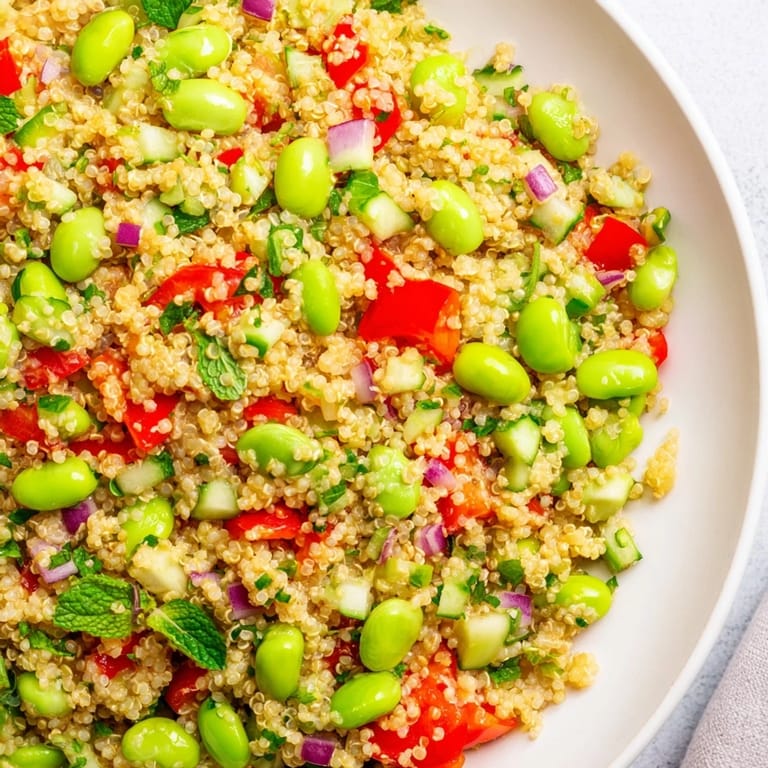
 The first time I brought this salad to a potluck, my friend Sarah actually asked for the recipe before she even finished her first bite. There is something magical that happens when nutty quinoa meets crisp vegetables and that bright citrus dressing wakes everything up. I have since made it for everything from weekday lunches to dinner parties, and it never fails to disappear.
Last summer, I started a routine of making a big batch every Sunday afternoon. My kitchen would fill with the scent of cooking quinoa and fresh herbs being chopped. It became this little ritual that made the whole week feel more manageable somehow.
Ingredients
- Quinoa: Rinse thoroughly under cold water to remove the bitter coating called saponin that can make quinoa taste soapy
- Water: Use filtered water if possible since the quinoa absorbs every flavor it cooks with
- Edamame: Fresh edamame cooks in just 3 to 4 minutes while frozen might need an extra minute
- Cherry tomatoes: Choose ones that feel heavy for their size and store them at room temperature for the best flavor
- Red bell pepper: Look for peppers with smooth, taut skin and avoid any with soft spots or wrinkles
- Cucumber: English or Persian cucumbers work best because they have thinner skins and fewer seeds
- Red onion: Soaking the chopped onion in cold water for 10 minutes tames its sharp bite if you are sensitive
- Fresh parsley: Flat leaf parsley has more flavor than curly and holds up better in salads
- Fresh mint: Tear the leaves by hand rather than chopping to prevent them from bruising and turning black
- Olive oil: Extra virgin olive oil gives the best flavor but a lighter olive oil works if you prefer a subtler taste
- Lemon juice: Room temperature lemons yield more juice so let them sit out before squeezing
- Rice vinegar: This adds a gentle sweetness that balances the sharp lemon without being overpowering
- Dijon mustard: The mustard acts as an emulsifier helping the oil and vinegar combine into a creamy dressing
- Salt and pepper: Taste the dressed salad before adding more since some ingredients like edamame are already seasoned
Tired of Takeout? 🥡
Get 10 meals you can make faster than delivery arrives. Seriously.
One email. No spam. Unsubscribe anytime.
Instructions
- Cook the quinoa:
- Rinse the quinoa under cold water until the water runs clear. Combine with water in a medium saucepan and bring to a boil then reduce heat to low, cover, and simmer for 15 minutes until fluffy.
- Prepare the edamame:
- Boil a small pot of water and add the edamame cooking for 3 to 4 minutes until tender. Drain well and spread on a plate to cool quickly.
- Chop the vegetables:
- While the grains cook halve the tomatoes, dice the pepper and cucumber, and finely chop the red onion. Place everything in a large mixing bowl.
- Make the dressing:
- Whisk together the olive oil, lemon juice, rice vinegar, Dijon mustard, salt, and pepper until the mixture thickens slightly.
- Combine everything:
- Add the cooled quinoa and edamame to the vegetables along with the fresh herbs. Pour the dressing over the top and toss gently.
- Let it rest:
- Let the salad sit for at least 15 minutes before serving to allow the flavors to meld together. Taste and adjust the seasoning if needed.
 Save to Pinterest
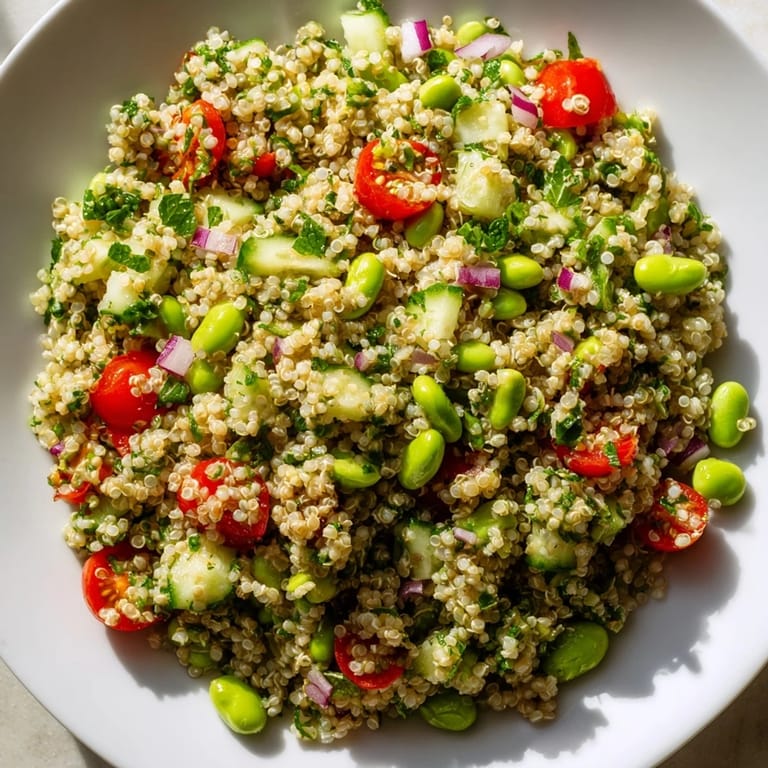
 My aunt requested this for her birthday lunch last month and seeing how everyone went back for seconds reminded me why I fell in love with this salad in the first place. It is one of those dishes that brings people together without anyone realizing it is happening.
Make Ahead Magic
This salad keeps beautifully in the refrigerator for up to four days. The quinoa actually absorbs more of the dressing over time making each day taste even better than the last. I always pack the dressing separately when meal prepping and toss it right before eating.
Serving Suggestions
Serve this alongside grilled fish or chicken for a complete light dinner. It also works beautifully tucked into a wrap with some hummus or piled on top of mixed greens for an even bigger salad. Sometimes I just eat it straight from the container standing in my kitchen and call it lunch.
Easy Variations
Swap out the edamame for chickpeas or add some crumbled feta for a creamy salty element. In the fall try adding roasted butternut squash and switching to a maple vinaigrette. The base recipe is incredibly forgiving and welcomes whatever you have on hand.
- Add avocado right before serving for extra creaminess
- Try swapping lime for the lemon juice and adding cilantro instead of parsley
- Toast some sunflower seeds or pumpkin seeds and sprinkle on top for crunch
 Save to Pinterest
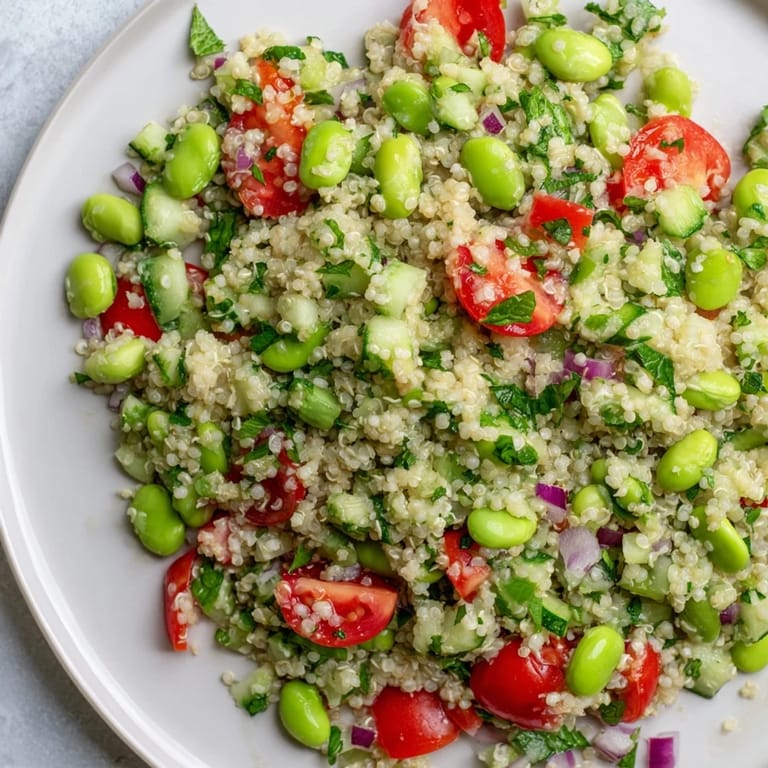
 Hope this bright salad finds its way into your regular rotation. It is the kind of recipe that makes healthy eating feel like a treat instead of a chore.
Recipe FAQs
- → Can I make this ahead of time?
Yes, this bowl keeps well for 3-4 days when refrigerated. Store the dressing separately and toss just before serving to maintain freshness.
- → What can I substitute for edamame?
Shelled peas, chickpeas, or black beans work well as alternatives. Adjust cooking time accordingly—canned beans just need rinsing while fresh peas require brief blanching.
- → Is this dish gluten-free?
Yes, all ingredients are naturally gluten-free. Just verify your quinoa package is certified gluten-free if you have severe sensitivity to cross-contamination.
- → How do I store leftovers?
Keep in an airtight container in the refrigerator for up to 4 days. The flavors actually improve overnight as ingredients marinate together.
- → Can I use other grains?
Farro, bulgur, or couscous make excellent substitutes. Cook according to package directions and adjust water ratios as needed for your chosen grain.
- → How can I add more protein?
Grilled chicken, baked tofu, or shrimp pair perfectly. For plant-based options, try adding hemp seeds, pumpkin seeds, or more legumes like chickpeas.