 Save to Pinterest
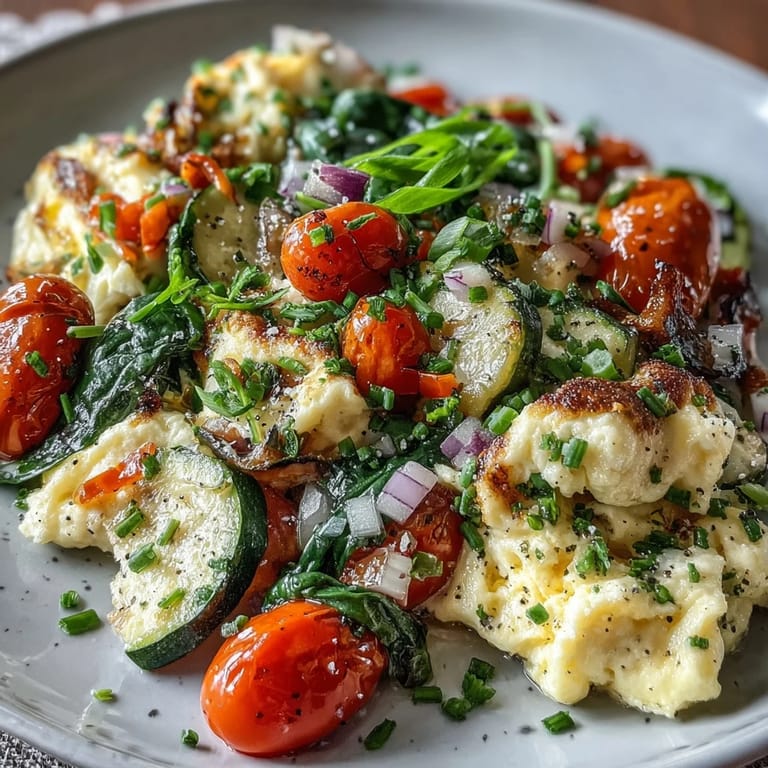
 There's something about the sound of eggs hitting a hot pan that makes a Tuesday morning feel less rushed. I discovered this scramble on a lazy weekend when my fridge was looking particularly colorful, and I realized I could turn a handful of vegetables into something that actually tasted intentional rather than like I was just using up what needed eating. The trick, I learned quickly, was respecting the vegetables enough to cook them first, letting them soften before the eggs arrived to join the party.
I made this for my neighbor one Sunday when she stopped by unexpectedly, and watching her face light up when she tasted it felt like winning something. She kept asking what restaurant I'd ordered from, which made me laugh because the whole thing cost about four dollars and took less time than brewing good coffee. That's when I realized this scramble wasn't just breakfast, it was a small way to show someone they were worth more than cereal.
Ingredients
- Eggs (4 large): These are the foundation, and using the freshest ones you can find makes a real difference in how fluffy they'll become once you whisk them into submission.
- Milk (2 tablespoons): The secret weapon that prevents rubbery eggs, though dairy-free milk works just as well if that's what you're working with.
- Salt and black pepper: Season aggressively at the end because the vegetables and milk mellow everything out as it cooks.
- Cherry tomatoes (1/2 cup, halved): Their sweetness balances the savory elements, and halving them lets them release their juice into the whole mixture.
- Baby spinach (1/2 cup): It wilts down to almost nothing, so don't be shy about packing it in before cooking.
- Red bell pepper (1/4 cup, diced): The color matters here, but beyond that, red peppers are sweeter than green and add a subtle brightness.
- Zucchini (1/4 cup, diced): Keep the pieces small so they soften before the eggs go in, preventing that raw vegetable texture.
- Red onion (2 tablespoons, finely chopped): A little goes a long way, and the sharpness mellows as it cooks alongside everything else.
- Olive oil or butter (1 tablespoon): I use butter when I want richness, olive oil when I want to feel lighter about breakfast, and both work.
- Fresh herbs (1 tablespoon, chopped): Add these at the very end so their flavor doesn't get cooked into oblivion.
Tired of Takeout? 🥡
Get 10 meals you can make faster than delivery arrives. Seriously.
One email. No spam. Unsubscribe anytime.
Instructions
- Whisk the eggs like you mean it:
- Crack your eggs into a bowl, pour in the milk, and whisk until the mixture looks slightly foamy on top. This incorporates air and guarantees fluffy scrambled eggs rather than dense ones.
- Get the pan ready:
- Heat your skillet over medium heat with butter or oil until it's shimmering but not smoking. You want it hot enough to sauté vegetables but not so hot that everything burns while you're working.
- Start with the onion and pepper:
- These two take the longest, so give them about two minutes to soften and release their flavor before adding anything else to the pan.
- Layer in the rest of the vegetables:
- Add zucchini and tomatoes now and let them cook for another couple of minutes, stirring occasionally so they cook evenly and nothing sticks.
- Wilt the spinach briefly:
- Stir in spinach and watch how quickly it transforms from leafy to integrated. About one minute is all you need.
- Pour in the eggs and stay patient:
- Add your whisked eggs and let them set for about thirty seconds without touching them. This creates a small crust that helps everything come together.
- Gently stir until creamy:
- Use a spatula to slowly push the eggs from the edges toward the center, stirring occasionally. You're aiming for soft, fluffy curds, not a uniform paste, so resist the urge to over-stir.
- Finish and serve immediately:
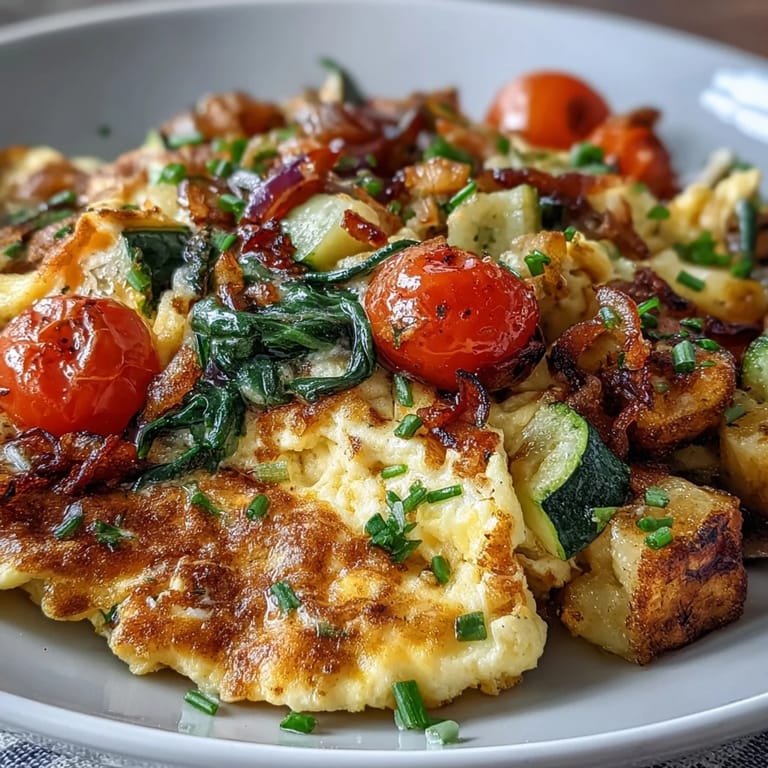
- When the eggs are just set but still look slightly glossy and underdone, they're actually perfect. Remove from heat, sprinkle herbs on top, and eat right away.
 Save to Pinterest
 This scramble became the thing I make when someone I love is having a rough morning and needs proof that someone's thinking of them. It's humble enough to feel authentic, colorful enough to lift a mood, and nourishing enough that they'll actually feel better after eating it.
Vegetable Flexibility and Seasonal Swaps
The beauty of this scramble is that it doesn't care if you follow the vegetable list exactly. Spring brought asparagus and early peas to my version, summer demanded zucchini and fresh corn, fall made me reach for mushrooms and kale, and winter has me using whatever's left in the crisper drawer. The proportions matter less than the concept: just use about two cups of vegetables total, cut small, and understand that softer vegetables like spinach go in at the end while sturdier ones like peppers go in first.
Making It More Than Breakfast
I've served this scramble for lunch with good bread and a small salad, at brunch with fresh fruit on the side, and even as a light dinner when I wanted something that didn't feel heavy before bed. The protein from the eggs keeps it satisfying, the vegetables make it substantial, and the whole thing costs less than a coffee shop breakfast while tasting infinitely better. It's become my go-to dish when feeding someone without knowing their dietary restrictions, because it's naturally vegetarian and gluten-free while feeling genuinely cared for.
Elevating and Customizing Your Scramble
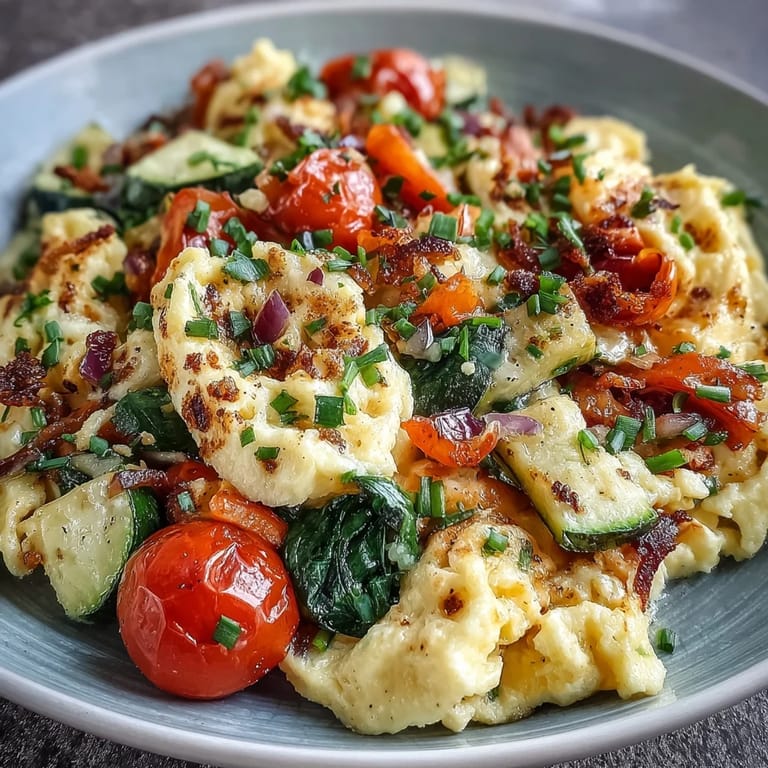
Once you master the basic version, the scramble becomes a canvas. I've added crumbled feta and discovered that cheese needs to go in right before serving so it doesn't melt into invisibility. I've stirred in everything from sun-dried tomatoes to caramelized onions to fresh avocado slices, each one changing the mood of the dish without changing the technique. The secret is understanding that you're building layers of flavor, not just throwing ingredients together, so each addition should feel intentional.
- Cheese works best when added at the very end so it stays distinct rather than melting away completely.
- Experiment with different herbs depending on what you're in the mood for, knowing that parsley is forgiving while basil can overpower.
- Serve with whole grain toast, avocado slices, or fresh fruit to round out the meal.
 Save to Pinterest
 This scramble has become my answer to the question of what to make when you want to feel nourished without fussing. It's the kind of dish that proves you don't need complicated recipes to cook something that feels genuinely good.
Recipe FAQs
- → How do I get fluffy scrambled eggs?
Whisk eggs with milk until slightly frothy to incorporate air. Cook over medium heat, gently pushing eggs from edges toward center. Remove from heat while still slightly soft as residual heat completes cooking.
- → What vegetables work best in egg scrambles?
Cherry tomatoes, spinach, bell peppers, zucchini, onions, mushrooms, asparagus, and kale all pair beautifully with eggs. Sauté harder vegetables first, then add delicate greens like spinach at the end.
- → Can I make this dairy-free?
Absolutely. Use plant-based milk instead of regular milk, opt for olive oil or dairy-free butter for cooking, and skip any cheese additions. The eggs and vegetables remain just as delicious.
- → How long can I store leftover scramble?
Store in an airtight container in the refrigerator for up to 2 days. Reheat gently in the microwave or in a skillet over low heat. For best texture and flavor, enjoy immediately after cooking.
- → What can I serve with egg scramble?
Pair with whole grain toast, avocado slices, or fresh fruit for a complete breakfast. Add a side of roasted potatoes or serve in a tortilla as a breakfast wrap. Top with hot sauce for extra kick.
- → Can I use egg whites instead of whole eggs?
Yes, substitute with liquid egg whites or separate eggs. Use approximately 6-8 egg whites to replace 4 whole eggs. Cooking time may be slightly shorter, so watch closely to prevent drying.