 Save to Pinterest
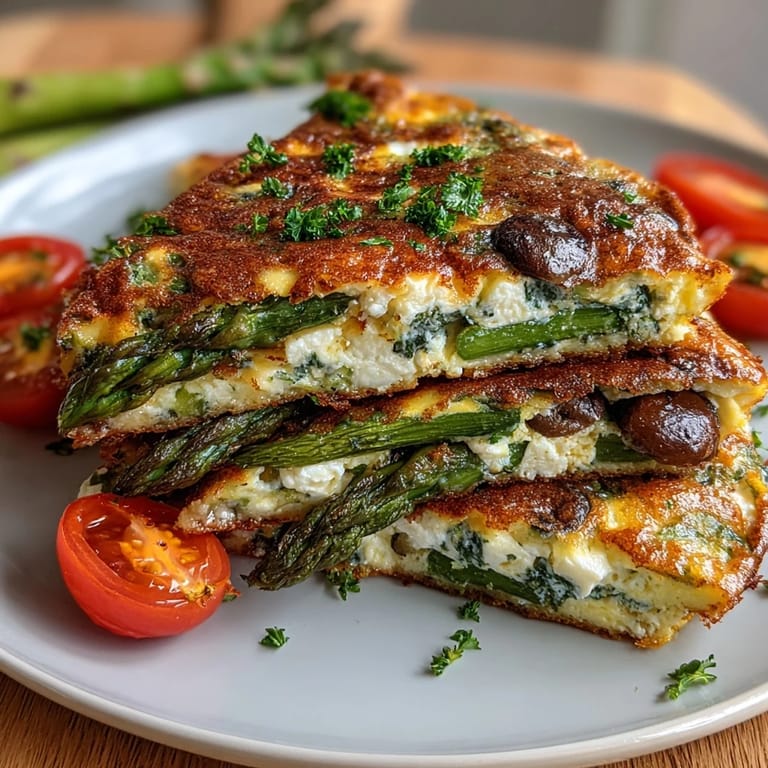
 Last spring, I was standing in my kitchen on a Saturday morning when my neighbor stopped by with a basket of asparagus she'd grown herself. I had eggs, some spinach that needed using, and suddenly the idea of a frittata just clicked. What started as an improvised breakfast became one of those dishes I now make whenever I want something that feels both celebratory and effortless. There's something about watching all those vibrant greens and reds come together in one golden pan that never gets old.
I'll never forget serving this to my sister's book club last April. Someone brought wine, someone else brought flowers, and I'd just pulled this golden frittata from the oven. It sat there steaming and beautiful, and within minutes it was gone. The best part was hearing them all asking for the recipe, not because it seemed fancy, but because it tasted so genuinely delicious and honest.
Ingredients
- Asparagus: Trimmed and cut into 1-inch pieces; early spring asparagus is tender and sweet, so don't be shy about cooking it until it's just tender enough to bend slightly.
- Baby spinach: Roughly chopped; fresh spinach wilts almost instantly in the heat of the other vegetables, so add it late in the sauté.
- Cherry tomatoes: Halved; their natural sweetness balances the earthy vegetables and bursts with flavor as they warm.
- Zucchini: Diced into small, even pieces; this ensures it cooks at the same rate as the other vegetables.
- Red onion: Finely chopped; it softens beautifully and adds a gentle sweetness that ties the whole dish together.
- Large eggs: Six of them, which create a silky, custard-like base that holds all the vegetables together.
- Milk: Use regular, oat, or almond milk depending on your preference; it makes the eggs fluffier and more tender.
- Crumbled feta cheese: Salty and tangy, it's the flavor anchor that makes everything taste more interesting.
- Fresh parsley and chives: Chopped fresh herbs add brightness and a hint of sophistication without any fuss.
- Salt and black pepper: Season thoughtfully as you go; you can always add more, but you can't take it out.
- Crushed red pepper flakes: Optional, but they add a whisper of heat that wakes up your palate.
- Olive oil: One tablespoon is enough to coat the pan and carry all those delicious flavors together.
Tired of Takeout? 🥡
Get 10 meals you can make faster than delivery arrives. Seriously.
One email. No spam. Unsubscribe anytime.
Instructions
- Preheat and prepare:
- Set your oven to 375°F and get an oven-safe skillet ready. This temperature is your sweet spot for cooking the frittata through without browning the top too quickly.
- Build your flavor foundation:
- Heat olive oil over medium heat and sauté the red onion for about 2 minutes until it softens and becomes translucent. You'll know it's ready when the raw bite is gone and it smells sweet and cooked through.
- Add the sturdy vegetables:
- Toss in the asparagus and zucchini with a pinch of salt and cook for 3 to 4 minutes, stirring occasionally. They should be just tender when pierced with a fork, not mushy or raw.
- Finish with the delicate greens:
- Stir in the spinach and cherry tomatoes and cook for just 1 to 2 minutes until the spinach is wilted and everything is heated through. The tomatoes should still hold their shape.
- Make your egg custard:
- In a separate bowl, whisk together the eggs, milk, salt, black pepper, and red pepper flakes until well combined and slightly frothy. Don't overthink it, just make sure everything is evenly mixed.
- Bring it all together:
- Pour the egg mixture over the vegetables and sprinkle the feta, parsley, and chives over the top. Let it cook on the stovetop for 2 to 3 minutes until the edges start to set and look slightly firm.
- Finish in the oven:
- Transfer the skillet carefully to the oven and bake for 10 to 12 minutes until the center is set and the top is lightly golden. You're looking for a gentle jiggle in the very center, not a wet puddle.
- Rest and serve:
- Let it cool for a minute or two, slice into wedges, and serve warm, at room temperature, or even chilled the next day. It's beautiful no matter when you eat it.
 Save to Pinterest
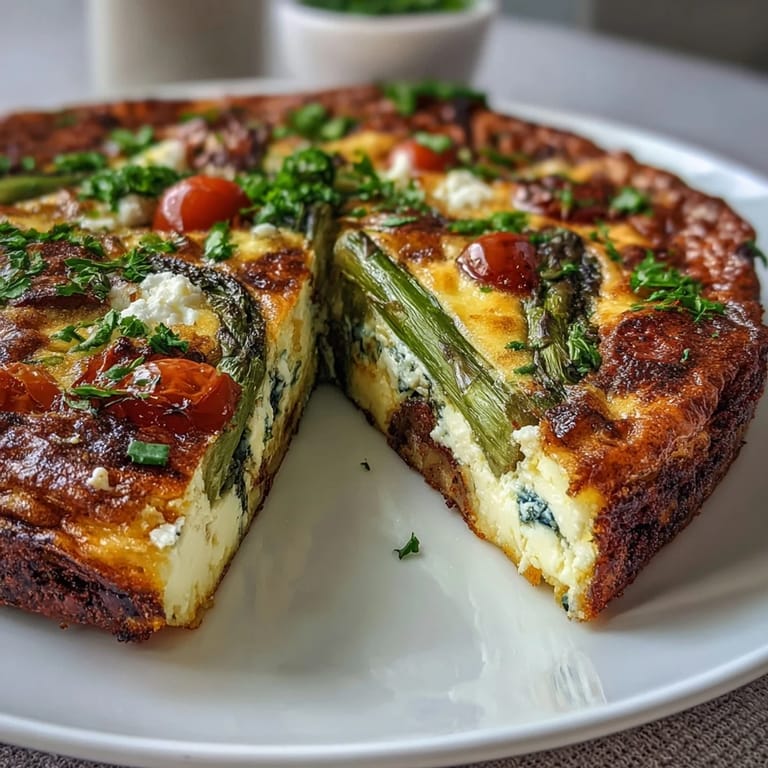
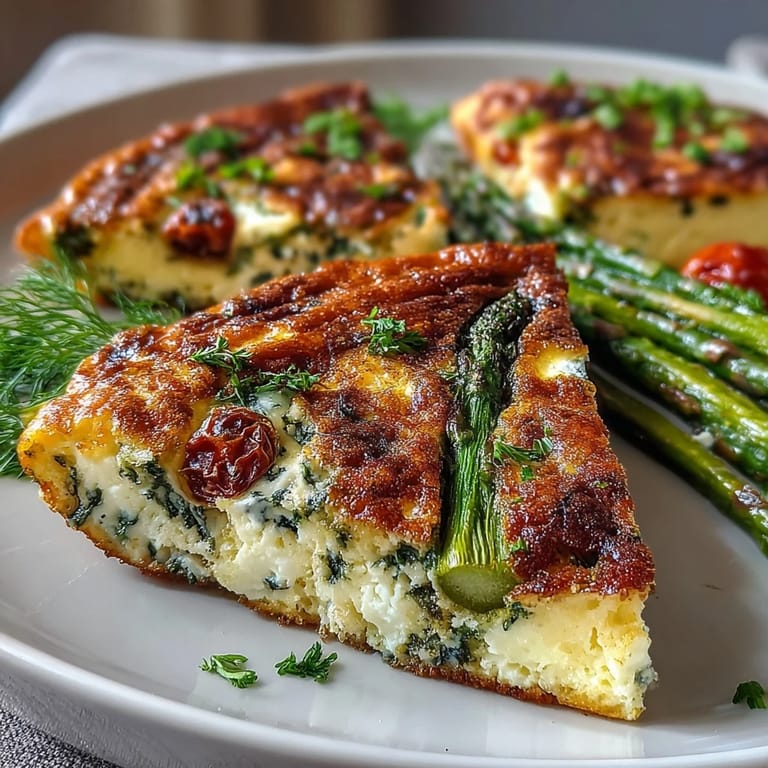
 There's a moment, right when you pull the frittata from the oven, where the whole kitchen fills with this incredible aroma of herbs, cheese, and cooked vegetables. That moment reminds me why I cook in the first place, not because I have to, but because it brings people together in the warmest, most unpretentious way.
Seasonal Swaps and Variations
The beauty of a frittata is how it adapts to whatever's in season or in your refrigerator. In late spring, try swapping the asparagus for fresh peas or thin green beans. Summer brings zucchini blossoms if you can find them, or roasted bell peppers for a sweeter note. Fall is perfect for leeks and mushrooms sautéed until golden. Winter calls for kale, caramelized onions, and root vegetables. The vegetables are just the canvas, so don't feel locked into this exact combination.
Dairy-Free and Dietary Adaptations
If dairy isn't part of your world, this recipe adapts beautifully without any sacrifice to flavor or texture. Use any plant-based milk you love, and either skip the cheese entirely or use a dairy-free version that crumbles and melts similarly. The eggs themselves provide plenty of richness and binding power, so you won't miss the creaminess. I've made this version for friends and they've never once asked if something was missing.
Serving and Storage Ideas
A frittata is endlessly flexible when it comes to how you serve it. Slice it into wedges and eat it right out of the pan, or cut it into smaller squares for appetizers or a lunch box. Pair it with a simple green salad and crusty bread for a complete meal, or serve it alongside fresh fruit for a lighter brunch. It keeps beautifully in the refrigerator for up to 3 days, and you can reheat slices gently in the oven or even eat them cold straight from the fridge.
- A crisp Sauvignon Blanc or light rosé pairs wonderfully if you're sipping while you cook.
- Leftovers make excellent grab-and-go breakfasts or quick lunches throughout the week.
- Slice it the night before if you're serving a crowd, and just bring it to room temperature before plating.
 Save to Pinterest
 This frittata has become my go-to for those moments when I want to cook something that feels intentional and nourishing without requiring any technical skill or hours in the kitchen. It's the kind of dish that reminds you why cooking for yourself and others is one of life's great pleasures.
Recipe FAQs
- → What vegetables work best in this dish?
Fresh spring vegetables like asparagus, zucchini, spinach, and cherry tomatoes provide a vibrant mix of textures and flavors.
- → Can I use dairy substitutes in this frittata?
Yes, plant-based milk and dairy-free cheese alternatives can be used to make it suitable for dairy-free diets.
- → How is the frittata cooked evenly?
Start by cooking the vegetables on the stovetop, then transfer the skillet to the oven to bake until set with a light golden top.
- → Can I add other herbs or spices?
Fresh parsley and chives are recommended, but feel free to experiment with thyme, basil, or red pepper flakes for added flavor.
- → What is the best way to serve this dish?
Serve warm or at room temperature, alongside a fresh green salad or crusty bread for a complete meal.
- → Is this suitable for gluten-free diets?
Yes, the dish is naturally gluten-free, making it suitable for those avoiding gluten.