 Save to Pinterest
 My grandmother kept a worn wooden spoon in a jar by her stove, the handle darkened by decades of stirring pots. One afternoon, watching her make mjadra, I realized that spoon had probably caramelized ten thousand batches of onions. The dish itself is deceptively simple—lentils, rice, onions—yet it carries the weight of a thousand family tables across Lebanon. There's something humbling about cooking something so honest, where there's nowhere to hide and every ingredient has to earn its place.
I made this for a friend who'd been stressed about work, and she sat at my kitchen counter just inhaling the smell of caramelizing onions for ten minutes before we even ate. That's when I understood—mjadra isn't fancy or impressive, but it has this quiet way of making people feel cared for. The spices warming in the broth, the gentle bubbling sound, the kitchen filling with that golden-brown sweetness of slow-cooked onions—it's almost therapeutic to cook.
Ingredients
- Brown or green lentils (1 cup): Rinsing them removes dust and ensures a clean, tender result—don't skip this step even though it feels unnecessary.
- Long-grain rice (¾ cup): Basmati stays separate and light; I learned this the hard way with short-grain rice that turned mushy.
- Water or vegetable broth (4 cups): Broth deepens the flavor noticeably, but water works fine if that's what you have.
- Olive oil (5 tablespoons total): Good olive oil makes a real difference here—cheap oil turns bitter during the long caramelizing.
- Warm spices (cumin, allspice, cinnamon): Toast them briefly in the hot oil before adding broth and you'll notice how much more vibrant they become.
- Bay leaf: This quietly anchors the whole dish and is worth hunting for in your spice cabinet.
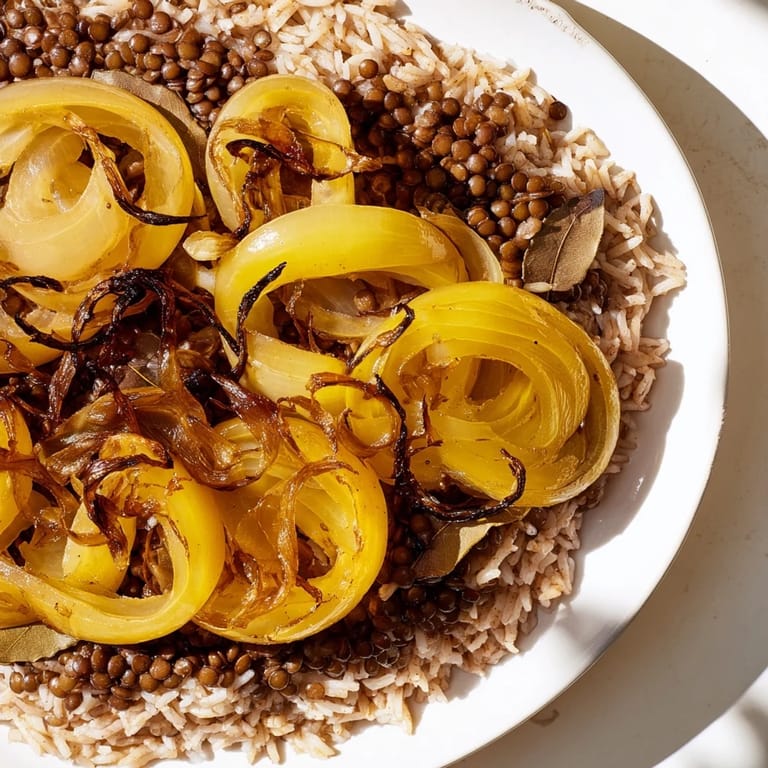
- Yellow onions (3 large): Slice them thin and be patient—rushing caramelization steals the magic from this dish.
- Salt and pepper: Taste as you go; the broth might already have salt, so adjust thoughtfully at the end.
Tired of Takeout? 🥡
Get 10 meals you can make faster than delivery arrives. Seriously.
One email. No spam. Unsubscribe anytime.
Instructions
- Toast and start the lentils:
- Heat olive oil in a large saucepan and let the lentils tumble in for a minute or two with the bay leaf. You'll hear them gently clicking against the pan—that's when you know the heat is right.
- Begin the simmer:
- Pour in your broth and let it come to a gentle boil, then lower the heat. This first 15 minutes is when the lentils start to soften and the bay leaf begins releasing its subtle flavor into the liquid.
- Caramelize the onions (the slow part):
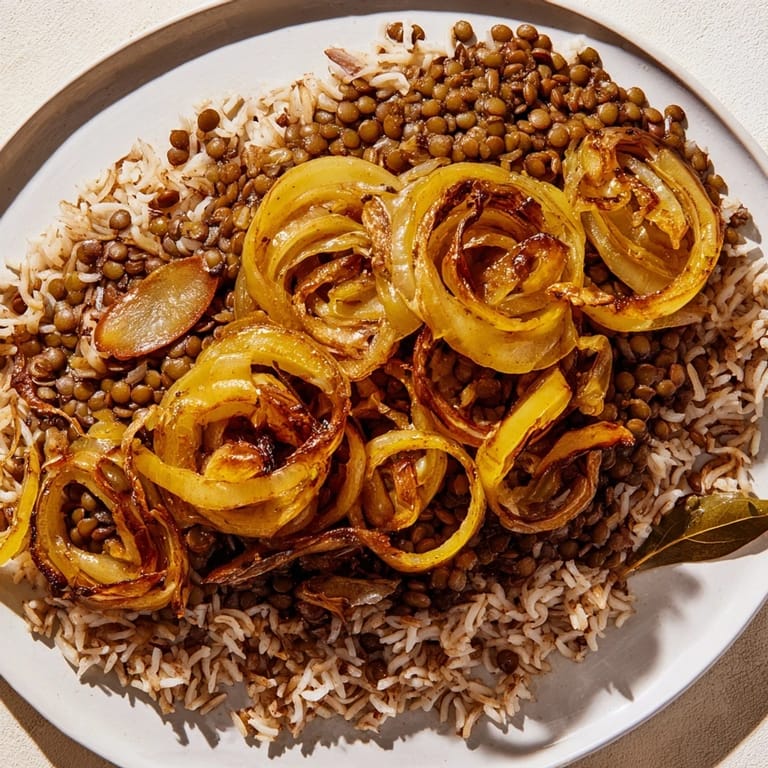
- In a separate skillet, coax your sliced onions into golden sweetness over medium-low heat, stirring often so they don't catch on the bottom. This takes 25–30 minutes and there's no shortcut—the onions need time to surrender their natural sugars.
- Bring everything together:
- Once the lentils have had their initial simmer, stir in the rice along with cumin, allspice, cinnamon, salt, and pepper. Give it a good stir so the spices coat everything evenly.
- Finish cooking low and slow:
- Cover the saucepan and let it simmer gently for 20–25 minutes until the rice is tender and all the liquid has been absorbed. Listen for the quiet sizzle at the bottom—that's the signal to check if it's done.
- Rest and fluff:
- Remove from heat, take out the bay leaf, and fluff everything with a fork to separate the grains. Taste now and adjust your seasoning if needed.
- Serve with the prize:
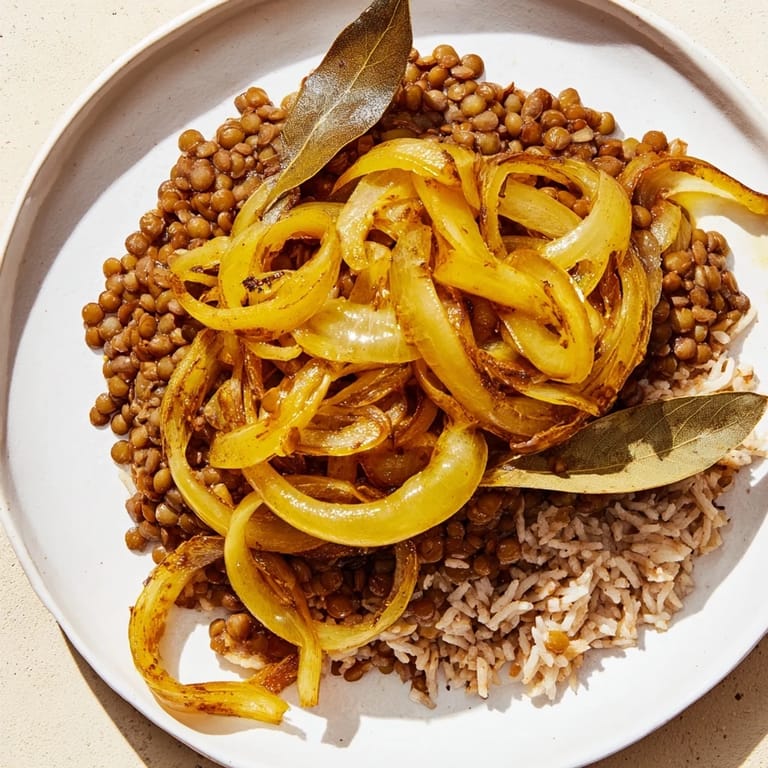
- Transfer to bowls and top generously with those caramelized onions—they're the reason this dish tastes like memory.
 Save to Pinterest
 My mother used to say mjadra was what you made when you wanted to feel rich without spending much money. Over the years, I've realized she meant something deeper—this dish has a kind of quiet dignity that comes from respecting simple ingredients and giving them time to shine.
The Soul of Slow Cooking
There's a reason this recipe takes nearly an hour despite only a few ingredients. The caramelizing of onions can't be rushed—try to speed it up and you'll burn them instead of coaxing out their sweetness. This is a dish that teaches patience in the gentlest way possible. Every minute of slow cooking is an investment in flavor that you simply can't replicate by turning up the heat.
Serving and Pairing
I've served mjadra at everything from casual weeknight dinners to more formal gatherings, and it adapts beautifully to both. Warm, it's comforting and filling; cold, it becomes something lighter and almost salad-like. A dollop of plain yogurt on top adds richness, while a simple tomato and cucumber salad alongside cuts through the earthiness with brightness and crunch. Pickled vegetables are traditional too—their sharp tang is the perfect foil to the warm spices.
The Spice Layer That Changes Everything
The combination of cumin, allspice, and cinnamon might seem unfamiliar if you're used to cooking with just one spice, but together they create something that tastes both warm and complex. None of them shouts; instead, they whisper together in the background, which is exactly where they should be. The cinnamon is the surprise—people often can't quite name what they're tasting, but they know something makes them want another spoonful.
- If you can't find allspice, substitute ¼ teaspoon cloves and ¼ teaspoon nutmeg for a similar warmth.
- Toasting the spices briefly in hot oil before adding liquid deepens their flavor significantly.
- Taste the dish before serving and trust your instincts—you might prefer more or less of any spice depending on your mood.
 Save to Pinterest
 Mjadra is the kind of recipe that reminds you why people cook in the first place. It asks for your time and attention, then rewards you with something that tastes like home, no matter where you grew up.
Recipe FAQs
- → What type of lentils work best for this dish?
Brown or green lentils are ideal, as they maintain a tender texture without becoming too mushy during simmering.
- → Can I use a different type of rice?
Long-grain varieties like basmati are preferred to provide a fluffy texture that complements the lentils.
- → How do you achieve perfectly caramelized onions?
Slowly cook thinly sliced onions in olive oil over medium-low heat with a pinch of salt, stirring frequently until golden brown and sweet.
- → Is it possible to prepare this dish ahead of time?
Yes, leftovers store well refrigerated for up to four days and can be gently reheated before serving.
- → What spices create the authentic flavor profile?
Cumin, allspice, and cinnamon blend to provide warm, aromatic notes that define the dish's traditional taste.