 Save to Pinterest
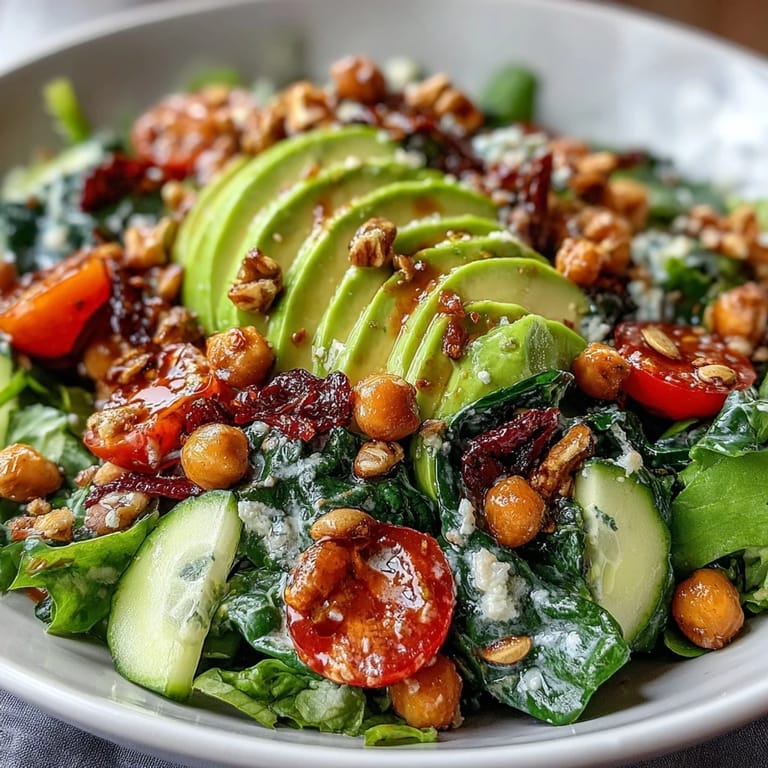
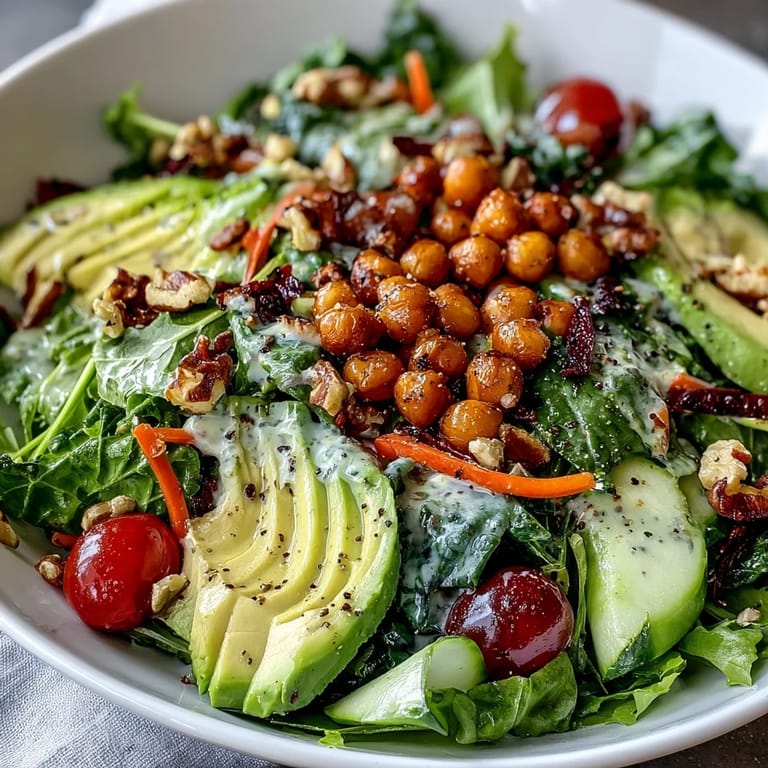
 There's something about assembling a power bowl that feels less like cooking and more like creating edible art. One Tuesday afternoon, I stood at my kitchen counter with an armful of vegetables from the farmers market, realizing I had no plan beyond wanting something colorful and sustaining. Instead of defaulting to my usual grain bowls, I decided to build layers of contrast—crisp greens, jewel-toned peppers, creamy avocado, and the satisfying crunch of toasted nuts. Twenty minutes later, I had something that tasted as good as it looked, and I haven't stopped making versions of it since.
I made this for my running group after our Saturday morning 10K, and something shifted that day. Everyone sat on my porch in those post-run endorphin hazes, eating directly from the big serving bowl I'd set out, trading bites and compliments. My friend Marcus, who survived on pizza and coffee, asked for the recipe. That moment mattered less for the salad itself and more for realizing that good food doesn't need to be complicated to feel special.
Ingredients
- Mixed salad greens (4 cups): Combine spinach, arugula, kale, and romaine for layered flavors and textures—no single green does it alone, and the mix keeps things interesting bite after bite.
- Cherry tomatoes (1 cup, halved): Their sweetness balances the peppery arugula, and halving them prevents them from rolling around like tiny red escape artists.
- Cucumber (1 cup, sliced): The cooling crispness here is essential; use English cucumbers if you can find them since they need no seeding and stay crisp longer.
- Red bell pepper (1, thinly sliced): This brings both color and a gentle sweetness that rounds out the veggie medley beautifully.
- Carrot (1 large, shredded): Shredding rather than slicing increases surface area and makes them more tender to bite through than thin slices.
- Avocado (1 small, sliced): Add this just before serving or toss with lemon juice to prevent browning—nobody wants sad, oxidized avocado.
- Chickpeas or black beans (1 can, rinsed and drained): Rinsing removes excess sodium and makes them taste fresher; both work equally well, so choose based on what's in your pantry.
- Toasted walnuts or almonds (1/3 cup, roughly chopped): Toast them yourself if you have time—the smell alone is worth it, and they'll taste exponentially better than pre-roasted versions.
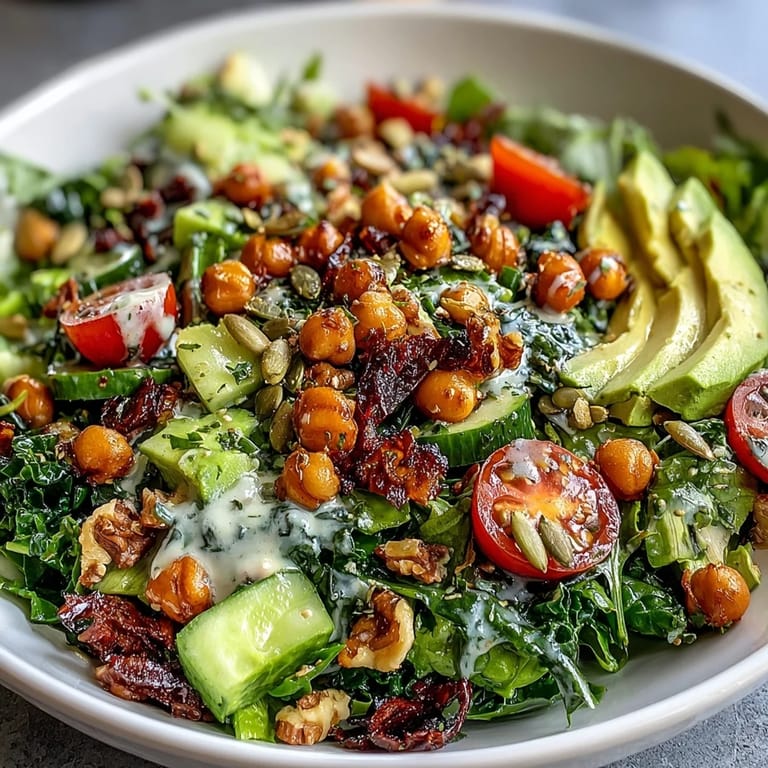
- Pumpkin seeds (2 tablespoons): These little jewels add magnesium and a satisfying crunch that survives even aggressive tossing.
- Olive oil (3 tablespoons): Use something you'd actually taste, because this much oil in the dressing means quality matters.
- Lemon juice (1 tablespoon): Fresh-squeezed is non-negotiable here; bottled lemon juice tastes like regret.
- Apple cider vinegar (1 tablespoon): This adds complexity and tang that plain vinegar can't quite achieve.
- Dijon mustard (1 teaspoon): It acts as an emulsifier, helping the dressing cling to the greens instead of pooling at the bottom.
- Honey or maple syrup (1 teaspoon): Just enough to round out the acidity without making this sweet—think of it as a whisper, not a shout.
- Salt and black pepper: Taste as you go; greens need more seasoning than you'd think.
Tired of Takeout? 🥡
Get 10 meals you can make faster than delivery arrives. Seriously.
One email. No spam. Unsubscribe anytime.
Instructions
- Start with your green foundation:
- Wash and spin dry your greens thoroughly—wet greens dilute the dressing and feel limp on the fork. Layer them generously into your largest salad bowl, using this as your base to catch all the delicious toppings.
- Arrange your vegetable medley:
- Rather than tossing everything together immediately, create sections of color: tomatoes here, cucumber there, bell pepper in another spot. This isn't just prettier—it gives you control over what goes in each bite.
- Add your protein:
- Distribute the rinsed chickpeas or beans evenly across the bowl, breaking up any clumps as you go. They'll settle into the gaps and ensure every forkful has that satisfying protein hit.
- Crown it with crunch:
- Scatter your toasted nuts and pumpkin seeds across the top, saving a few for garnish if you're feeling fancy. This is where the textural magic happens.
- Make your dressing sing:
- In a separate small bowl, whisk the olive oil, lemon juice, apple cider vinegar, mustard, and honey until it's emulsified and smooth. The mixture should cling slightly when you lift the whisk—that's how you know the mustard is doing its job.
- Dress and serve:
- Drizzle the dressing over everything just before eating, or serve it on the side if your guests are the particular type. You can toss for maximum flavor distribution or leave it composed for maximum drama.
 Save to Pinterest
 My neighbor Diane, who'd been widowed for two years, asked me to teach her how to make something green and healthy. We stood in her kitchen on a gray February afternoon, chopping vegetables and talking about nothing in particular, and I watched her face change slightly when she tasted the finished bowl. She said it tasted like the future, which I didn't fully understand until months later when she started hosting Sunday lunches again. Food does that sometimes—it becomes the vehicle for healing you didn't plan on.
Building Your Perfect Bowl
The architecture of this bowl matters more than you'd think. If you layer from heaviest to lightest, the greens stay fresher longer and the whole thing holds together better when you scoop. I learned this by accident after stacking everything randomly the first few times and watching my bowl turn into a watery mess by lunch. Now I think of it like landscaping: foundation, then middle layer, then delicate elements on top. It changes nothing about the flavor but somehow changes everything about the experience.
Why Walnuts Beat Almonds (Sometimes)
Walnuts have this slightly bitter edge that plays beautifully against the sweetness of cherry tomatoes, while almonds are milder and fade into the background. Both are absolutely fine, but walnuts feel more assertive in your mouth, which I prefer when the rest of the bowl is fairly light. Then again, if you're someone who finds walnuts too intense, almonds won't let you down—the important part is that they're toasted and roughly chopped so they don't get lost between the greens.
The Dressing Question
This dressing walks a careful line between acidic and balanced, peppery but not sharp, rich without being heavy. I've experimented with balsamic vinegar, rice vinegar, and white wine vinegar, but apple cider vinegar stays my favorite because it adds something almost fruity that complements raw vegetables in a way other vinegars don't quite manage. The honey or maple syrup isn't there to make this sweet—it's there to tell the acid to calm down and play nice with everything else. Try adjusting the ratios to match your mood: more mustard on days you want something bold, more honey on days you want something gentle.
- Make the dressing in a mason jar, cap it, and shake aggressively for 30 seconds instead of whisking—you'll get better emulsification and no cleanup.
- Double the dressing and save half in the fridge for two or three days of bowls, since it keeps beautifully.
- Taste the dressing on a single green leaf before you commit to the whole bowl, so you can adjust for salt and lemon juice.
 Save to Pinterest
 This bowl has become my answer to the question I ask myself most mornings: what can I eat that will make me feel strong instead of sluggish? It's simple enough to throw together on a Tuesday and impressive enough to serve when friends drop by unexpectedly. That's the real power here.
Recipe FAQs
- → Can I make this bowl ahead of time?
Yes, prepare the components separately in advance. Store washed greens, chopped vegetables, beans, and nuts in airtight containers. Keep the dressing in a small jar and toss everything together just before serving to maintain freshness and texture.
- → What other proteins work well in this bowl?
Beyond chickpeas and black beans, try lentils, edamame, kidney beans, or white beans. For non-vegetarian options, grilled chicken, salmon, or shrimp complement the fresh vegetables beautifully while keeping the bowl light and nutritious.
- → How can I add more substance to this bowl?
Add cooked grains like quinoa, brown rice, farro, or couscous for extra heartiness. A half-cup to one cup of cooked grains per serving transforms this into a more filling meal while maintaining the fresh, vibrant character.
- → Can I substitute the nuts for allergies?
Absolutely. Replace walnuts or almonds with sunflower seeds, sesame seeds, or extra pumpkin seeds. For added crunch without nuts, try toasted coconut flakes or crumbled gluten-free pretzels. The bowl remains delicious and texturally satisfying.
- → How long does the dressing keep?
The whisked dressing stays fresh in a sealed container in the refrigerator for up to one week. The olive oil may solidify when cold—simply let it sit at room temperature for a few minutes and shake well before using.
- → What vegetables can I swap seasonally?
Embrace seasonal produce by swapping in roasted sweet potato or beets in fall, fresh corn or radishes in summer, and sautéed Brussels sprouts or roasted squash in winter. The bowl adapts beautifully to whatever fresh vegetables are available.