 Save to Pinterest
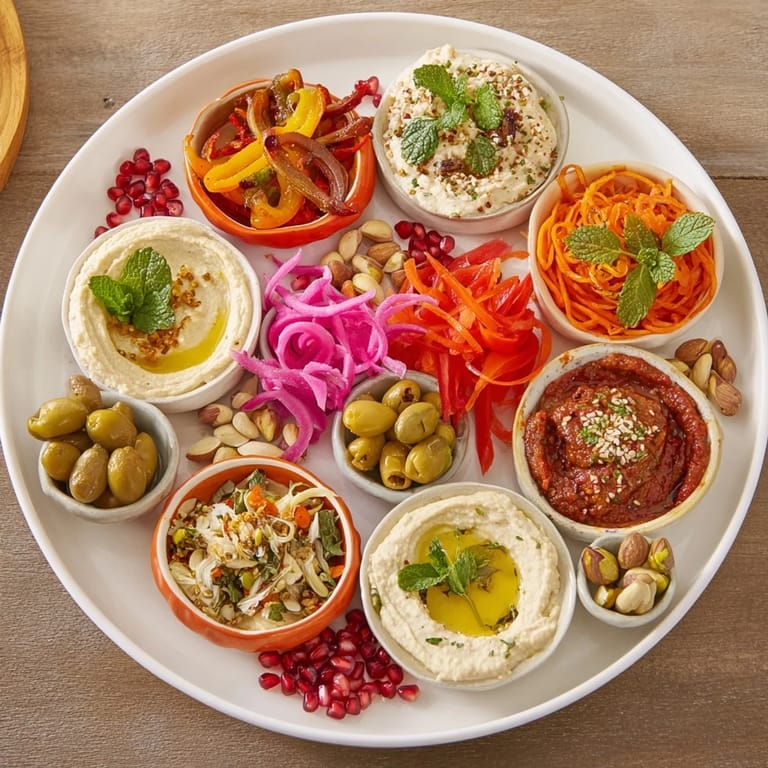
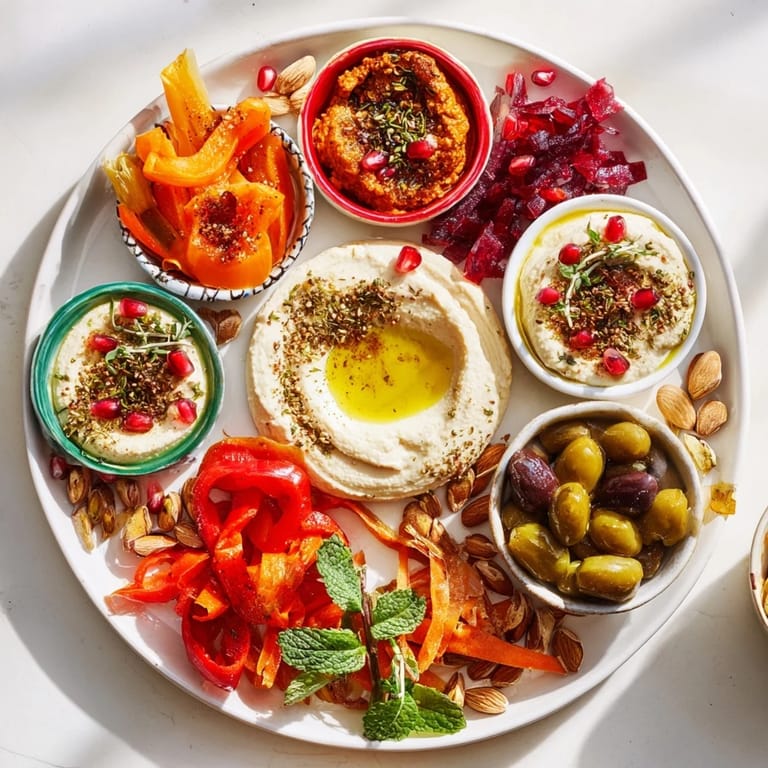
 I still remember the first time I stepped into a riad in Marrakech, where the courtyard was lined with hand-painted zellige tiles in blues, greens, and terracottas. That geometric beauty inspired me to recreate that feeling on a table, but with food. What started as a simple appetizer platter evolved into this Moroccan Tile Mosaic, where every bowl of vibrant dips and colorful ingredients mirrors those intricate mosaics. Now, whenever I arrange this platter, I'm transported back to that moment, and my guests feel it too.
I hosted a dinner party during Ramadan, wanting to honor the spirit of breaking fast with something nourishing and celebratory. When I unveiled this platter, my Moroccan friend's eyes lit up with recognition, and she spent the next hour sharing stories about her grandmother's kitchen and the markets of Fez. That night, the platter became more than appetizers, it became a conversation, a memory, a bridge between cultures.
Ingredients
- Classic hummus: The creamy anchor of any mezze board, and a canvas for other flavors to shine. I learned to blend mine extra smooth and to not shy away from tahini, which gives it that silky luxe finish.
- Baba ganoush: This smoky eggplant dip is where the magic happens. Roast the eggplant directly over flame if you can, the charred skin adds depth that you simply cannot replicate in the oven.
- Muhammara: Red peppers and walnuts ground into a dip that tastes like warm spice and comfort. I always make extra because guests tend to return to this one again and again.
- Labneh or Greek yogurt: Thick, tangy, and elegant when drizzled with olive oil and zaatar. If using yogurt, strain it overnight to get the creamy texture labneh has naturally.
- Roasted red peppers: Sweet and silky, they balance the saltier olives and pickled elements. Use quality jarred ones if fresh ones are out of season, no shame in that shortcut.
- Marinated artichoke hearts: Tender and briny, they add a sophisticated touch that says you put thought into this spread.
- Moroccan carrot salad: Shredded raw carrots with fresh lemon, cumin, and parsley create brightness and crunch. The rawness is intentional, it provides contrast to all the cooked and preserved items.
- Preserved lemon slices: This is the soul of Moroccan cooking, intensely floral and salty, a tiny slice adds complexity to any bite.
- Mixed Moroccan olives: Choose varieties with different sizes and shades, they create visual interest and different taste experiences, some buttery, some briny, some spiced.
- Quick-pickled red onions: Thinly sliced and sharp with vinegar, they cut through richness and add a pop of color. They take ten minutes and transform the entire platter.
- Cornichons or baby gherkins: Small, crunchy, and playful, they're the kind of detail guests don't expect but absolutely appreciate.
- Roasted almonds: Unsalted so they don't compete with the already flavorful dips and spreads. Toast them yourself if you can, the kitchen will smell like a Mediterranean market.
- Pistachios: Their pale green adds a color note that ties back to traditional zellige tiles, and their buttery richness is undeniable.
- Toasted sesame seeds: Nutty and fine, they add texture and a subtle flavor bridge between everything on the board.
- Baguette or gluten-free crackers: Toast these just before serving so they're warm and crispy. Warm bread is what makes people feel welcomed and fed, not just appetized.
- Mini pita breads: Quartered and warm, they're the perfect pocket for filling with dips and vegetables, an invitation to customize each bite.
- Pomegranate seeds: Jewel-like and tart, they're functional garnish and flavor, adding brightness and a hint of tartness that awakens the palate.
- Fresh mint and cilantro: Fragrant and alive, these herbs scatter color and aroma across the board, reminding everyone this is living, breathing food.
- Sumac: A whisper of lemony tanginess that is uniquely Moroccan and Mediterranean, just a light dusting changes the entire conversation.
- Extra virgin olive oil: The finishing liquid that says this was made with care. Choose one with character that you would drink straight if no one was looking.
Tired of Takeout? 🥡
Get 10 meals you can make faster than delivery arrives. Seriously.
One email. No spam. Unsubscribe anytime.
Instructions
- Gather your vessels:
- Pull out 8 to 12 small bowls or ramekins in colors that make you happy. If you have them, choose blues, greens, terracottas, and warm earth tones that echo Moroccan tiles. If they don't match, that's authentic zellige energy right there. These bowls are not just containers, they're part of the art.
- Prepare the dips ahead:
- Whether these are homemade or store-bought, place each one in its own bowl. Smooth the surface with the back of a spoon. This is your blank canvas. Let them come to room temperature before serving so their flavors are brightest and their textures are most appealing.
- Ready the vegetables:
- Slice, quarter, and arrange roasted red peppers, artichoke hearts, and Moroccan carrot salad in their own dedicated bowls. Keep preserved lemons separate, they're strong flavored and deserve their own space. This is the part where you get to handle these beautiful ingredients and really see what you're working with.
- Build the pickle and olive station:
- Mix the olives or keep them separate if you have multiple varieties. Show off the quick-pickled red onions, their bright color is a show-stopper. Arrange cornichons separately. Seeing all these briny, sharp elements in one place is exciting.
- Toast your bread:
- Just before you're ready to arrange, slice your baguette and toast until the exterior is crisp and the interior is still tender. Warm mini pittas by wrapping them in a kitchen towel or stacking them on a warm plate. Warm bread smells like welcome.
- Arrange the nuts and seeds:
- Pour roasted almonds into one bowl, pistachios into another, toasted sesame seeds into a third. They're small but mighty, and deserve focused attention rather than being mixed together.
- Create your mosaic:
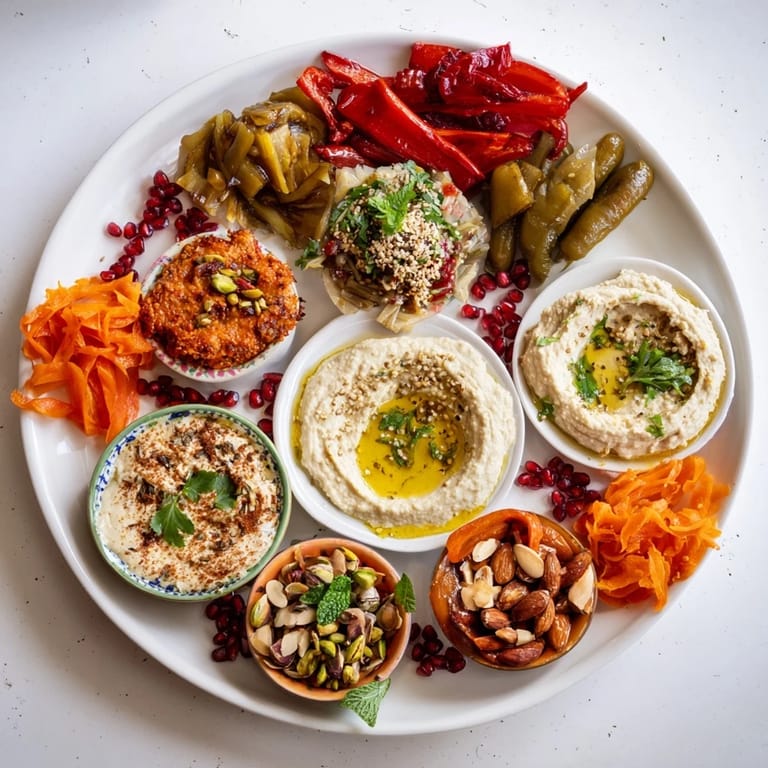
- On your largest serving tray or wooden board, begin arranging all bowls in a pattern that pleases your eye. Don't overthink it, trust your instincts about placement. Fill gaps with pomegranate seeds, fresh herbs, a sprinkle of sumac. Step back. Does it feel alive? Does it feel like a celebration? If yes, you're there.
- Final flourishes:
- Drizzle olive oil over the dips and vegetables. Let it pool slightly around the hummus, let it shine on the labneh. This final step says the meal is about to begin.
- Serve with intention:
- Encourage guests to mix flavors, to try combinations, to make their own discoveries. Provide small spoons for dips and let people create their own bites on their plates. This is interactive, social eating at its best.
 Save to Pinterest
 My eight-year-old niece once stood in front of a mosaic platter I made and said it was too pretty to eat. Then she tried the muhammara and changed her mind immediately. That moment, watching her discover something new, is exactly why I make this. Food that feeds both the eyes and the spirit.
The Spirit of Mezze
Mezze is not just appetizers, it's a philosophy. It's about abundance and sharing, about trying many things rather than committing to one. It's about the space where strangers become friends because they're passing the same bowl around a table. This platter honors that tradition by presenting choice, by celebrating variety, by making everyone feel like there's something here for them. The colors and flavors are intentionally diverse because that's what makes a table feel welcoming.
Making It Your Own
This recipe is a framework, not a rule book. If you have access to different marinated vegetables, use them. If there's a dip you make better than anyone, that belongs on this board. If you want to add grilled halloumi or thin slices of spiced sausage for guests who want protein, do it. The beauty of a mosaic is that every tile is a choice, and your choices make it distinctly yours. I once added roasted beets and pomegranate molasses because that's what I had, and it became the favorite version I've ever made.
Serving and Storage
Serve this at room temperature for the fullest flavor experience. Most components will keep in the refrigerator for several days, though fresh herbs should be added fresh. If you're making this ahead, cover loosely and bring it out an hour before guests arrive so everything relaxes back to its best temperature and flavor. Leftover dips are gold, they turn into lunch the next day or get stirred into grain bowls or drizzled over roasted vegetables. Nothing gets wasted.
- Toast the bread fresh on the day of serving so it's crispy and warm when people eat it
- If you must assemble ahead, keep the fresh herbs separate and scatter them just before serving so they stay bright
- Check that all cold elements are actually cold and all room temperature items are actually room temperature when you serve, temperature makes an enormous difference to how flavors come through
 Save to Pinterest
 This platter is an invitation to slow down and savor, to try something new, to share the table and the moment with people you care about. Make it, arrange it with love, and watch what happens.
Recipe FAQs
- → What flavor combinations work best on the platter?
Pair creamy dips like hummus with tangy labneh and spicy muhammara, balanced by marinated vegetables and the crunch of nuts and olives for a delightful variety.
- → How can I make the platter gluten-free?
Replace bread slices with gluten-free crackers or omit altogether, ensuring all dips and accompaniments are free from gluten ingredients.
- → What herbs enhance the platter's presentation and taste?
Fresh mint and cilantro leaves add vibrant color and aromatic notes, while a sprinkle of sumac lends a subtle tangy flavor.
- → Can this platter be adapted for vegan preferences?
Yes, substitute labneh with plant-based yogurt and ensure no dairy-based ingredients are used to maintain vegan suitability.
- → How should I serve the mosaic platter for best experience?
Arrange all components tightly in small bowls on a large tray to create a colorful pattern; encourage guests to mix bites for varied tastes.
- → What are good beverage pairings for this platter?
Moroccan mint tea or a crisp white wine complement the fresh and spiced flavors perfectly.