 Save to Pinterest
 There's something almost magical about watching pasta cook in its own broth instead of a separate pot of boiling water—it's like the dish is building itself right before your eyes. I discovered this method on a particularly chaotic Tuesday when I had one pot clean and a hungry family waiting, and somehow that limitation turned into my favorite weeknight shortcut. The pasta absorbs all the flavors as it softens, the vegetables release their sweetness into the liquid, and by the time everything's done, you've got this deeply seasoned, comforting dish that tastes like it took far more effort than it actually did.
I made this for my neighbor last month when she was recovering from surgery and didn't have the energy to cook, and watching her face light up when she realized it was actual food and not just something microwaved told me everything I needed to know about this recipe. She asked for the method three times over because she couldn't quite believe that pasta made this way could be so tender and rich, not mushy or bland like some one-pot dishes can be. That's when I realized this wasn't just a lazy weeknight solution—it was legitimately good food that happened to be convenient.
Ingredients
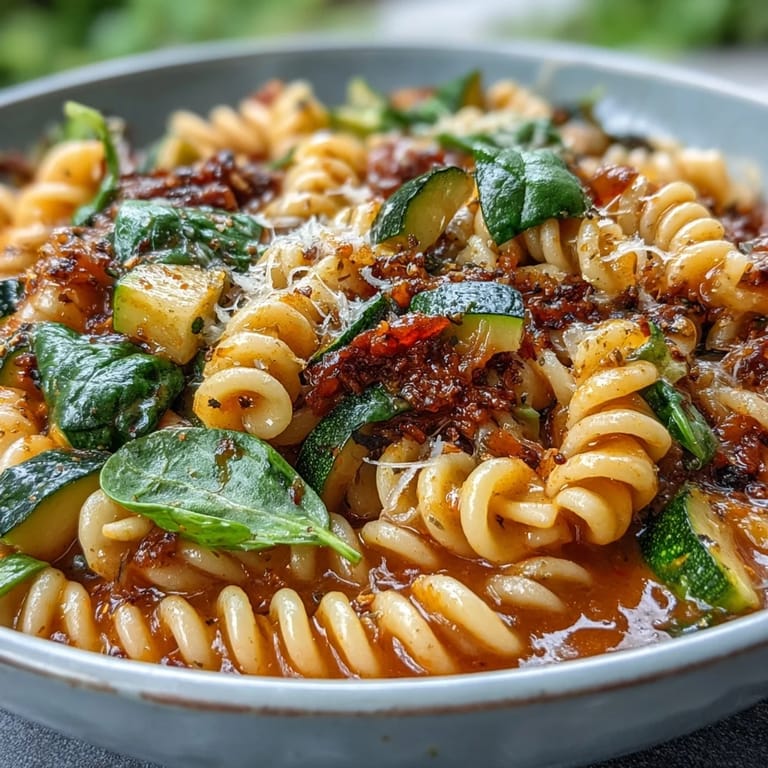
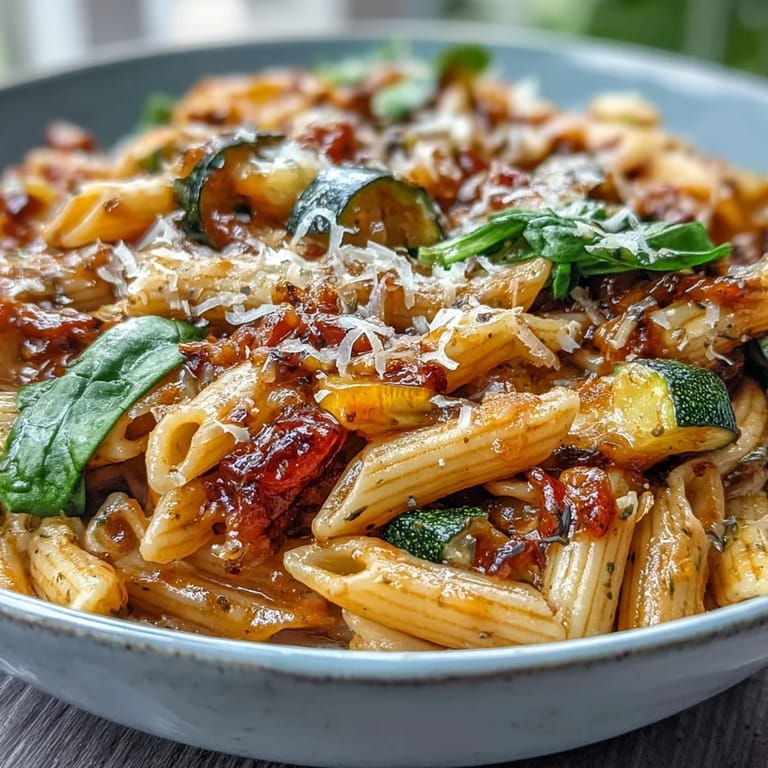
- Dried penne or fusilli (350 g): The shape matters more than you'd think—tubes and spirals catch sauce in their ridges and curves, so every forkful tastes intentional rather than like plain pasta with sauce on top.
- Medium onion, finely chopped: This is your flavor foundation, so don't rush the chopping or the sautéing; those few minutes of gentle heat transform onion from sharp to sweet.
- Garlic cloves, minced (2): Mince these as fine as you can manage because they'll distribute throughout the broth and create little pockets of warm, savory flavor.
- Medium zucchini, diced: Zucchini becomes almost silky when it cooks in liquid like this, absorbing the broth instead of releasing water the way it would if you were sautéing it dry.
- Red bell pepper, diced: The sweetness of red peppers balances the tomatoes beautifully and adds a slight jammy quality as they soften.
- Canned diced tomatoes with juice (400 g): Don't drain them—that juice is liquid gold and adds acidity that keeps everything tasting fresh and bright instead of heavy.
- Baby spinach (100 g): Add this at the very end so it stays tender and vivid green rather than becoming a dark, wilted shadow of itself.
- Vegetable broth (700 ml): This is the heart of the dish, so use something with actual flavor rather than the blandest option on the shelf; better broth means better pasta.
- Grated Parmesan cheese (60 g): The starch from the pasta cooking in the broth creates a subtle sauce, and the Parmesan finishes it with a salty, umami richness that makes you want another bowl.
- Olive oil (2 tbsp): This builds your flavor base, so use something you'd actually taste on good bread.
- Dried Italian herbs (1 tsp): These bloom in the hot broth and infuse the entire dish with herbaceous warmth.
- Chili flakes (½ tsp, optional): A whisper of heat makes the other flavors pop and prevents the dish from tasting one-note.
- Salt and black pepper, to taste: Taste as you go because the final seasoning can only be judged at the end when everything's cooked.
Tired of Takeout? 🥡
Get 10 meals you can make faster than delivery arrives. Seriously.
One email. No spam. Unsubscribe anytime.
Instructions
- Build your flavor base:
- Heat the olive oil in your largest pot over medium heat, then add the chopped onion and minced garlic. You're looking for that moment when the kitchen suddenly smells incredible and the onion turns translucent at the edges—about 2 to 3 minutes. Don't let it brown; you want sweet and mellow, not caramelized.
- Add the vegetables:
- Stir in the diced zucchini and bell pepper, cooking for another 2 to 3 minutes so they begin to soften slightly and release their flavors into the oil. You'll notice them starting to smell sweet and complex rather than raw and grassy.
- Combine everything:
- Pour in the uncooked pasta, the canned tomatoes with all their juice, and the vegetable broth. Add the dried herbs, chili flakes if you're using them, salt, and pepper, then stir everything together until the pasta is mostly submerged. This is where the magic starts—you're essentially creating a shallow braise instead of boiling.
- Simmer until tender:
- Bring the pot to a boil, then immediately reduce the heat to a gentle simmer and cover it. Stir occasionally for 10 to 12 minutes so the pasta cooks evenly and doesn't stick to the bottom; you're looking for that moment when the pasta is tender but still has a slight bite and most of the liquid has been absorbed into it. The residual starch from the pasta thickens the broth naturally, creating a light sauce.
- Finish with spinach and cheese:
- Remove the cover and stir in the baby spinach and grated Parmesan cheese, cooking for just 1 to 2 minutes until the spinach wilts into tender ribbons and the cheese melts throughout, creating a creamy coating. Taste everything and adjust the salt and pepper because this is your only chance before serving.
 Save to Pinterest
 My eight-year-old nephew called this "the pasta that doesn't make you sad," which is the highest compliment a weeknight dinner can receive in a house full of picky eaters. There's something about eating directly from the pot it was cooked in, passing it around the table, and watching people go back for seconds without being asked that reminds me why simple food done right matters so much.
Why This Method Works So Well
Cooking pasta in broth instead of water is genuinely a different technique, not just a shortcut. The starch that naturally releases from the pasta as it cooks combines with the broth and the tomato juice to create a silky, naturally thickened sauce that coats every piece without requiring cream or butter or complicated emulsions. The vegetables soften gently in this liquid environment instead of releasing water, so they become tender rather than mushy, and everything absorbs the flavors of the herbs and broth rather than sitting in a separate sauce.
Making It Your Own
This recipe is genuinely flexible in a way that matters for real cooking, where you're working with what's available and what your family actually eats. I've made it with mushrooms instead of zucchini when someone had used the last one, with kale instead of spinach because that's what we had, and once with a handful of frozen peas added at the very end that somehow made it feel like spring even though it was December. The skeleton of the method stays the same—sauté aromatics, add vegetables, pour in the pasta and liquid, simmer—but the specifics belong to you and your kitchen.
Stretching a Single Pot Even Further
If you want to turn this into something more substantial, sliced cooked sausage stirred in at the end adds richness without requiring a separate pan, shredded rotisserie chicken makes it feel like a completely different meal, and a can of white beans adds protein and texture without changing the cooking method at all. The beauty is that all of these additions go in during the last minute or two, so you're never really cooking more than one thing at a time. Pair it with something crisp and bright—a simple salad with lemon dressing, crusty bread for soaking up the last of the broth, or even just sliced tomatoes and fresh basil if your garden's producing—and suddenly you have a complete meal.
- Keep the heat at a true simmer rather than a rolling boil so the pasta cooks evenly and you don't lose liquid to evaporation.
- Add any protein extras during the last minute so they warm through without overcooking or drying out.
- Serve this immediately while everything's hot because it thickens as it cools and the texture changes.
 Save to Pinterest
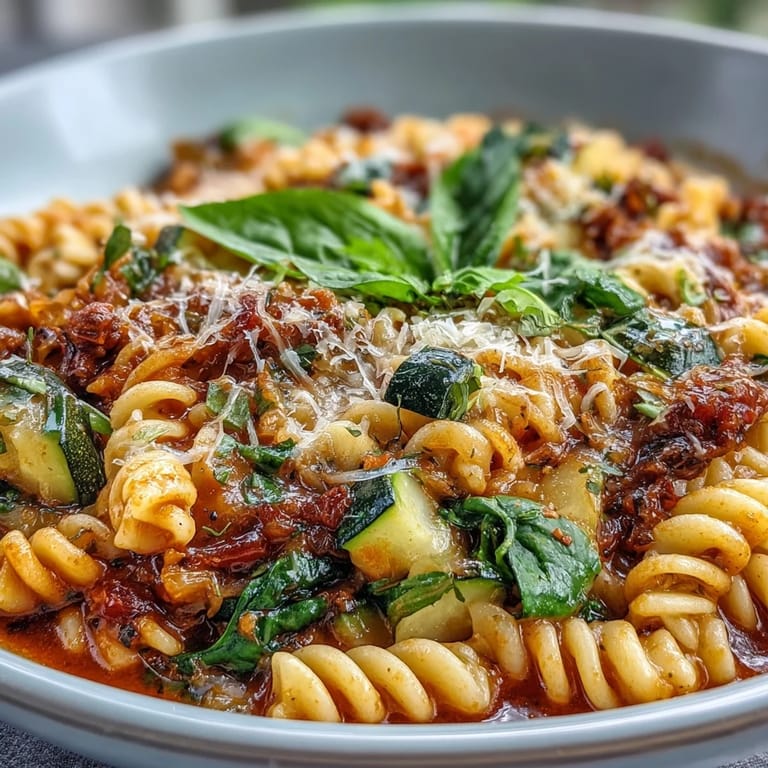
 This is the recipe I reach for when I'm tired, when money's tight, when I have twenty minutes and zero energy, or when I want to feed people something that tastes like you actually tried without any of the fuss. It's become the kind of dish that disappears quietly from the table, the kind people ask you to make again.
Recipe FAQs
- → Can I use a different type of pasta?
Yes, fusilli or other similar dried pasta shapes work well. Whole-wheat or gluten-free options can be substituted as preferred.
- → How do I add protein to this dish?
Include sliced cooked sausage, shredded rotisserie chicken, or canned beans during the cooking process for extra protein.
- → What can I use instead of Parmesan cheese?
For dairy-free alternatives, omit Parmesan or use a plant-based cheese substitute. Nutritional yeast can also add a savory flavor.
- → Can I change the vegetables used?
Absolutely! Mushrooms, peas, carrots, or other seasonal vegetables can be swapped in based on availability and preference.
- → How can I make this dish spicier?
Increase chili flakes or add fresh diced chili peppers while sautéing the onion and garlic to enhance heat.