 Save to Pinterest
 My grandmother's kitchen smelled like black currants every July, when she'd spend an entire afternoon coaxing that deep purple juice from tiny berries. She never measured anything by weight, just by feel and instinct, but when I finally decided to learn her method properly, I discovered the magic wasn't in shortcuts—it was in patience and the willingness to let gravity do the work. That first batch I made myself, I got impatient and pressed the fruit through the sieve, which turned my crystal-clear jelly murky. Now I know better.
Years later, I made this jelly for a dinner party where a friend brought homemade sourdough, and we spread it on warm toast while the bread was still steaming. That simple moment—the jelly melting slightly into the nooks and crannies, the tartness cutting through the buttery bread—made me understand why my grandmother never abandoned this recipe for anything fancier. It was never about impressing; it was about creating something small and perfect.
Ingredients
- Fresh black currants (1 kg): These little dark berries are packed with natural pectin, which is what makes the jelly set—use ripe ones, not underripe, and don't skip the rinsing because grit ruins everything.
- Water (250 ml): Just enough to help the fruit release its juice without diluting the flavor, so resist the urge to add more.
- Granulated sugar (800 g): The ratio matters here; too little and it won't set properly, too much and you've made candy instead of jelly.
- Lemon juice (2 tbsp): This brightens the deep, sometimes flat flavor of black currants and helps activate the pectin's gelling power.
Tired of Takeout? 🥡
Get 10 meals you can make faster than delivery arrives. Seriously.
One email. No spam. Unsubscribe anytime.
Instructions
- Start with clean berries:
- Rinse your black currants under cool water and pick off any stems or leaves—this takes a few minutes but saves you from gritty jelly later. Pat them dry with a soft cloth if you're feeling meticulous.
- Coax out the juice:
- Combine the currants and water in a heavy-bottomed saucepan and bring to a gentle simmer over medium heat. As it warms, the berries will start releasing their juice, turning the liquid a deep purple. Stir and mash them occasionally for about 15 to 20 minutes until they're completely soft and falling apart.
- Let gravity work its magic:
- Pour your cooked fruit into a fine-mesh sieve or jelly bag suspended over a bowl and walk away—this is the hardest part, but it's non-negotiable if you want clear jelly. Leave it to drain for at least 2 hours, longer if you can manage overnight in the refrigerator. Do not press or squeeze.
- Measure and balance:
- Once you've collected your juice, measure it carefully. You should have roughly 700 to 750 ml; for every cup of juice, you'll use 1 cup of sugar. This ratio is your foundation.
- Dissolve gently:
- Pour the juice back into a clean saucepan with the sugar and lemon juice. Stir constantly over low heat until every granule of sugar has dissolved completely—this prevents crystallization later. You'll see the mixture go from grainy to glossy and smooth.
- Reach the rolling boil:
- Turn the heat up and let it boil hard and fast for 10 to 12 minutes, watching for the moment it reaches 105°C (221°F) on a candy thermometer, or when a small spoonful dropped onto a cold plate wrinkles when you push it. This is the setting point, and it's the difference between jelly and syrup.
- Finish and jar:
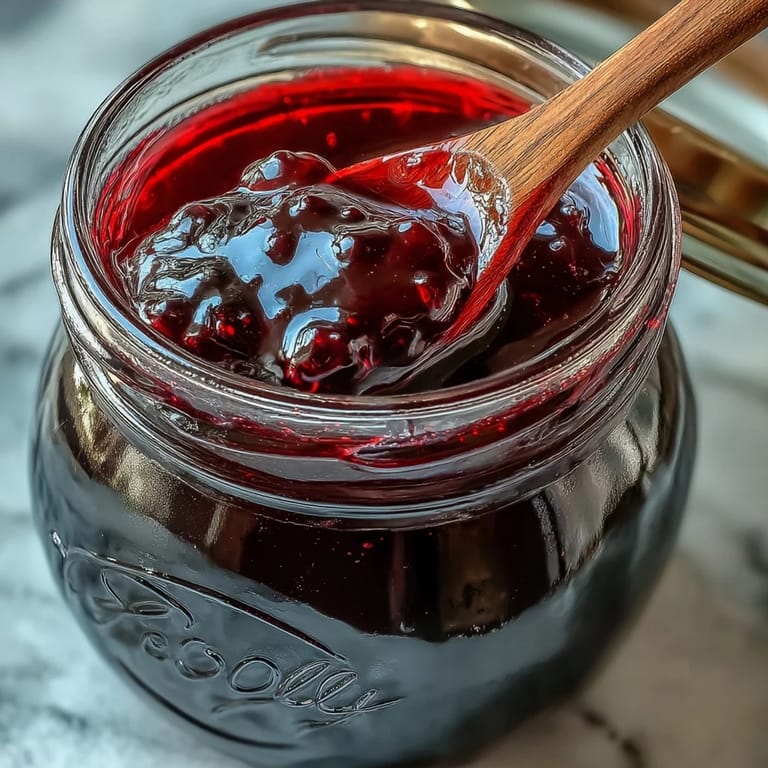
- Remove from heat and skim away any foam with a clean spoon. Using a ladle, carefully pour the hot jelly into sterilized jars, leaving about half a centimeter of headspace, and seal immediately while everything is still hot. The lids will pop as they cool, which is satisfying and also a sign you've done it right.
 Save to Pinterest
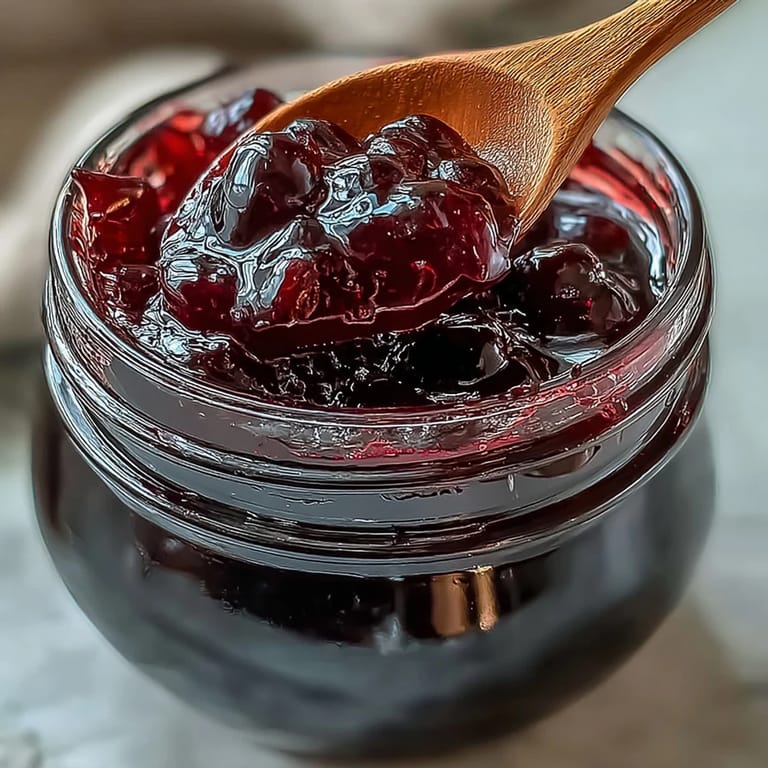
 There's a moment when you pour that first jar and hear it seal as it cools—a small pop that sounds like a tiny promise. You've made something that will last, that will taste like this specific July for months to come, and that's a kind of alchemy that never gets old.
The Science Behind the Set
Black currants are naturally high in pectin, which is why this recipe works so well without added thickeners. The pectin molecules need three things to gel properly: fruit, sugar, and acid, and you're providing all three. When you boil the mixture hard and fast, you're not just cooking it—you're concentrating everything and creating the right molecular conditions for that beautiful firm set that spreads thickly on toast without being rubbery.
Beyond Toast
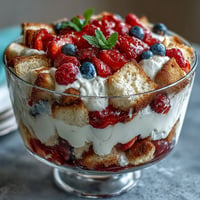
This jelly is surprisingly versatile once you stop thinking of it as just a breakfast spread. I've glazed fruit tarts with it, stirred it into softened cream cheese for a quick appetizer with crackers, and swirled it into plain yogurt for something that tastes like a dessert. It's also beautiful between the layers of a vanilla sponge cake, where its tartness prevents the whole thing from becoming cloying.
Storage and Second Life
Unopened jars will keep in a cool, dark place for up to a year, though honestly they rarely last that long in my house. Once opened, store in the refrigerator and use within three weeks, but the real magic happens when you give a jar as a gift and watch someone's face when they taste something you made with your own hands.
- If you notice mold on the surface of an opened jar, discard the entire thing immediately rather than trying to salvage it.
- Sterilize your jars properly by running them through the dishwasher on the hottest cycle or boiling them for 10 minutes before use.
- Write the date on the lid with a permanent marker so you'll actually remember when you made it.
 Save to Pinterest
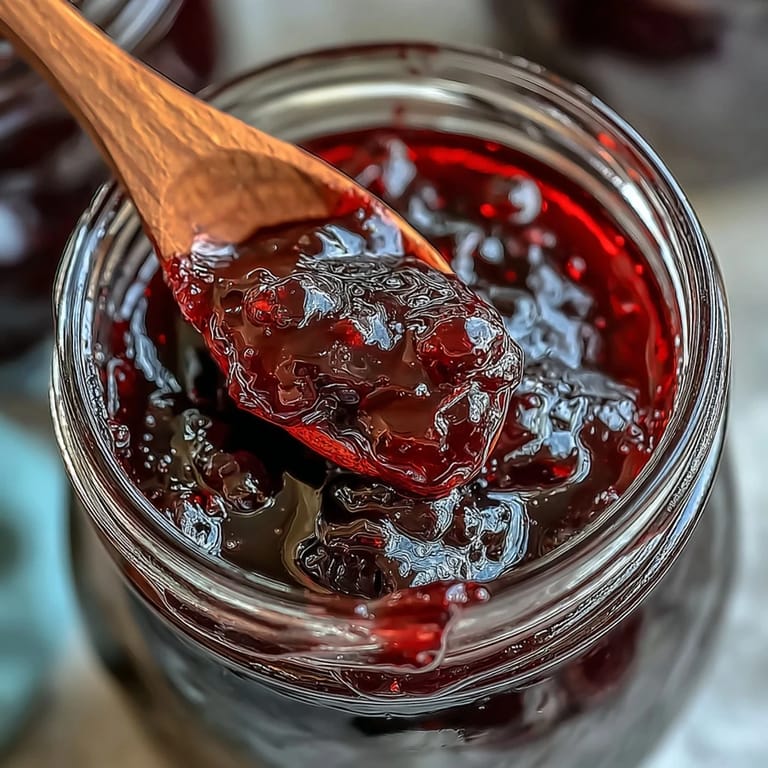
 Making jelly is one of those old-fashioned skills that feels revolutionary when you actually do it, turning a simple fruit into something that transforms breakfast forever. There's real satisfaction in that jar.
Recipe FAQs
- → What is the best way to ensure clarity in black currant spread?
Strain the cooked fruit juice without pressing, ideally letting it drain slowly in a fine-mesh sieve or jelly bag for several hours to remove solids and maintain clarity.
- → How can I check if the spread has set properly?
The spread reaches the right consistency when it passes the wrinkle test on a cold plate, or when it reaches about 105°C (221°F) on a candy thermometer.
- → Can I add pectin to achieve a firmer set?
Yes, adding a small amount of commercial pectin according to package instructions is helpful if currants are very ripe or low in natural pectin.
- → How should I store the spread after preparation?
Store sealed jars in a cool, dark place. Once opened, keep refrigerated and consume within three weeks for best quality.
- → What foods pair well with this black currant spread?
It complements soft cheeses, yogurt, pastries, and can be used as a glaze or filling in desserts for added fruity depth.