 Save to Pinterest
 There's something about the way blueberries catch the light on a winter plate that made me fall for this salad. I was rummaging through my fridge one chilly afternoon, staring at a carton of berries and some chicken, when I realized that sweet and savory could be the answer to feeling like spring despite the gray weather outside. The goat cheese was almost an accident—a last-minute addition that somehow made everything click together in the most unexpected way.
I made this for a friend who'd been having a rough week, and watching her face light up when she tasted it was worth every minute in the kitchen. She kept asking what was in it, convinced there was some secret ingredient I wasn't telling her. The truth was simpler—just good ingredients treated with a little care, the way cooking should be.
Ingredients
- Boneless, skinless chicken breasts (2): Lean protein that soaks up seasoning beautifully and cooks quickly without drying out if you don't overcook it.
- Olive oil (1 tablespoon for chicken, 1/4 cup for dressing): The good stuff matters here—it's the bridge between flavors, so use extra-virgin for the dressing.
- Salt and black pepper: These aren't afterthoughts; they're how you tell the chicken it's worth paying attention to.
- Mixed greens (6 cups): Arugula, spinach, and baby kale work together—the peppery notes play beautifully with everything else on the plate.
- Fresh blueberries (1 cup): They're the surprise that makes people pause mid-bite, so use ones that actually taste like something.
- Red onion (1/2 small), thinly sliced: A little sharpness cuts through the richness of the goat cheese and keeps your palate awake.
- Walnuts (1/2 cup), roughly chopped: Toast them lightly if you have time; it wakes up their nutty flavor and adds a satisfying crunch.
- Goat cheese (4 oz), crumbled: The creamy element that makes this salad feel indulgent without being heavy.
- Balsamic vinegar (2 tablespoons): Aged is better, and a little goes a long way in building depth.
- Honey (1 tablespoon): Just enough to soften the vinegar's edge without making it sweet.
- Dijon mustard (1 teaspoon): An emulsifier that helps everything come together and adds a subtle kick.
- Balsamic glaze (2 tablespoons): The finishing touch that makes people think you're more of a cook than you probably are.
Tired of Takeout? 🥡
Get 10 meals you can make faster than delivery arrives. Seriously.
One email. No spam. Unsubscribe anytime.
Instructions
- Get your pan hot and ready:
- Heat a grill pan or skillet over medium-high heat until a drop of water dances across the surface. This matters because you want that chicken to sizzle the moment it touches down, creating a golden crust while the inside stays tender.
- Season and sear the chicken:
- Brush your chicken breasts with olive oil and season generously with salt and pepper on both sides. Cook for 6 to 7 minutes per side, listening for that satisfying sizzle, until the internal temperature hits 165°F or the juices run clear when you pierce the thickest part.
- Let it rest:
- This is the step people skip and immediately regret. Remove the chicken to a cutting board and let it sit for 5 minutes so the juices settle back into the meat instead of running all over your plate.
- Make the dressing:
- While the chicken rests, whisk together olive oil, balsamic vinegar, honey, Dijon mustard, salt, and pepper in a small bowl. Taste it—if it makes you pucker, you need more honey; if it's too sweet, a pinch more vinegar fixes it.
- Build your salad:
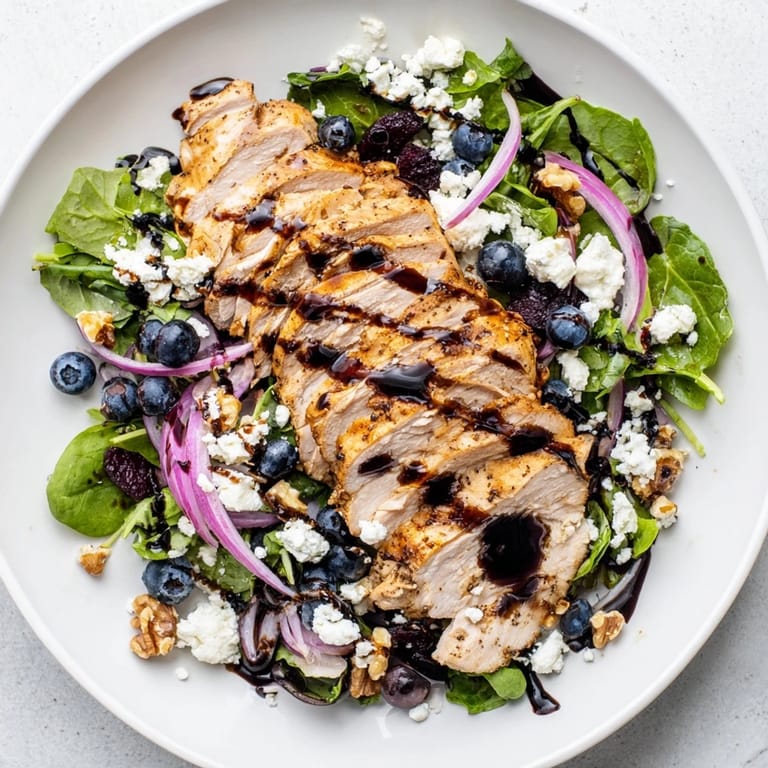
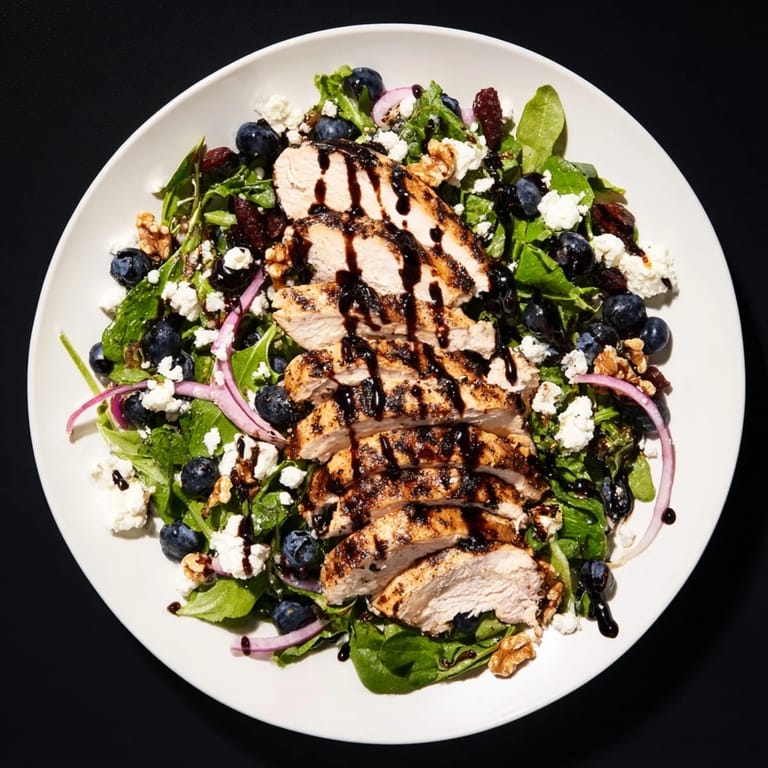
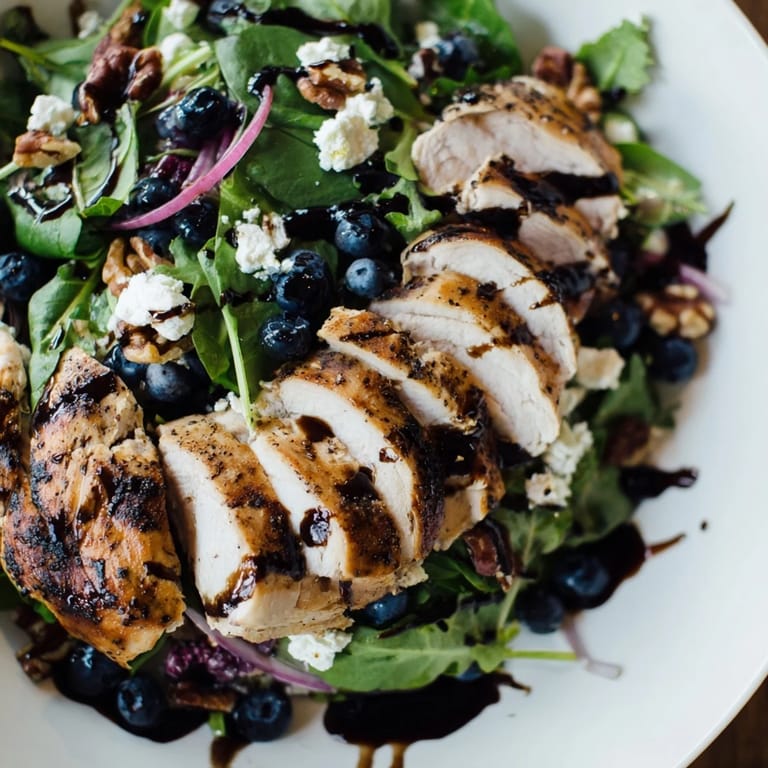
- Arrange the mixed greens on a platter or individual plates, then scatter blueberries, red onion slivers, walnuts, and goat cheese across the top like you're painting rather than assembling.
- Slice and place the chicken:
- Cut the rested chicken into thin, bite-sized pieces and nestle them among the greens, distributing them so every forkful gets some protein.
- Dress and finish:
- Drizzle the dressing evenly across everything, then finish with a generous pour of balsamic glaze in a thin stream across the top. This glaze is what makes people stop and ask for the recipe.
 Save to Pinterest
 There was a moment when my sister tried this salad and said, "This is fancy," with genuine surprise in her voice, and I realized that good food isn't about complexity—it's about paying attention to details. That feeling of someone discovering something beautiful because you cared enough to do it right, that's the real magic happening on the plate.
Why Blueberries and Goat Cheese Are a Revelation
The first time I combined these two, I was skeptical. Sweet berries and tangy cheese seemed like they belonged in different sentences, let alone on the same plate. But that's exactly why it works—the blueberries soften the goat cheese's intensity while the cheese adds a richness that keeps the berries from feeling too simple. It's one of those flavor combinations that teaches you something about cooking, that opposites really do create something greater than either ingredient alone.
Timing and Prep Strategy
This salad is genuinely fast, but it rewards a little planning. Slice your onion and chop your walnuts while the pan heats, so when the chicken comes off the heat, you're just minutes away from eating. The greens can be washed and dried ahead of time, and honestly, everything tastes better when you're not rushing through assembly while the chicken gets cold.
Variations and Swaps That Work
I've made this with pecans instead of walnuts on nights when I was out of the latter, and it shifts the whole flavor profile in a quieter direction. Feta crumbles in for the goat cheese work beautifully if that's what you have, though you'll lose some of that delicate creaminess. Even a quick marinate of the chicken in lemon juice and thyme for 30 minutes before cooking elevates it to something that feels even more intentional.
- Swap pecans for walnuts if you prefer a softer, sweeter nutty flavor.
- Try fresh raspberries mixed with blueberries for a more complex berry profile.
- Add a handful of fresh herbs like mint or basil just before serving for a brightness that surprises.
 Save to Pinterest
 This salad has quietly become one of those dishes I return to when I want to feel like I'm taking care of myself without any fuss. It's become the thing I know how to make beautifully, the kind of meal that reminds you that the best cooking is often the simplest.
Recipe FAQs
- → How should the chicken be cooked for best results?
Grill or sear the chicken breasts over medium-high heat for about 6–7 minutes per side until cooked through, then let rest before slicing thinly to retain juiciness.
- → Can walnuts be substituted?
Yes, pecans make a great alternative, offering a similar crunchy texture and rich flavor.
- → Is there a way to add more flavor to the chicken?
Marinate the chicken for 30 minutes in olive oil, lemon juice, and herbs before cooking to enhance the taste.
- → What greens work best for this salad?
A mix of arugula, spinach, and baby kale provides a fresh, slightly peppery base that complements the other ingredients well.
- → How is the balsamic glaze used in this dish?
Drizzle the balsamic glaze over the assembled salad last for a tangy-sweet finish that enhances all the flavors.
- → Are there any common allergens in this dish?
This dish contains dairy from goat cheese and tree nuts from walnuts; check labels for any additional gluten or allergens in balsamic glaze or mustard.