 Save to Pinterest
 There's something almost meditative about watching rice hit a hot skillet—that first sizzle when cold grains meet oil, the way they begin to toast and contract. I discovered this bowl during a lazy weekend when I had leftover jasmine rice and two eggs, nothing else that felt exciting. What started as improvisation became something I crave now, crispy on the outside, tender within, topped with a runny yolk that binds everything together like liquid gold.
I made this for a friend who'd just moved in next door, armed with a skillet and whatever vegetables were in my crisper drawer. She stood at my kitchen counter listening to that rice crackle and pop, and by the time I slid the fried eggs on top, she was already asking for the recipe. That's when I realized this wasn't just a quick meal—it was something shareable, something that made people feel welcomed.
Ingredients
- Cold cooked rice (2 cups, preferably day-old): Day-old rice is essential because moisture makes it steam instead of crisp; if you only have fresh rice, spread it on a plate to cool completely before using it.
- Large eggs (2): Size matters here—larger eggs give you more of that liquid center that makes the whole bowl come alive.
- Carrot, julienned (1 small): The thinness matters; it should be barely thicker than a thread so it adds crunch without overwhelming texture.
- Cucumber, thinly sliced (1 small): This brings freshness and prevents the bowl from feeling heavy, a balance I learned through trial and error.
- Scallions, sliced (2): The white and green parts offer different things—use both for layers of onion flavor that build as you eat.
- Toasted sesame seeds (1 tablespoon): Toasting them yourself makes a noticeable difference in depth, though store-bought toasted seeds work fine in a pinch.
- Soy sauce (2 tablespoons): Use good soy sauce here, not the ultra-salty kind; it's small enough that quality registers.
- Rice vinegar (1 tablespoon): This is the brightness that keeps the bowl from tasting one-note.
- Sesame oil (1 teaspoon): A little goes a long way; this is where the bowl gets its aromatic signature.
- Honey or sugar (1 teaspoon): This softens the salty-sour edges and brings balance, a trick I borrowed from Korean cooking.
- Vegetable oil for frying (2 tablespoons): You need enough to achieve those crispy, golden edges on the rice.
Tired of Takeout? 🥡
Get 10 meals you can make faster than delivery arrives. Seriously.
One email. No spam. Unsubscribe anytime.
Instructions
- Make the dressing first:
- Whisk soy sauce, rice vinegar, sesame oil, and honey in a small bowl until the honey dissolves. This takes less than a minute and tastes better when it's had even a few moments to marry together.
- Crispen the rice:
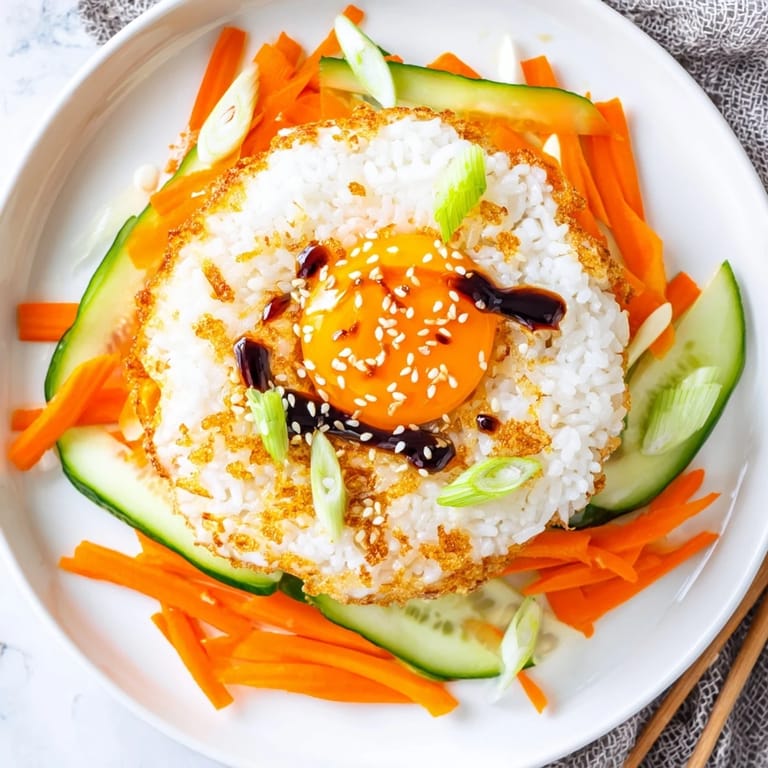
- Heat 1 tablespoon oil in your nonstick skillet over medium-high heat, add the cold rice in an even layer, and press down with the back of a spatula. Listen for that gentle crackling sound—it means the bottom is browning. Leave it alone for 5–7 minutes; resist the urge to stir.
- Decide your crisp level:
- You can flip the whole thing (it's dramatic but works if you're confident) or just stir to crisp the edges. Either way, you're looking for burnished golden rice, not burnt.
- Divide and make room for eggs:
- Transfer the rice to two serving bowls and set aside. The residual heat keeps it warm while you handle the eggs.
- Fry the eggs with intention:
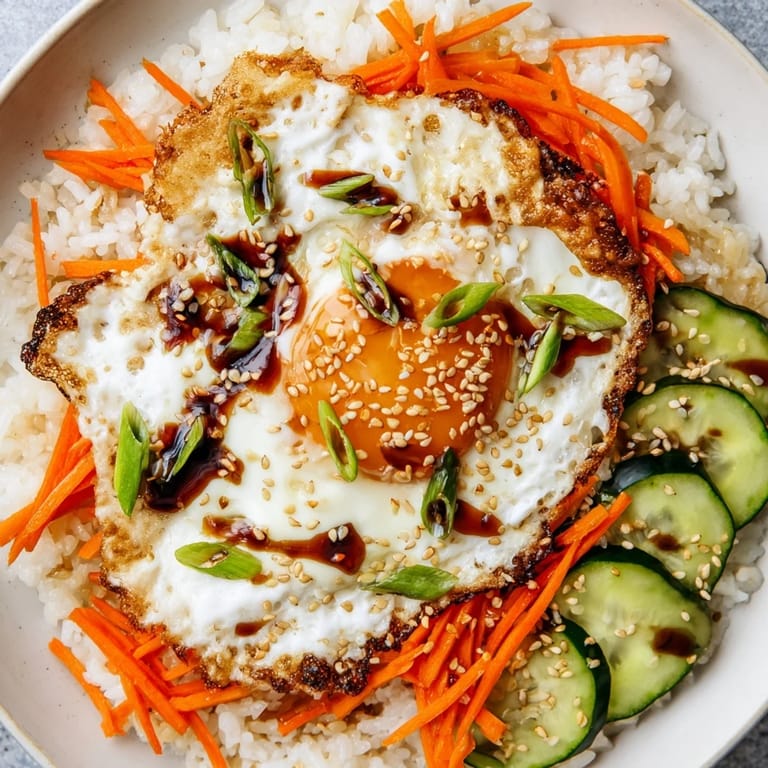
- Add the remaining oil to the skillet over medium-high heat and crack both eggs in. You want the whites to set into delicate lace-like edges while the yolks stay glossy and runny—about 2–3 minutes, but stay close and watch.
- Compose and dress:
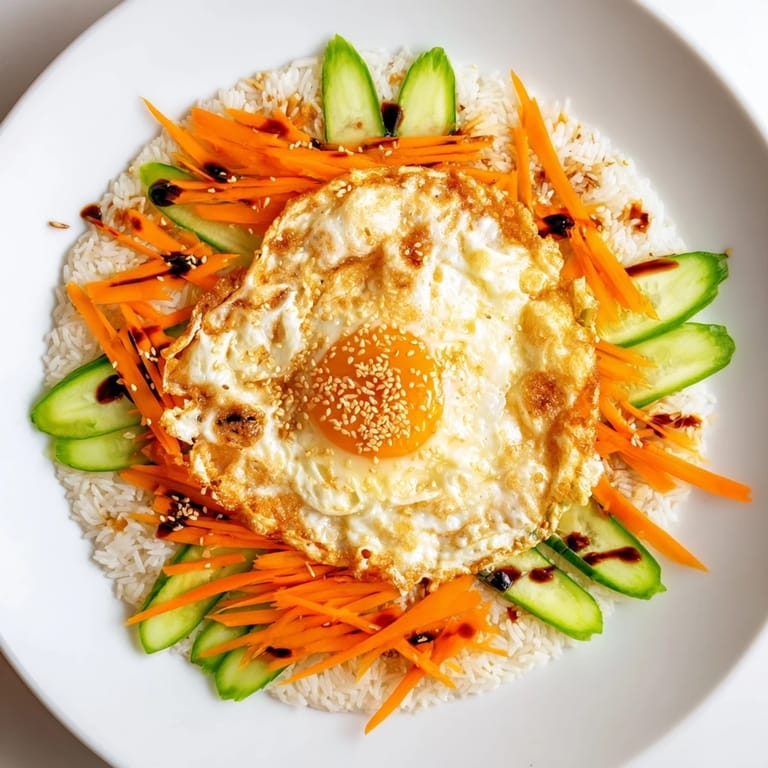
- Nestle a fried egg on top of each rice portion, arrange your vegetables around it in whatever pattern feels right, then drizzle with the soy dressing and finish with sesame seeds. The warm rice will soften the cool vegetables just enough.
 Save to Pinterest
 There was a morning I made this in my smallest skillet because I was too lazy to wash the bigger one, and somehow the eggs came out even more perfect—the edges curled and crisped against the tight sides. Funny how constraints sometimes lead to discoveries, and how something born from impatience becomes a small ritual you return to.
Why Cold Rice Changes Everything
The difference between cold and warm rice is the difference between a nonstick surface and a glue-like mess. Cold rice has had time for its moisture to stabilize; when it hits hot oil, each grain browns individually instead of clumping together. I learned this the hard way, ruining at least three batches before understanding the science, and now it's the first thing I tell anyone making this bowl.
The Runny Yolk as Binding Agent
When you break that yolk into the warm rice, it becomes a sauce—creamy, rich, and it coats every grain with golden richness. This is why serving immediately matters; you want the rice still warm enough to slightly cook that yolk while keeping its liquid center intact. It's the opposite of scrambled eggs; here, the white is set and crispy while the yolk remains almost raw, a contradiction that somehow works perfectly.
Vegetables as Balance and Texture
The carrot and cucumber aren't just garnish—they're your palette cleanser, the cool contrast that keeps this from feeling heavy. I tried versions without them once and kept feeling like something was missing, a brightness that the richness of the egg and oil needed. Fresh vegetables also give you something to do with your chopsticks, a rhythm to eating that feels intentional rather than rushed.
- Slice vegetables thin enough that they don't require chewing, letting you focus on mixing and enjoying.
- If you have leftover vegetables from other meals, use them—roasted mushrooms, steamed broccoli, or blanched snap peas all work beautifully.
- The soy dressing pulls everything together, so don't skimp on drizzling it over every component.
 Save to Pinterest
 This bowl has become my answer to hunger without complexity, comfort without fuss. It's proof that sometimes the best meals come from working with what you have and listening to the sounds your skillet makes.
Recipe FAQs
- → How do I get the rice crispy?
Use day-old, cold rice for best results. Press it firmly into a hot skillet with oil and cook undisturbed until the bottom is golden brown and crunchy.
- → Can I use other types of rice?
Yes, jasmine or white rice works well. For nuttier flavor, brown rice can be substituted but may require slightly longer cooking.
- → How should the eggs be cooked?
Fry the eggs until whites are set and edges crisped, leaving yolks runny if preferred for added texture and richness.
- → What vegetables complement this dish?
Fresh julienned carrot, thin cucumber slices, and scallions add freshness and crunch. You can also add kimchi or sautéed mushrooms for extra flavor.
- → What variations can enhance the flavor?
Try topping with sriracha or chili oil for heat, or substitute brown rice for a different texture. Avocado slices add creamy richness.