 Save to Pinterest
 My sourdough starter had been sitting neglected in the fridge for weeks, and I felt guilty every time I opened the door. One afternoon, while scrolling through my phone with a cup of coffee, I stumbled on the idea of using discard in brownies instead of letting it go to waste. The concept sounded odd at first—tang in chocolate?—but something about it made sense. That evening, I pulled out my mixing bowl and discovered that the subtle sourness didn't compete with the chocolate at all; it deepened it, made it richer somehow, like a secret ingredient no one could quite name.
I made these for my neighbor who'd been dropping off fresh bread from her sourdough starter every other week, a quiet generosity I wanted to repay somehow. When she tasted one and her eyes widened, then softed, I knew something had clicked. She asked for the recipe but I told her to just visit my kitchen next time—some things are better learned side by side with someone who cares.
Ingredients
- Dark chocolate (60–70% cocoa), chopped: The higher cocoa percentage keeps these from tasting one-dimensional sweet; if you grab something milder, you'll lose that sophisticated depth that makes people pause between bites.
- Unsalted butter and neutral oil: The combo of butter and oil creates a tender crumb that melts on your tongue rather than sitting dense—butter alone tends to make brownies cake-like as they cool.
- Granulated and brown sugar: Brown sugar brings moisture and a subtle molasses note that pairs beautifully with the sourdough tang; white sugar alone makes them taste flat.
- Sourdough discard: Unfed discard works best because it's thinner and incorporates more smoothly than fed starter; the acidity is what you're after here, not the leavening power.
- Dutch-process cocoa powder: This stuff is worth seeking out because it's less acidic than natural cocoa, which actually lets the sourdough's tang sing instead of creating competing sourness.
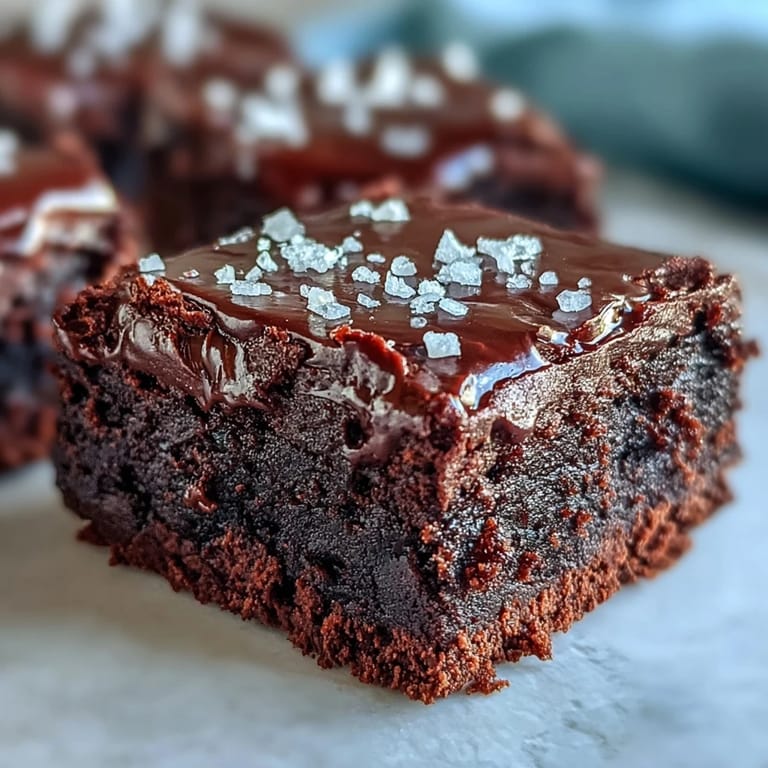
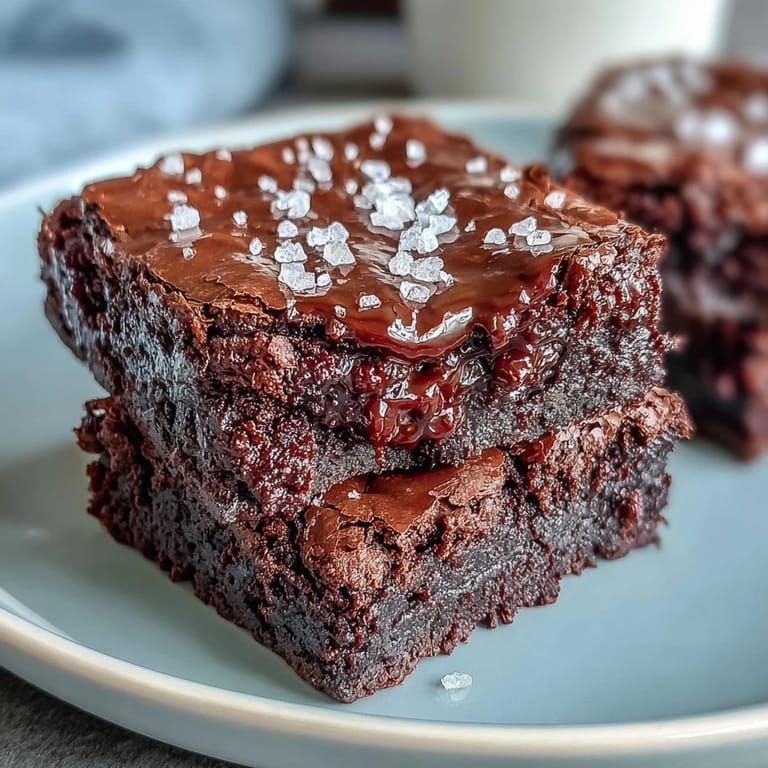
- Flaky sea salt for topping: It's the punctuation mark that makes these special—regular table salt dissolves and disappears, but flakes stay crisp and give you texture.
Tired of Takeout? 🥡
Get 10 meals you can make faster than delivery arrives. Seriously.
One email. No spam. Unsubscribe anytime.
Instructions
- Heat your chocolate and butter together:
- Set your heatproof bowl over barely simmering water and let the steam do the work—don't rush this or let it get too hot, or you'll end up with grainy chocolate that never quite comes back together. Once it's smooth and glossy, whisk in the oil off heat so you know exactly when to stop.
- Whisk in your sugars until glossy:
- This takes maybe a minute of actual work, but it matters because you're incorporating air and beginning to emulsify everything. You'll see the mixture go from loose to shiny and thick, which is your signal you're on the right track.
- Add eggs one at a time with vigor:
- This is where most home bakers rush, but don't—after each egg goes in, whisk hard for a full minute until the mixture looks thick and pale and holds a ribbon when you lift the whisk. This creates structure that makes brownies fudgy instead of cakey.
- Fold in the sourdough discard and vanilla:
- Stir it in gently until you don't see streaks anymore; the sourdough is already loose, so it'll incorporate faster than you'd expect. This is where you finally get to smell that subtle tang coming alive.
- Sift and fold the dry ingredients:
- Sifting isn't fancy—it just prevents lumps of cocoa powder from hiding in the batter and creating grittiness. Fold gently with a spatula and stop as soon as you don't see dry flour; overmixing tightens the gluten and gives you cake instead of fudge.
- Bake until the edges are set but the center jiggles slightly:
- At 28–32 minutes, the edges should feel firm and the center should give just a little when you gently shake the pan. A toothpick pulled from the very center should have moist crumbs clinging to it, not wet batter.
 Save to Pinterest
 My daughter came home from school one day and found the kitchen smelling like chocolate and caramel, the brownies cooling on the rack. She broke off a corner piece before I could even cut them properly, took one bite with the sea salt still catching the light, and didn't say a word—just looked at me with that expression that meant she'd tasted something worth remembering. Those moments are why I keep baking.
The Sourdough Secret
Using sourdough discard feels like alchemy because you're taking something you were about to throw away and transforming it into something the opposite of waste. The fermentation that happened in your starter—the slow breakdown of flour and growth of wild yeast—leaves behind acids and complexity that regular batter just doesn't have. When that tang meets chocolate, it doesn't make the brownies taste sour; it makes them taste more intensely, more honestly chocolate.
Texture That Matters
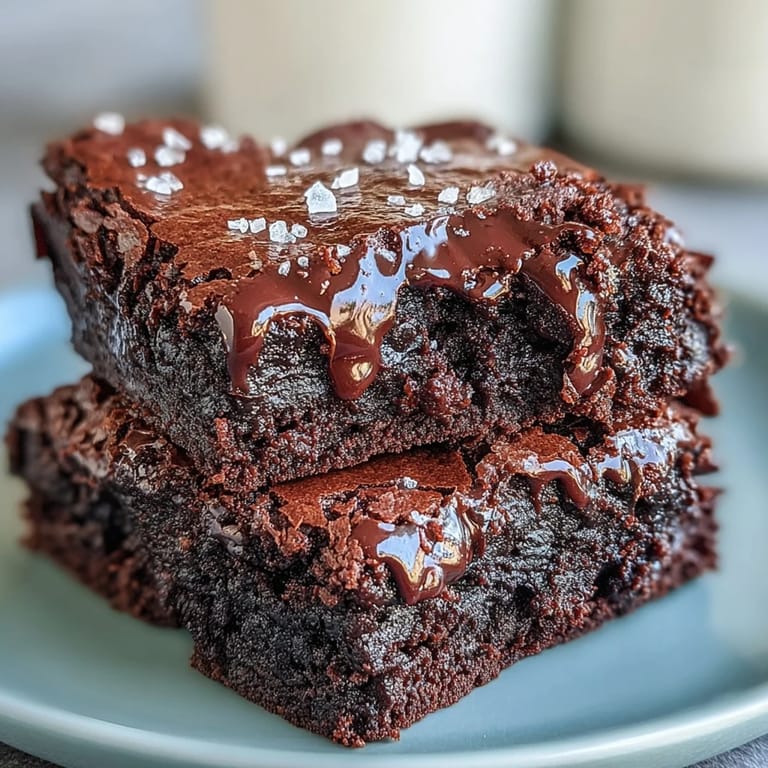
The reason these brownies are so fudgy comes down to respecting moisture and fat, not overthinking things. The sourdough discard adds liquid in a way that's different from water or milk—it has structure from the fermentation, so it doesn't make the batter loose or greasy. Combined with the oil and butter ratio, you get a crumb that stays tender for days without becoming stale or dense, which is something most brownie recipes struggle with.
Why This Works Every Time
There's a reason these brownies feel foolproof once you understand the mechanics: the chocolate and egg emulsion is forgiving, the sourdough discard is naturally stable, and the baking time window is wide enough that you don't need a thermometer to get it right. The most common mistake is opening the oven door too early and letting the temperature drop, which stalls the baking and gives you dense brownies instead of fudgy ones.
- Trust your senses—if the kitchen smells intensely of chocolate and the edges look set and slightly pulling away from the pan, you're almost certainly done.
- Let them cool completely in the pan on the rack so they firm up properly and cut cleanly without crumbling.
- Cut with a hot, wet knife wiped clean between cuts for the most elegant presentation and the least mess.
 Save to Pinterest
 These brownies have a way of disappearing from the cooling rack faster than you'd expect, and I think that's the highest compliment a dessert can receive. They're the kind of thing that makes your kitchen feel like the best place to be.
Recipe FAQs
- → What does sourdough discard add to brownies?
Sourdough discard contributes a subtle tang and enhances the depth of flavor, creating a more complex taste profile.
- → How is the sea salt used in these brownies?
Flaky sea salt is sprinkled on top before baking to add a precise sweet-salty contrast and a slight crunch.
- → Can I use a different type of chocolate?
Yes, dark chocolate with 60–70% cocoa is recommended for richness, but bittersweet or semi-sweet can also work.
- → Why fold the dry ingredients gently?
Gently folding prevents overmixing, which keeps the brownies tender and helps maintain their fudgy texture.
- → What is the best way to check doneness?
Insert a toothpick near the edges; it should come out with moist crumbs, indicating a soft center and perfectly baked edges.