 Save to Pinterest
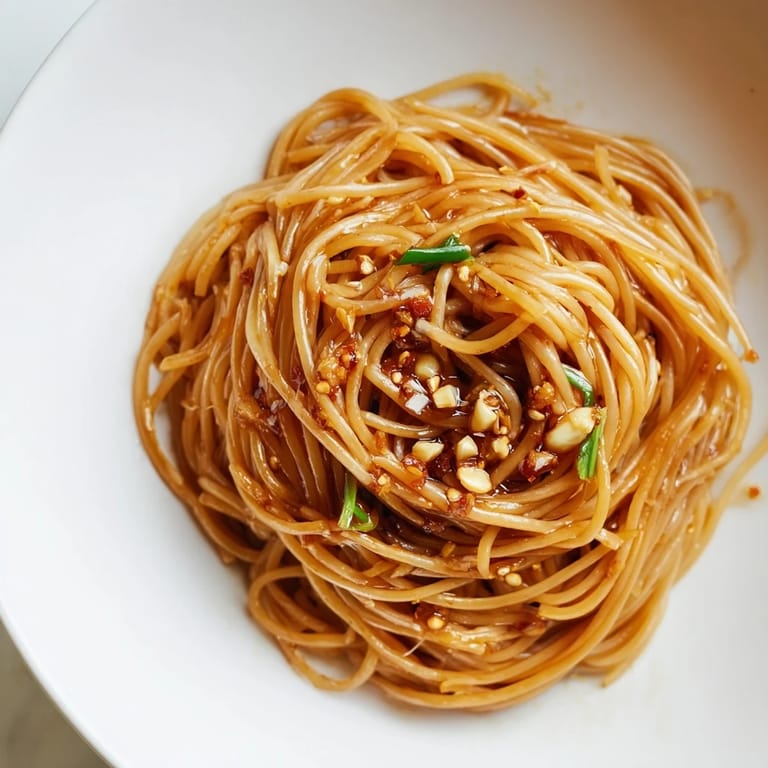
 There's a particular kind of magic that happens when hot oil hits a bowl of fragrant spices—that sudden sizzle, the way the kitchen fills with warmth and complexity in an instant. I discovered garlic chili oil noodles on a quiet weeknight when I was tired of overthinking dinner, and I wanted something that would taste bold without demanding hours of my attention. The first bite was electric, the kind that makes you pause and really taste what's in front of you. It's become the recipe I return to when I need to feel fed, not just full.
I made this for a friend who was going through a rough season, and watching their face light up at the first twirl of noodles reminded me why I love cooking in the first place. It wasn't fancy or complicated, just honest food that said, 'I'm glad you're here.' They asked for the recipe that same night.
Ingredients
- Wheat noodles (200 g): Chinese wheat noodles or linguine work equally well; the chewiness matters more than the exact type, and don't skip saving that starchy cooking water—it's liquid gold for binding everything together.
- Garlic (4 cloves): Mince it finely so it distributes evenly through the oil and creates those little flavor pockets throughout each bite.
- Scallions (2, white and green parts separated): The white parts bloom in the hot oil while the green tops add a fresh finish, so keep them separate until the very end.
- Toasted sesame seeds (1 tablespoon): These add a nutty texture and visual appeal; toasting them yourself if you have the time deepens their flavor considerably.
- Chili flakes (2½ tablespoons): Sichuan or Korean varieties give different heat signatures—Sichuan brings that tingling numbness while Korean chili has a slightly sweeter, fruitier burn.
- Sichuan peppercorns (½ teaspoon, optional): These create that distinctive mouth-numbing sensation; skip them if you want straightforward heat instead of complexity.
- Ground white pepper (¼ teaspoon): White pepper adds a sharper bite than black and won't speckle the oil with visible flakes.
- Sugar and salt (½ teaspoon each): These balance the heat and bind all the flavors together—don't skip the sugar, it rounds out the spice in surprising ways.
- Neutral oil (3 tablespoons): Canola, sunflower, or grapeseed work best because they won't impart their own flavor and will heat evenly.
- Light soy sauce (1½ tablespoons): This is your savory backbone; use quality soy sauce if you can, it makes a noticeable difference.
- Chinese black vinegar (1 tablespoon): Chinkiang vinegar has a deep, almost malty quality that regular vinegar can't replicate—it's worth seeking out.
- Dark soy sauce (1 teaspoon, optional): Adds color and a touch more depth if you want the noodles darker and richer.
- Toasted sesame oil (½ teaspoon): A small amount is all you need; this oil is potent and aromatic, so restraint is key.
Tired of Takeout? 🥡
Get 10 meals you can make faster than delivery arrives. Seriously.
One email. No spam. Unsubscribe anytime.
Instructions
- Boil the noodles until tender:
- Cook them according to the package directions until they have a slight chew left in them—not mushy, not crunchy. Drain them and set aside, but don't rinse them; that starch is important.
- Prepare your spice bowl:
- Combine the minced garlic, white scallion parts, chili flakes, Sichuan peppercorns if using, white pepper, sugar, salt, and sesame seeds in a heatproof bowl. Everything should be in there before the hot oil arrives.
- Heat the oil until it shimmers:
- In a small saucepan over medium-high heat, warm the neutral oil until you see it shimmer and move easily but not smoke. This takes about 2 minutes; rushing it loses the point.
- Wake up the spices with heat:
- Slowly and carefully pour the hot oil over the spice mixture—it will sizzle and fill your kitchen with a smell that makes you understand why this dish exists. Stir it all together while it's still hot so the flavors start blending.
- Mix the sauce:
- In a large bowl, whisk together the light soy sauce, black vinegar, dark soy sauce if using, and sesame oil, then add the reserved noodle cooking water. This is your binding agent, so don't skip it.
- Toss everything together:
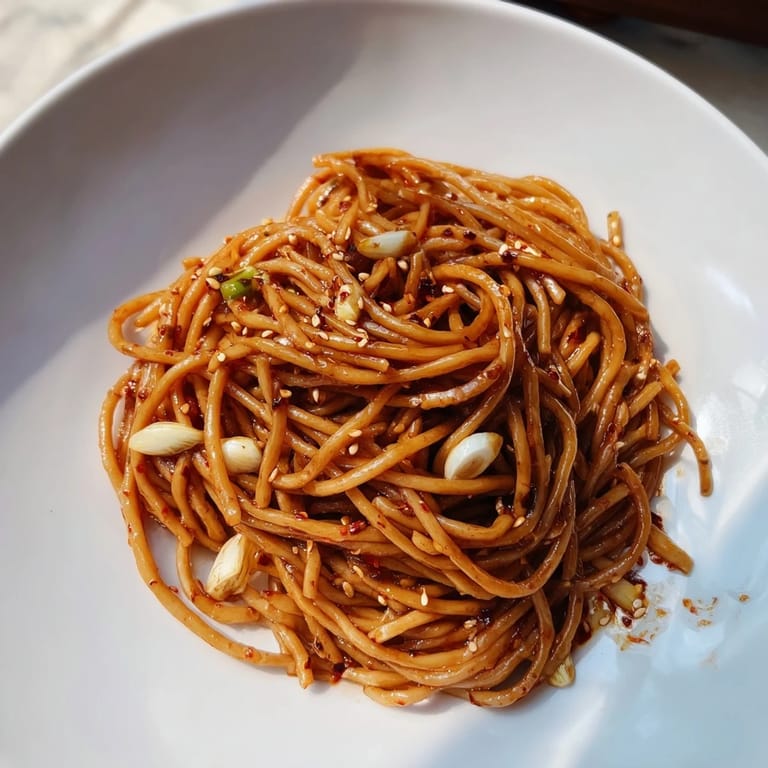
- Add the noodles to the sauce mixture, then pour the warm chili oil over top. Toss everything until every noodle is coated and glossy, about a minute of energetic tossing.
- Finish and serve:
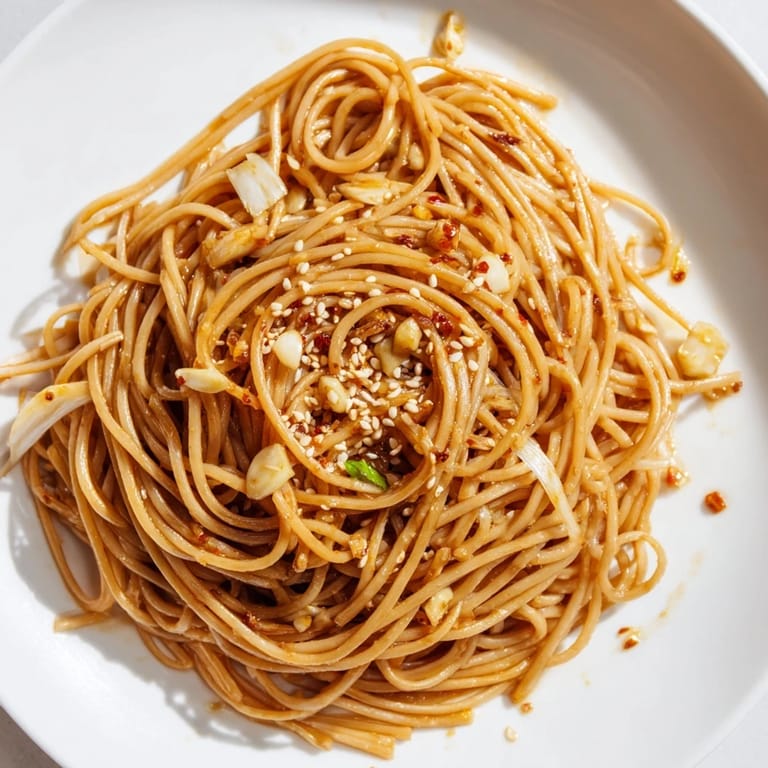
- Top with the green scallion parts and extra sesame seeds if you have them, then eat immediately while the oil is still warm and fragrant. This dish waits for no one.
 Save to Pinterest
 I've eaten these noodles standing at the kitchen counter at midnight, on park benches in summer, and in the quiet moments before a difficult conversation. There's something about the simplicity and boldness of them that makes you present, that forces you to taste and feel instead of just consuming.
Playing With Heat
The beauty of this dish is that it bends to your spice tolerance without becoming a different recipe. I've made it for people who want barely a whisper of chili and for those who chase the burn—both versions are equally valid. Start with less chili flakes than you think you need, taste it, and adjust upward rather than discovering you've gone too far. The Sichuan peppercorns add an interesting numbing quality if you want to explore that, but they're optional and honestly, the straightforward heat of plain chili flakes is satisfying on its own.
Making It a Meal
This is a complete dish on its own, but it also welcomes additions without demanding them. Sautéed vegetables like bok choy or mushrooms add substance and texture, or you can stir in some pan-seared tofu or shredded rotisserie chicken if you want more protein. I've even made it with crispy garlic chips sprinkled on top when I had the time and energy, and it was lovely but not necessary. The noodles are the star here; anything else is just there to keep them company.
Pairing and Storage
Serve this with something cold and crisp—a cold beer cuts through the richness beautifully, or jasmine tea offers a floral counterpoint. If you somehow have leftovers, they'll keep in the refrigerator for a day or two, though the oil will congeal slightly when cold and the noodles will firm up. Warm them gently if you can, stirring with a touch of extra sesame oil to revive them, but honestly, this is best eaten fresh and warm.
- The chili oil keeps separately for weeks and works on scrambled eggs, soup, or roasted vegetables.
- Make a double batch of the oil base and you'll have instant cravings solved for the week.
- Don't refrigerate the finished noodles if you can help it—they're a now-food, not a later-food.
 Save to Pinterest
 This recipe taught me that sometimes the simplest dishes carry the most pleasure, and that speed doesn't have to mean sacrifice. It's become my answer to 'what should we eat tonight' because it always delivers satisfaction.
Recipe FAQs
- → How do I adjust the spiciness of the dish?
Modify the amount of chili flakes used in the chili oil to suit your preferred heat level, adding less for milder spice or more for extra kick.
- → Can I use different types of noodles?
Yes, wheat noodles like linguine, Chinese wheat noodles, or similar types work well to hold the flavorful oil and seasonings.
- → What is the purpose of pouring hot oil over the garlic and chili mixture?
Pouring hot oil infuses the mixture with depth and aroma as it releases the flavors of the garlic, chilies, and spices, creating a fragrant chili oil.
- → Are there suggested pairings to accompany this dish?
It pairs wonderfully with crisp, cold beverages like beer or jasmine tea to balance the fiery and savory notes.
- → Can this be customized with additional ingredients?
Absolutely, adding sautéed vegetables, tofu, or shredded chicken can enhance texture and protein content for a heartier meal.