 Save to Pinterest
 Years ago, a friend handed me a bowl of this salad at a summer lunch and I couldn't stop eating it. She barely remembered where she'd learned to make it, but something about the way the cool quinoa played against warm, toasted nuts stuck with me. I've made it countless times since, each batch a little different depending on what's in the garden or what I'm craving that week. It's become one of those recipes that feels both special and effortless, like it was waiting for me to discover it.
I made this for a potluck last spring when everything felt a bit heavy and complicated, and people actually asked for the recipe instead of just eating it politely. That's when I realized this salad works because it doesn't pretend to be something it's not—it's bright, honest, and genuinely delicious.
Ingredients
- Quinoa or bulgur, 1 cup uncooked: Choose based on your mood—quinoa is fluffier and slightly nuttier, bulgur absorbs dressing faster and has a chewier texture that some people prefer.
- Water, 2 cups: Use this ratio for either grain, and don't skip rinsing the quinoa first to remove that bitter coating.
- Chickpeas, 1 can (15 oz), drained and rinsed: Rinsing them matters more than you'd think—it removes excess starch and gives you a cleaner taste.
- Cucumber, 1 large, diced: Cut it into rough pieces so they don't disappear into the other ingredients, and don't peel it if it looks fresh.
- Red onion, 1/2 small, finely chopped: The sharp bite mellows as it sits with the dressing, which is exactly what you want.
- Feta cheese, 3/4 cup crumbled: Use good feta if you can find it—the tangy, salty contrast is what makes this salad sing.
- Fresh parsley, 1/2 cup chopped: This is the backbone of the herb flavor, so don't treat it as optional.
- Fresh mint, 1/4 cup chopped: Add this right before serving or it'll bruise and turn dark; your nose will tell you when you've got the right amount.
- Pistachios or slivered almonds, 1/3 cup toasted and chopped: Toast them yourself if you have time—the difference between store-bought and fresh-toasted is honestly worth five minutes of your time.
- Extra virgin olive oil, 3 tbsp: Don't use the cooking olive oil for this, use one you'd actually taste on bread.
- Lemon juice, 2 tbsp, freshly squeezed: Bottled will work in a pinch, but fresh juice changes the entire personality of the dressing.
- Garlic, 1 clove, minced: One clove is plenty because it intensifies as it sits; you can always add more, but you can't take it back.
- Sea salt, 1/2 tsp: Taste as you go—some feta is saltier than others, so adjust accordingly.
- Black pepper, 1/4 tsp: Freshly ground, always.
Tired of Takeout? 🥡
Get 10 meals you can make faster than delivery arrives. Seriously.
One email. No spam. Unsubscribe anytime.
Instructions
- Start your grain:
- Rinse the quinoa or bulgur under cold water until the water runs clear, which removes any bitterness. Bring two cups of water to a boil in a medium saucepan, add your grain, and as soon as it returns to a boil, lower the heat to a gentle simmer, cover, and let it cook undisturbed for about twelve minutes for quinoa or fifteen for bulgur.
- Cool it down:
- Fluff the cooked grain with a fork and spread it on a plate or shallow bowl to cool faster. This prevents the warm grain from wilting your fresh herbs later, and you'll notice the difference in texture.
- Build your base:
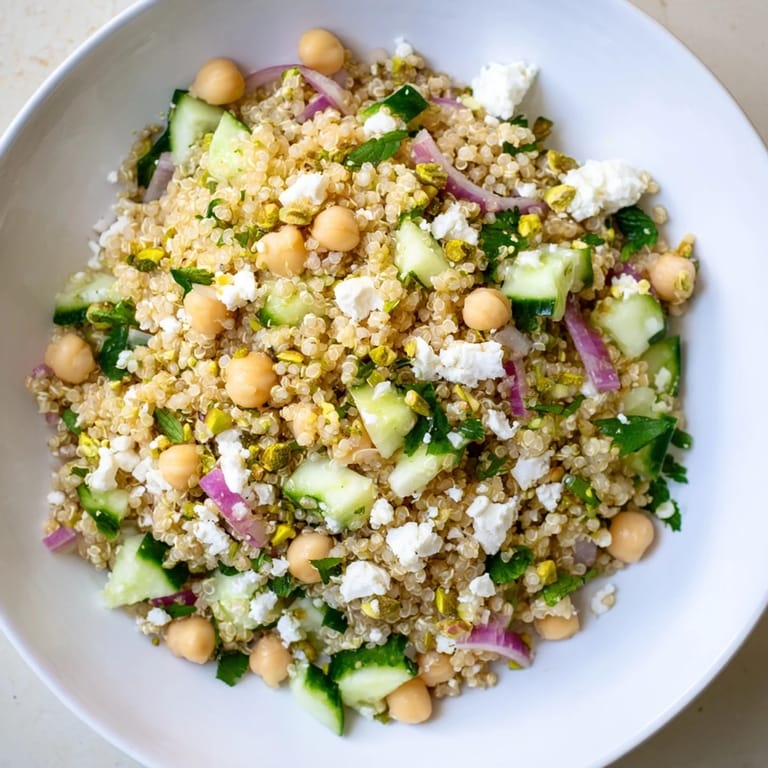
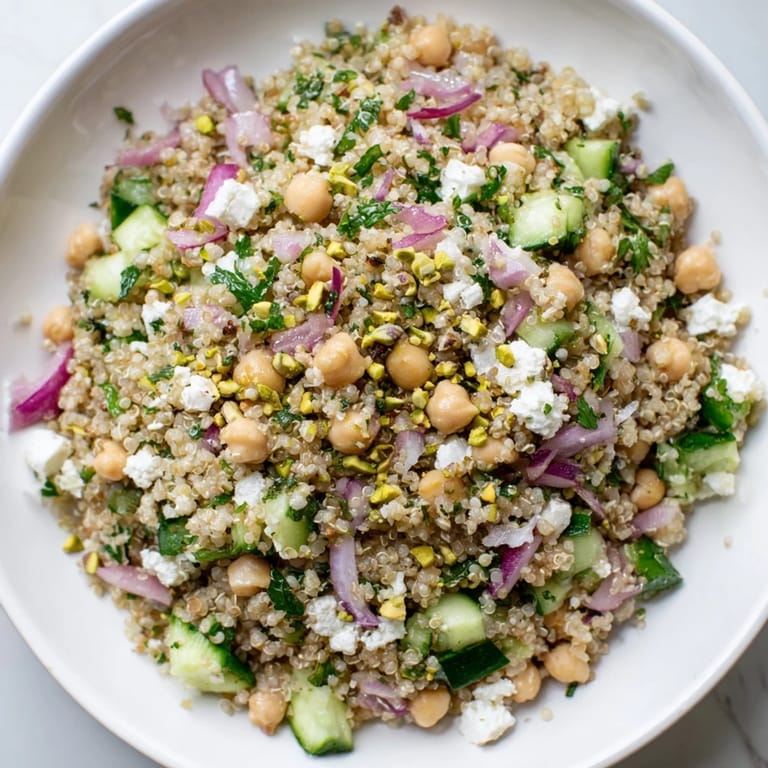
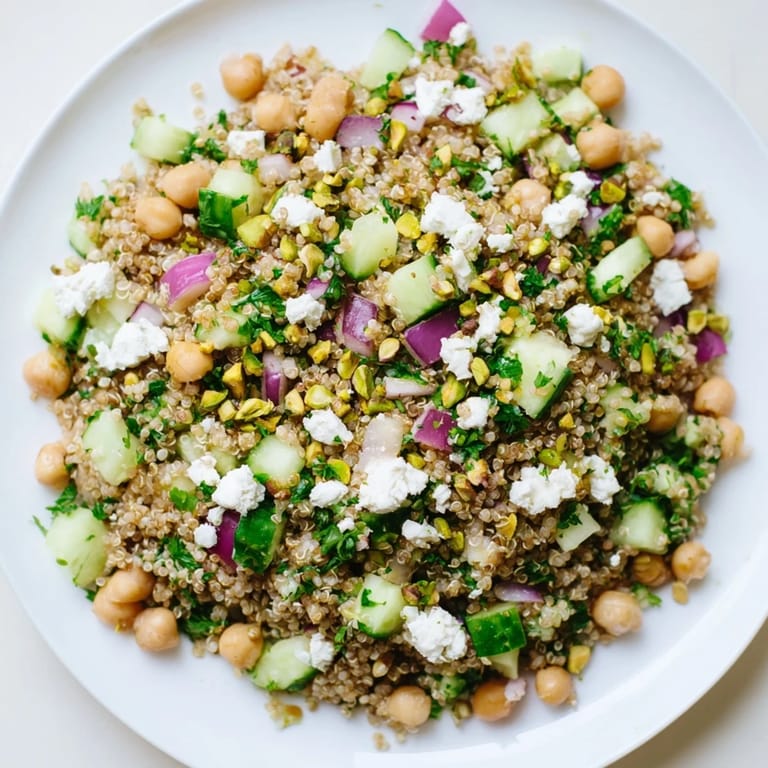
- In a large bowl, combine your cooled grain with the drained chickpeas, diced cucumber, chopped red onion, crumbled feta, parsley, and mint. Don't add the nuts yet—they stay crisp that way if you add them just before serving.
- Make the dressing:
- In a small bowl, whisk together the olive oil, fresh lemon juice, minced garlic, salt, and pepper until it feels balanced. Taste it straight from the whisk; the garlic should be noticeable but not aggressive, and the lemon should make you smile.
- Bring it together:
- Pour your dressing over the salad mixture and toss gently but thoroughly, making sure every part of the grain gets coated. Taste it now and adjust—add more salt, pepper, or lemon juice as needed.
- Finish strong:
- Scatter the toasted nuts over top just before serving, or store them separately and add them when you're ready to eat if you're making this ahead. Serve it chilled or at room temperature, depending on the season and your mood.
 Save to Pinterest
 There's something quiet and satisfying about serving this salad, the way people eat it slowly instead of rushing, the conversation that happens around it. It's become the recipe I reach for when I want to feed people well without making a fuss.
Why This Salad Works Year-Round
In summer, it's refreshing and light, the herbs tasting bright against the warm sun you've been sitting in. In winter, it feels substantial enough that you don't miss hot food, and the nuts provide that toasted warmth your body is craving. Spring brings the first fresh herbs, and fall is when you want something that tastes like it has nutrition built in. This salad doesn't change much, but somehow it always feels right for the season.
The Small Magic of Feta and Fresh Herbs
Good feta is salty and tangy in a way that makes every other ingredient taste more like itself. Add fresh herbs to that, and suddenly you're not eating a salad—you're eating something someone cared about making. The mint and parsley together create a flavor that's greater than the sum of their parts, and it's worth buying them fresh instead of using what's been in your freezer since March.
Making It Your Own
This recipe is forgiving and flexible, which is part of why it works. I've made it with avocado stirred in, with sun-dried tomatoes for a sweeter note, with walnuts when that's what I had on hand. Once you understand how the pieces fit together, you can improvise based on what's in your kitchen or what sounds good that day.
- If you want it to feel more like a main course, add grilled chicken or a poached egg on top.
- Roasted vegetables like zucchini or bell peppers make it feel like a different dish entirely.
- A dollop of Greek yogurt mixed into the dressing adds creaminess without changing what makes this salad special.
 Save to Pinterest
 This salad has taught me that the best recipes are the ones you return to without thinking, the ones that improve with repetition and feel like an old friend every time. That's what makes it worth keeping around.
Recipe FAQs
- → Can I use bulgur instead of quinoa?
Yes, bulgur works well and offers a similar texture. Cook it according to the package instructions before adding to the salad.
- → How can I make this dish vegan?
To veganize, simply omit the feta or replace it with a dairy-free cheese alternative or additional herbs for flavor.
- → What nuts can I substitute for pistachios?
Almonds, walnuts, or pecans are excellent substitutes that add different but complementary flavors and crunch.
- → Is it better served chilled or room temperature?
Both work well; chilling allows flavors to meld, while room temperature enhances the dressing’s aroma and taste.
- → Can I prepare the grains ahead of time?
Absolutely, cooking quinoa or bulgur in advance and cooling it speeds up the assembly and enhances texture.