 Save to Pinterest
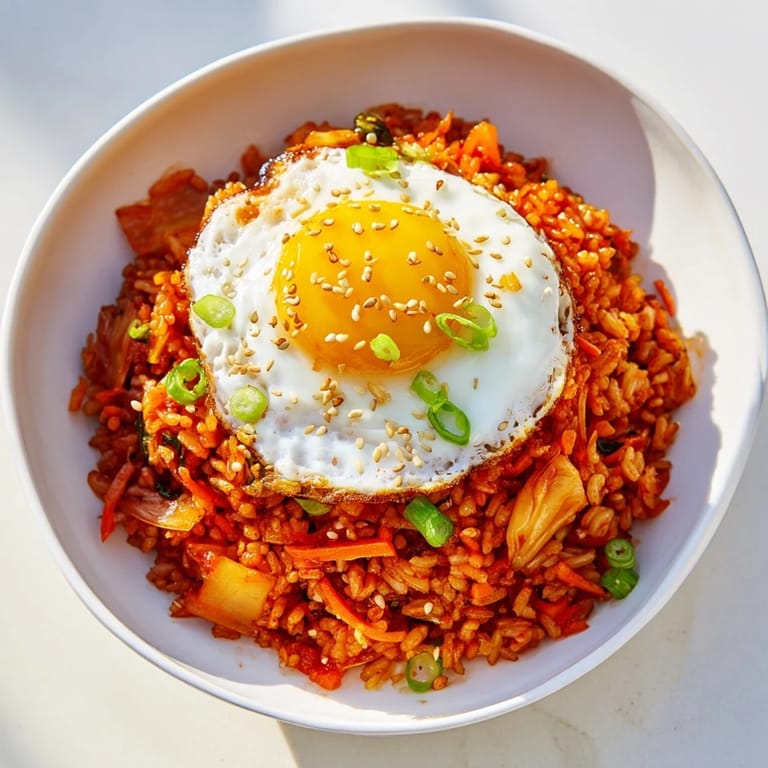
 My tiny apartment kitchen smelled like heaven when I finally attempted kimchi fried rice after years of ordering it at late-night Korean spots. Something about the sizzling kimchi hitting hot oil made me realize I'd been missing out on making this comfort food at home. Now it's my go-to when I want something bold, warming, and ready in under thirty minutes.
I served this to my skeptical brother who claimed he didn't like spicy food, and he went back for thirds. The way the runny egg yolk mixes into the hot rice creates this incredible creamy sauce that ties everything together. Watching someone discover how good kimchi fried rice can be is one of my favorite kitchen moments.
Ingredients
- 2 cups cooked short-grain rice preferably day-old: Cold rice from the fridge prevents clumping and gives you those perfect separate grains
- 1 cup napa cabbage kimchi chopped plus 2 tbsp kimchi juice: Older, more fermented kimchi packs more flavor and cooks down beautifully
- ½ cup yellow onion finely chopped: Builds a sweet aromatic base that balances the kimchi's tang
- ½ cup carrot diced: Adds subtle sweetness and welcome texture contrast
- 2 green onions sliced white and green parts separated: White parts cook with the vegetables for depth, green parts finish fresh
- 1 tbsp gochujang Korean chili paste: The essential savory-spicy backbone that defines the dish
- 1 tbsp soy sauce: Adds necessary saltiness and rounds out the flavor profile
- 1 tsp toasted sesame oil: Finishing touch that brings that authentic Korean fragrance
- ½ tsp sugar: Helps balance the acidity of the kimchi and heat from the gochujang
- ⅛ tsp freshly ground black pepper: Subtle background heat that complements rather than competes
- 2 tbsp vegetable oil: High smoke point for proper stir-frying at high temperatures
- 1 tsp toasted sesame seeds: Adds final crunch and visual appeal
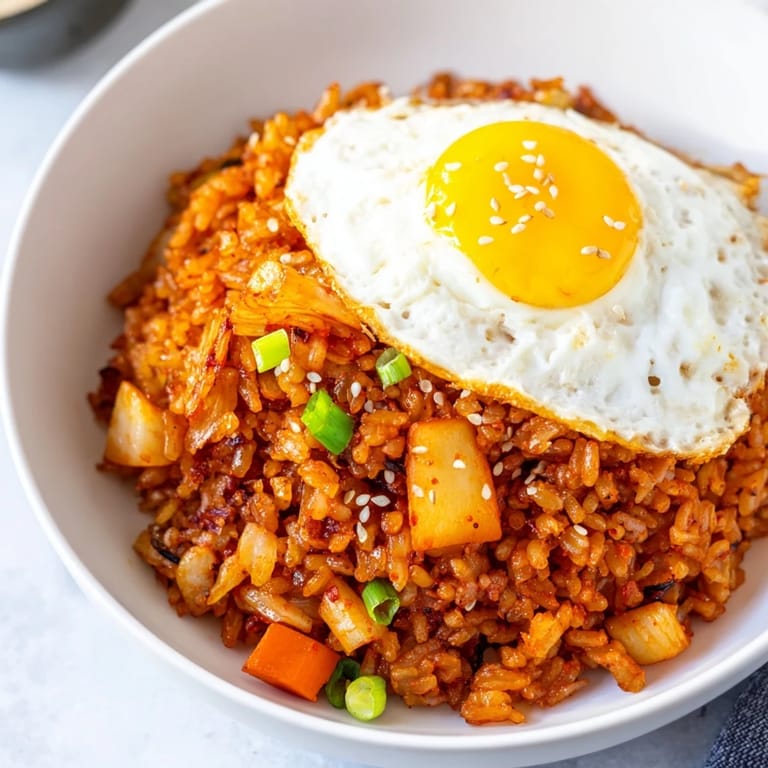
- 2 fried eggs optional: The runny yolk creates an instant sauce when broken into the rice
Tired of Takeout? 🥡
Get 10 meals you can make faster than delivery arrives. Seriously.
One email. No spam. Unsubscribe anytime.
Instructions
- Sauté the aromatics:
- Heat 1 tablespoon of vegetable oil in a large skillet or wok over medium-high heat until shimmering, then add the chopped onion, carrot, and white parts of the green onion. Stir-fry for 2 to 3 minutes until the vegetables soften slightly and the onion turns translucent.
- Caramelize the kimchi:
- Add the chopped kimchi to the pan and cook for another 2 to 3 minutes, stirring occasionally, until it becomes fragrant and the edges start to brown and caramelize slightly.
- Build the sauce base:
- Stir in the gochujang, soy sauce, kimchi juice, sugar, and black pepper, then cook for 1 minute while stirring constantly to coat the vegetables evenly and let the flavors meld.
- Combine with rice:
- Add the rice to the pan and break up any clumps with your spatula, then toss everything together and stir-fry for 3 to 4 minutes until the rice is evenly coated, hot throughout, and slightly crispy at the edges.
- Add finishing touches:
- Drizzle with sesame oil and scatter the green parts of the green onion over the rice, then stir well to distribute the fresh onion flavor and sesame aroma.
- Fry the eggs optional:
- Heat the remaining oil in a separate small pan over medium-high heat and crack in the eggs, frying until the whites are crispy but the yolks remain runny for that perfect sauce consistency.
- Finish and serve:
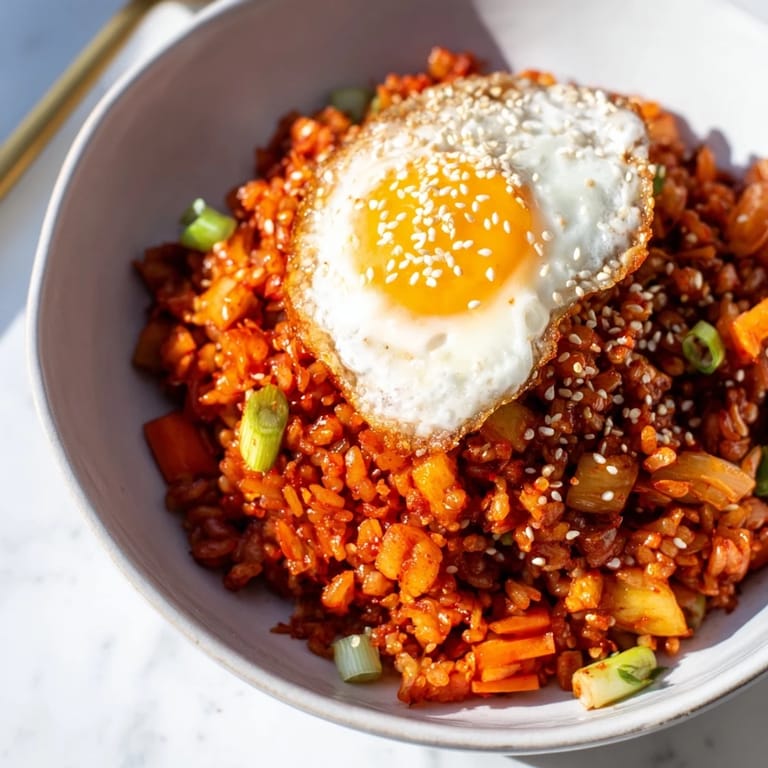
- Serve the kimchi fried rice in bowls, topped with a fried egg if using and a generous sprinkle of sesame seeds for that final crunch.
 Save to Pinterest
 This recipe saved me during a particularly rough week when cooking felt like too much effort but takeout wasn't in the budget. Something about the rhythmic chopping and the way the kitchen filled with those familiar spicy aromas made everything feel manageable again.
Making It Your Own
Once you master the basic technique, kimchi fried rice becomes a canvas for whatever you have on hand. I've thrown in frozen peas, corn, spinach, even leftover roasted vegetables, and it always works because the kimchi provides such a strong flavor foundation.
Protein Additions
While the egg is traditional, this dish welcomes plenty of other proteins. Diced tofu gets crispy and browned, leftover chicken or pork reheats beautifully, and shrimp cook in minutes. Just add them during the vegetable step so they heat through properly.
Serving Suggestions
A cold crisp lager or icy barley tea cuts through the spice and richness perfectly. I also like to set out extra kimchi, pickled vegetables, or a simple cucumber salad on the side. The cool refreshment balances the heat and makes the meal feel complete.
- Drizzle with extra sesame oil right before serving for an aromatic finish
- Keep some kimchi juice on hand to adjust seasoning if the rice tastes dry
- Fry your eggs until the edges are lace-crispy for the best texture contrast
 Save to Pinterest
 There's something deeply satisfying about turning humble ingredients into a meal that feels comforting and special. This recipe reminds me that some of the best food comes from simple things cooked with attention and care.
Recipe FAQs
- → Can I use fresh rice instead of day-old?
Day-old rice works best because its lower moisture content prevents clumping. If using fresh rice, spread it on a baking sheet and refrigerate for 1-2 hours to dry slightly before cooking.
- → How spicy is this dish?
The spice level depends on your kimchi and gochujang. Start with 1 tablespoon of gochujang, then add more after tasting. You can also reduce the kimchi juice for milder flavor.
- → What protein additions work well?
Diced tofu, shredded chicken, or shrimp pair perfectly. Add pre-cooked proteins during the final 2 minutes of stir-frying just to heat through.
- → Can I make this vegan?
Simply omit the fried egg topping or substitute with scrambled tofu. Check your kimchi and gochujang labels—some brands contain fish products or shellfish.
- → How long does leftover kimchi fried rice keep?
Store in an airtight container in the refrigerator for up to 3 days. Reheat in a skillet over medium heat, adding a splash of water if needed to separate the grains.