 Save to Pinterest
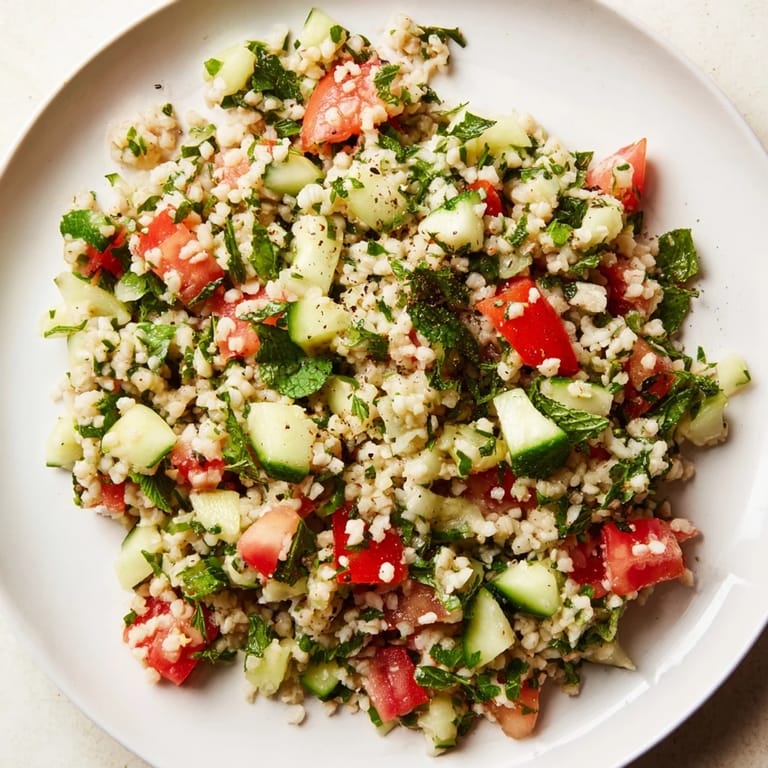
 My neighbor Layla taught me to make tabbouleh on a warm afternoon when she casually mentioned hers was nothing like the versions I'd tried before. She pulled out a massive bunch of parsley—so much that it seemed impossible it would all fit in a bowl—and that's when I understood the real secret: this isn't a salad with herbs sprinkled in, it's a celebration of green abundance with everything else playing supporting roles. The bright lemon hit me first when she squeezed it fresh into the dressing, and I realized I'd been skimping on citrus my whole life.
I brought it to a potluck once, nervous that something so simple wouldn't hold its own against the fancier dishes. Instead, it was the only thing that came home empty, and three people asked for the recipe before dessert was even served. There's something about a truly fresh salad that makes everyone at the table slow down and actually taste what they're eating.
Ingredients
- Fine bulgur wheat: Use the fine grind, not the coarse—it hydrates faster and gives you that tender grain that disappears into the salad rather than sitting there like little pebbles.
- Flat-leaf parsley: This is non-negotiable, and yes, you need a full two cups packed tight; curly parsley tastes bitter by comparison and the texture gets woolly.
- Fresh mint: Half a cup seems modest until you realize the mint and parsley are supposed to be partners, not mint making a guest appearance.
- Spring onions: They add a gentle bite that raw red onion would bulldoze right through.
- Tomatoes: Medium ones are your friend here because they're less watery than the giants; seed them if you have time, but honestly, a few extra tomato juices won't ruin anything.
- Cucumber: Peel it or don't depending on the skin thickness; thin-skinned cucumbers are fine left on, but thick ones taste a bit bitter.
- Extra-virgin olive oil: This is one of three ingredients, so use something you actually enjoy tasting on its own.
- Lemon juice: Freshly squeezed only—bottled tastes like disappointment in a bottle.
- Sea salt and black pepper: Grind the pepper fresh; pre-ground loses its brightness after it's been sitting open.
Tired of Takeout? 🥡
Get 10 meals you can make faster than delivery arrives. Seriously.
One email. No spam. Unsubscribe anytime.
Instructions
- Awaken the bulgur:
- Pour boiling water over the bulgur and cover it—you'll smell the grain soften as steam does its work. After 10 to 15 minutes, fluff it with a fork and let any excess water drain off.
- Build your green foundation:
- In your largest bowl, pile in the chopped parsley, mint, spring onions, tomatoes, and cucumber. This is where it gets fun because you get to see just how much green you're actually working with.
- Bring the grain into the party:
- Add the cooled bulgur to the vegetable mixture. The bulgur should be warm or room temperature, never hot, or the fresh herbs will start to wilt.
- Make the dressing come alive:
- Whisk olive oil with fresh lemon juice, salt, and pepper in a small bowl. Taste it before it hits the salad—it should make your mouth pucker just slightly, because the herbs will soften that sharp edge.
- Bring it all together:
- Drizzle the dressing over everything and toss gently so you don't bruise the herbs. This isn't the time to be aggressive.
- Taste and adjust:
- This is crucial—lemon juice and salt levels depend on your tomatoes, your preferences, your mood. Take a bite and make it yours.
 Save to Pinterest
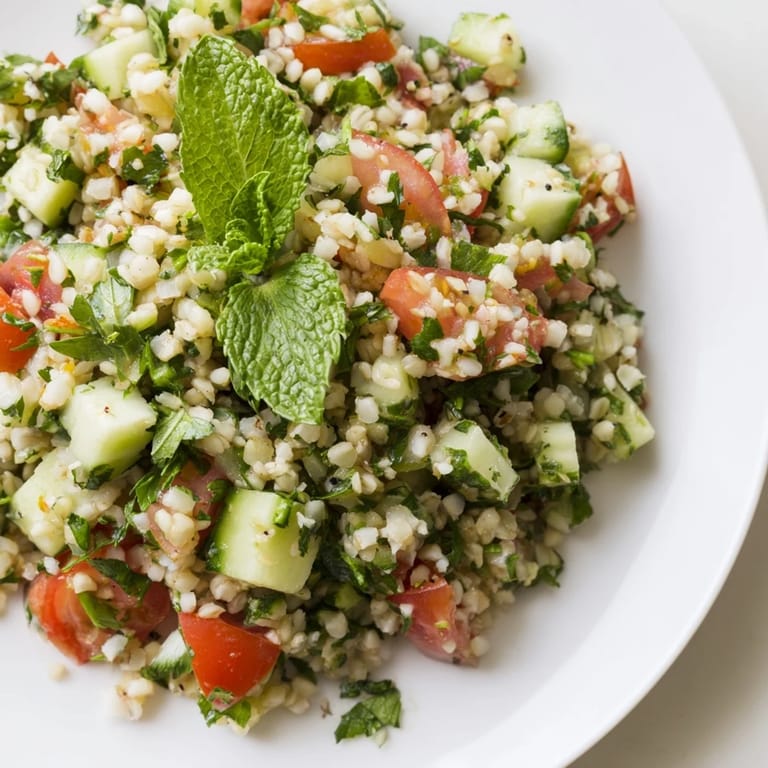
 I learned the real magic of tabbouleh when my friend's grandmother watched me make it and gently corrected me for squeezing the tomatoes too hard while dicing—she showed me how to let the knife do the work, keeping each piece intact so the salad stayed bright rather than turning into tomato paste with stuff in it. In that one small moment, I understood that tabbouleh isn't about cooking; it's about respect for fresh things.
The Herb Question
Some people make tabbouleh with equal parts parsley and bulgur by weight, which sounds right until you taste it and realize the grains completely disappear into the background. I've found that the ratio people give you as "traditional" actually varies wildly depending on where you are in Lebanon—some regions are herb-heavy, others less so. Trust the method of using about two cups of parsley and half a cup of bulgur, then taste and adjust because your tomatoes and lemons will be different from mine.
Serving and Storage
Tabbouleh is best served at room temperature with your fingers, lettuce leaves, or pita bread to scoop it up, which is honestly the only way it ever appears on a table in Lebanon. Cold tabbouleh works in a pinch, but something about the chill mutes the brightness of the lemon and herbs. If you have leftovers—which is rare—they'll keep for two days in the refrigerator before the parsley starts looking tired and the textures collapse into each other.
Playing with Tradition
This salad is simple enough that any small change feels significant, and versatile enough that you can make it your own without betraying it. I've added pomegranate seeds in the winter when tomatoes are sad, swapped mint for basil when I was running low, and once made it with quinoa because a guest needed gluten-free and honestly, no one noticed the difference except in their digestion. The core—fresh herbs, bright acid, good oil, and whatever vegetables look good—stays the same.
- For a gluten-free version, cooked quinoa swaps in perfectly for bulgur without changing the flavor profile.
- Pomegranate seeds, radishes, or feta can be added if you want to make it your own, but the original version needs nothing.
- This salad tastes better when everything is at room temperature, not chilled, so pull it from the fridge a few minutes before serving.
 Save to Pinterest
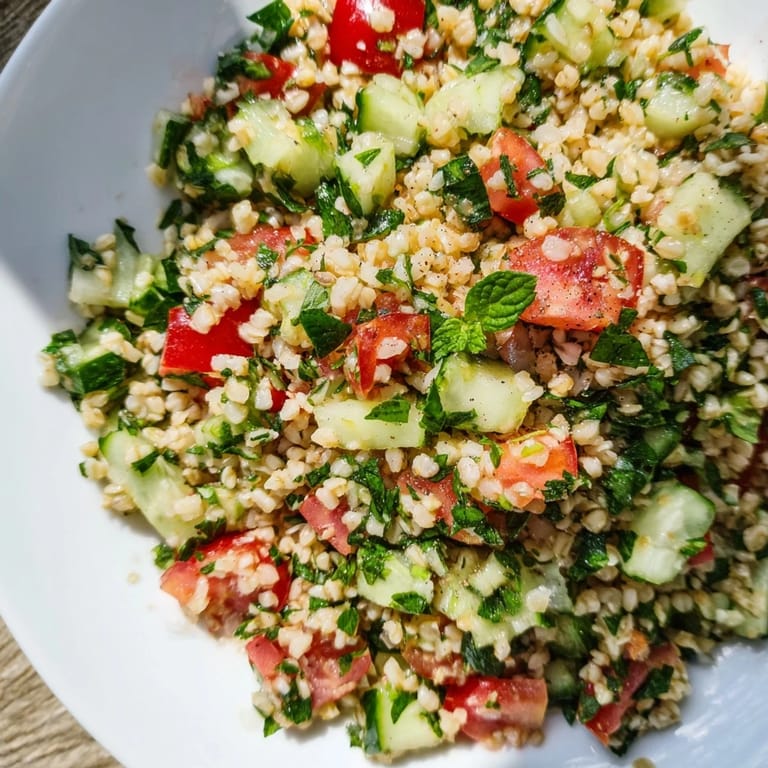
 Tabbouleh reminds me why I love cooking simple food—there's nowhere to hide, so every ingredient has to actually taste like something. Make it often enough and you'll find yourself buying better olive oil, seeking out the best tomatoes at the market, and learning which herbs the farmers' market vendor recommends this week.
Recipe FAQs
- → What grain is used in this salad?
Fine bulgur wheat is soaked until tender and combined with fresh herbs and vegetables.
- → Can I make this gluten-free?
Yes, substituting bulgur with cooked quinoa makes it suitable for gluten-free diets.
- → What herbs enhance the flavor?
Flat-leaf parsley and fresh mint contribute to the signature bright and aromatic taste.
- → How should the dressing be prepared?
A simple whisk of extra-virgin olive oil, fresh lemon juice, salt, and black pepper perfectly complements the salad.
- → Is cooking required for this dish?
Only soaking the bulgur in hot water is needed; no additional cooking is required.
- → How long can this salad be stored?
It stays fresh up to two days when refrigerated, though it is best enjoyed soon after preparation.