 Save to Pinterest
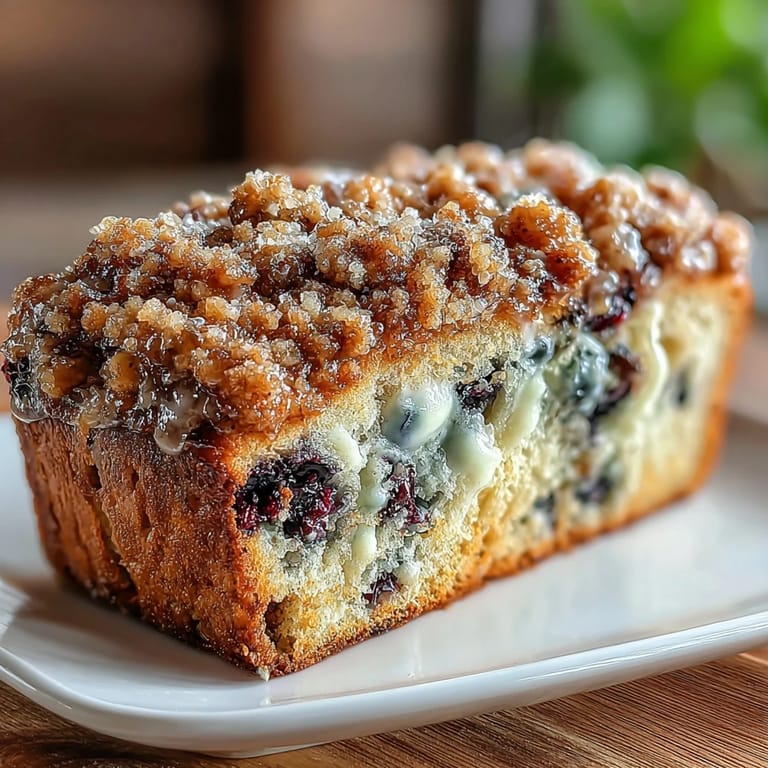
 One Saturday morning, my kitchen filled with the most unexpected aroma—tangy sourdough mingling with fresh lemon and bursting blueberries. I'd been experimenting with my starter all week, and something just clicked when I thought to swirl bright berries straight into the dough instead of layering them traditionally. That golden crumble topping caught the early light streaming through my window, and I knew immediately this loaf was going to become a regular visitor to my breakfast table.
I made this for my neighbor last month when she was recovering from surgery, and watching her face light up when she smelled it cooling on the rack reminded me why baking matters. She texted me three days later asking for the recipe because her teenage son had already devoured half the loaf.
Ingredients
- Bread flour: The protein content keeps this loaf structured and tender, giving you that proper crumb you're after rather than a dense brick.
- Active sourdough starter: This is your flavor engine—use one that's recently fed and bubbly, or your dough will feel sluggish during proofing.
- Granulated sugar: Just enough to wake up the yeast and feed the dough without making it cake-like.
- Large egg: Adds richness and helps bind everything together into a cohesive crumb.
- Whole milk, lukewarm: Temperature matters here; too hot kills your starter, too cold and fermentation stalls.
- Unsalted butter, softened: It needs to be soft enough to incorporate smoothly without toughening the gluten you've been developing.
- Fine sea salt: A small amount, but essential for flavor and controlling fermentation speed.
- Lemon zest: Use a microplane to get those bright oils into every thread of dough.
- Fresh or frozen blueberries: Fresh are ideal because they hold their shape better, but frozen work equally well—I've done this both ways on busy mornings.
- Cornstarch: The secret to keeping your blueberry swirl from weeping into the dough and making everything soggy.
- All-purpose flour for crumble: Lighter than bread flour, it creates a more delicate, sandy texture on top.
- Cold butter cubes: This is non-negotiable for crumble; warm butter makes paste instead of crumbs.
- Light brown sugar: Adds moisture and molasses notes that complement the blueberry tartness.
Tired of Takeout? 🥡
Get 10 meals you can make faster than delivery arrives. Seriously.
One email. No spam. Unsubscribe anytime.
Instructions
- Building the foundation:
- Combine your dry ingredients and lemon zest in the mixer bowl, then add starter, egg, and warm milk. Mix until shaggy—you're not looking for smoothness yet, just a rough gathering of flour and liquid.
- Developing the dough:
- Add butter piece by piece on low speed, watching as the dough transforms from lumpy to silky and elastic. This takes patience, usually 8 to 10 minutes, but don't rush it; you're building structure that will hold those berries.
- First rise:
- Oil your bowl lightly, nestle the dough in, cover, and find a warm corner—a sunny windowsill, the top of your fridge, even near (but not on) a heating vent. You're waiting for it to roughly double, which should happen in about 2 hours.
- Making the blueberry swirl:
- While dough rises, combine berries, sugar, and lemon juice in a saucepan and let them cook down until they burst open. The mixture will look loose, almost runny—that's when you add the cornstarch, stir constantly for 2 to 3 minutes until it thickens to a jam-like consistency, then set it aside to cool completely.
- Preparing the crumble:
- Mix flour, brown sugar, and salt together, then work in your cold butter cubes with your fingertips until it looks like coarse sand. Chill this while everything else happens.
- Shaping the swirl:
- Turn out your risen dough onto a floured surface and gently roll it into a rectangle about 10 by 14 inches. Spread that cooled blueberry mixture across almost the entire surface, leaving a bare 1-inch border around the edges so the filling doesn't squeeze out.
- Rolling and tucking:
- Roll tightly from the short end toward you, creating a log, then place it seam-side down in a greased loaf pan. This position keeps the spiral from unraveling as it rises.
- Second rise:
- Cover loosely and let it rise again for about an hour until the dough puffs above the rim slightly. You want it puffy, not massively overproofed, or it'll collapse in the oven.
- The crumble moment:
- Preheat your oven to 350°F. Brush the top with a little milk or beaten egg if you like a shiny finish, then scatter that chilled crumble topping evenly across the surface.
- Baking with intention:
- Slide it into the oven for 50 to 55 minutes, covering with foil after about 30 minutes if the top is browning too quickly. You're looking for golden brown, and the loaf should sound slightly hollow when you tap it.
- The patience of cooling:
- Let it rest in the pan for 15 minutes—this helps it set—then turn it out onto a wire rack to cool completely before you slice into it. Warm bread will shred; cool bread will slice cleanly.
 Save to Pinterest
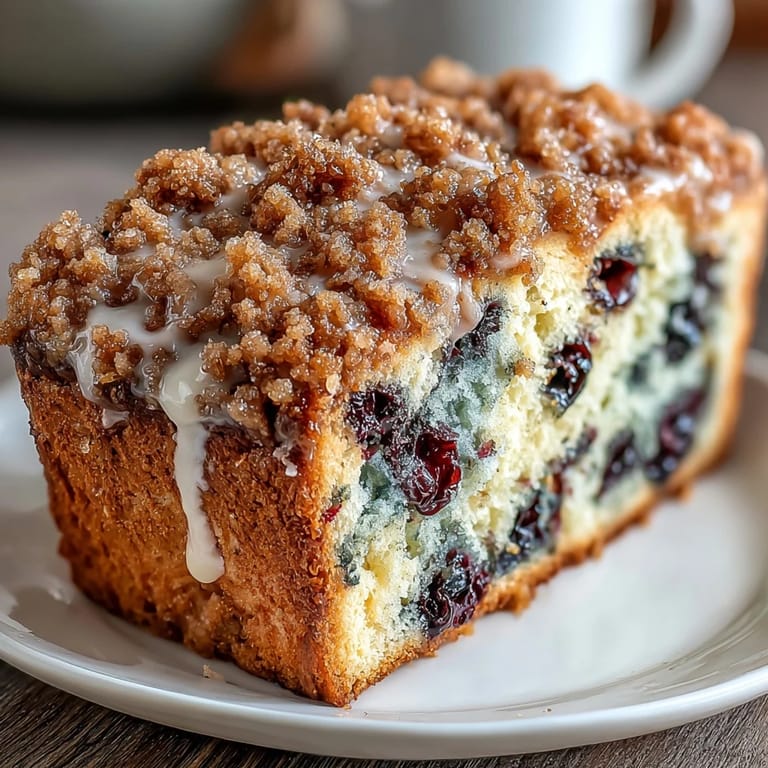
 There's a specific moment when this bread tells you it's ready—it's not just about the timer. You lift the loaf from the pan and hear that hollow knock, and suddenly you're holding something warm and golden that you actually made from flour and starter and patience. That's when it stops being a recipe and becomes something you made.
Timing Your Rise Perfectly
Proofing times are suggestions, not absolutes, and they shift with room temperature. A warm kitchen might finish the dough in 90 minutes; a cool one might take 2 hours and 15 minutes. Rather than watching the clock, watch the dough itself. When it's nearly doubled and springs back slowly when you poke it, it's ready to shape.
The Flavor Trilogy
The magic here is the conversation between three bold flavors: the subtle funk of fermented sourdough, the brightness of lemon, and the slight tartness of blueberries. None of them dominates because each one respects the others. This is why it works for breakfast but also why it's perfectly acceptable to eat it at 4 p.m. with a cup of tea and no one judging you.
Storage and Keeping
This loaf keeps beautifully for 3 to 4 days wrapped in a kitchen towel on your counter—that crumble topping even gets a little crunchier as it sits. You can freeze it too; wrap it well and thaw it at room temperature whenever you need a quick breakfast with zero effort. I've also found that day-old slices toast wonderfully if you want to refresh them.
- Store in a paper bag or wrapped in kitchen towel for a softer crust, or in an airtight container if you prefer it to stay tender.
- If you're slicing within a few hours of baking, use a serrated knife and a gentle sawing motion rather than pressing down.
- Reheat slices gently in a 300°F oven for about 5 minutes if they've been stored in the fridge.
 Save to Pinterest
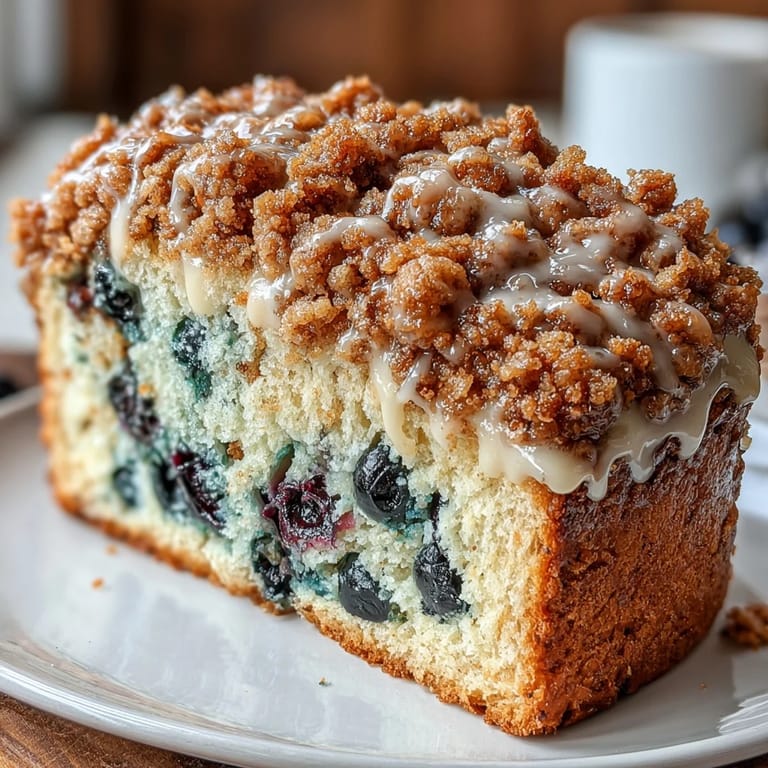
 Bake this loaf and you're doing something quietly wonderful: transforming simple ingredients into something that nourishes and makes people genuinely happy. That's cooking at its best.
Recipe FAQs
- → What type of flour is best for this loaf?
Bread flour is recommended to provide structure and a chewy crumb ideal for sourdough loaves with swirls.
- → Can I use frozen blueberries for the swirl?
Yes, frozen blueberries work well and can be used without thawing, maintaining flavor and color.
- → How is the crumble topping prepared?
The crumble is made by cutting cold butter into flour, brown sugar, and a pinch of salt until coarse crumbs form, then chilled until baking.
- → What is the purpose of the lemon zest and juice?
Lemon zest adds bright citrus aroma to the dough, while lemon juice in the swirl enhances the blueberry’s tartness and helps thicken the filling.
- → How should I proof the dough for best results?
Let the dough rise in a warm place until doubled in size, about 2 hours, and again for 1 hour after shaping to develop flavor and texture.