 Save to Pinterest
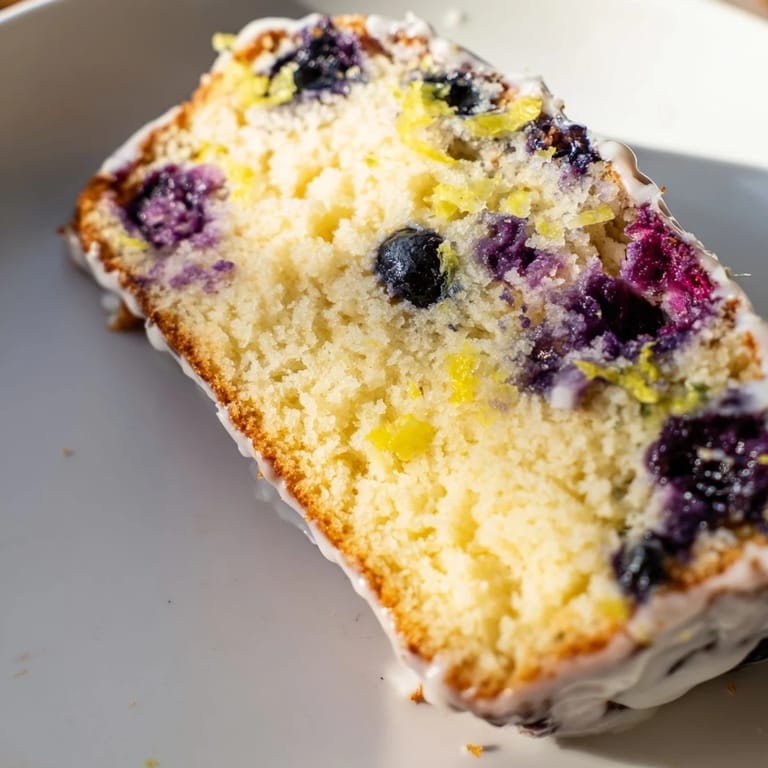
 There's something wonderfully unpretentious about a loaf that comes together in a blender. I discovered this recipe on one of those mornings when I had ingredients but zero patience for fussing, and what emerged from the oven was so tender and bright that I've made it dozens of times since. The lemon cuts through the yogurt's tang, the blueberries burst softly, and somehow blending the batter actually creates a more delicate crumb than traditional creaming ever could. It's the kind of cake that tastes fancier than it has any right to be given how little work it asks of you.
I remember bringing this to a book club meeting on a rainy Tuesday, and watching people's surprised delight when they tasted it. Someone asked if it was from a fancy bakery, which made me laugh because I'd literally blended it in my kitchen fifteen minutes before leaving home. That's when I realized this loaf had quietly become my secret weapon—simple enough to make casually, impressive enough to share without apology.
Ingredients
- Eggs (2 large): They emulsify with the yogurt and oil, creating that silky, tender crumb that makes people pause mid-bite.
- Greek yogurt (1 cup): Swap out some of the fat with tang and moisture—this is what keeps the cake from drying out even after it sits for a few days.
- Vegetable oil (1/2 cup): I've learned oil makes a more tender cake than butter here, and it distributes evenly when blended.
- Lemon zest (1 tbsp finely grated): This is where the magic lives—more important than the juice because it carries the purest, brightest flavor.
- Fresh lemon juice (1/4 cup): It adds acidity that balances the sweetness and cuts through the richness beautifully.
- Vanilla extract (1 tsp): A quiet background note that deepens the overall flavor without being obvious.
- All-purpose flour (1 1/2 cups): Nothing fancy needed here, but measure by weight if you can—it keeps the cake consistent every time.
- Granulated sugar (3/4 cup): Just enough sweetness to let the lemon shine without turning this into pure dessert.
- Baking powder (2 tsp) and baking soda (1/2 tsp): Together they lift the batter gently and help it rise evenly in the pan.
- Fine sea salt (1/4 tsp): A pinch that amplifies every other flavor without making anything taste salty.
- Fresh blueberries (1 cup): Toss them in flour before folding so they stay suspended throughout instead of sinking to the bottom—I learned this the hard way.
- Powdered sugar (1/2 cup, for glaze): Mixed with lemon juice, it creates a thin, glossy coating that soaks slightly into the still-warm cake.
Tired of Takeout? 🥡
Get 10 meals you can make faster than delivery arrives. Seriously.
One email. No spam. Unsubscribe anytime.
Instructions
- Set your stage:
- Preheat the oven to 350°F and line your 9x5-inch loaf pan with parchment—this matters because the edges bake faster than the center. I tape the parchment down so it doesn't slip while you're pouring batter.
- Blend the wet base:
- Crack the eggs into your blender, add yogurt, oil, lemon zest, lemon juice, and vanilla, then blend until completely smooth and pale. You'll feel the texture shift as the ingredients emulsify, becoming almost silky.
- Add the dry ingredients carefully:
- Dump in flour, sugar, baking powder, baking soda, and salt, then pulse—not blend. Count to five, pulse again, and stop the second you don't see streaks of flour anymore. Overmixing here creates a tough, dense cake, which defeats the whole point of this method.
- Give the blueberries their protective coating:
- Toss your blueberries with that tablespoon of flour so they distribute evenly and don't sink. Now gently fold them in using a spatula, folding the batter up and over itself rather than stirring, which bruises them and turns the batter purple.
- Get it in the pan:
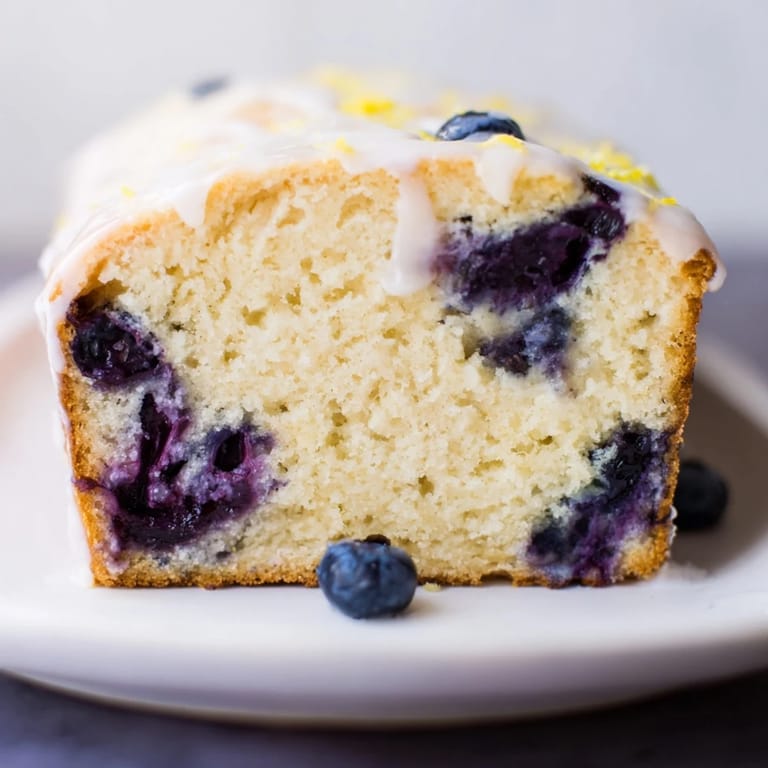
- Pour the batter into your prepared pan and smooth the top with your spatula. It should look slightly domed and studded with blue throughout.
- Bake with patience:
- Bake for 50–55 minutes until a toothpick poked in the center comes out clean or with just a few moist crumbs clinging to it. If the top is browning too fast around 35 minutes, tent the pan loosely with foil—it keeps the top tender while the inside finishes.
- Cool slowly:
- Let it sit in the pan for ten minutes first, which lets the crumb set just enough to hold together, then turn it out onto a wire rack to cool completely. This is when your kitchen will smell absolutely incredible.
- Finish with a drizzle:
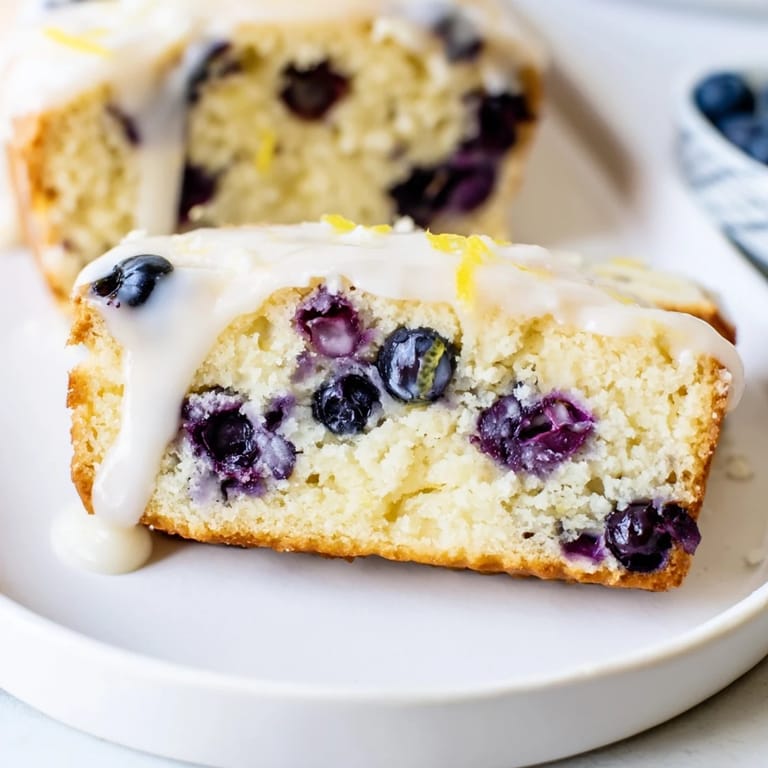
- Whisk powdered sugar with one to two tablespoons of fresh lemon juice until you get a thin, pourable consistency. Pour it over the completely cooled loaf in thin lines, letting it pool slightly in the cracks—it's not just for looks, it adds another layer of brightness.
 Save to Pinterest
 I gave a slice to my neighbor one afternoon, and she came back the next day asking if I could teach her because she'd already made two loaves. Watching someone else take ownership of a recipe you love feels like passing along something small but genuine.
Why This Blender Method Actually Works
Traditionally, cakes ask you to cream butter and sugar, which takes five minutes of beating and a stand mixer you might not own. Here, blending the wet ingredients first means the eggs and oil emulsify without all that extra machinery, which creates the same tender crumb through a completely different path. The blender aeration also helps the batter rise more evenly than hand-mixing would. I've made this both ways—the blender version wins every time on texture.
The Lemon Zest Makes the Difference
Lemon zest contains the oils where all the bright, aromatic flavor actually lives, which is why I always zest the lemons first and then juice them. The juice alone would make this cake taste sour, but the zest adds that sunny complexity that makes people ask what's in it. I learned early on that you can taste the difference between one and two teaspoons of zest—go for the full tablespoon if your lemons are on the smaller side.
Variations and Substitutions That Work
This loaf is forgiving in the best ways, though a couple of swaps genuinely matter. For dairy-free, coconut yogurt holds the moisture beautifully and adds a subtle sweetness that plays well with lemon. Frozen blueberries are not a compromise—they actually work better because they stay intact longer as the batter bakes. You can also add half a teaspoon of almond extract alongside the vanilla for a subtle flavor twist, or swap in blackberries if that's what's at the market.
- Coconut yogurt keeps the loaf moist and adds a slight creaminess that dairy-free versions sometimes miss.
- Swap in an extra quarter teaspoon of vanilla if you don't have lemon zest, though it becomes a different cake.
- Store it wrapped in plastic wrap at room temperature for three days, or freeze it whole for up to three months.
 Save to Pinterest
 This loaf has become the cake I return to when I want something that feels homemade without the fussiness of traditional baking. It's proof that sometimes the easiest recipes are the ones people remember.
Recipe FAQs
- → How do I prevent blueberries from sinking?
Toss blueberries with a small amount of flour before folding them gently into the batter. This helps suspend them evenly throughout the loaf.
- → Can I use frozen blueberries?
Yes, use frozen blueberries straight from the freezer without thawing to maintain texture and prevent color bleeding.
- → What is the purpose of lemon zest and juice here?
Lemon zest and juice provide bright, tangy notes that balance the sweetness and enhance the loaf's fresh flavor profile.
- → How do I achieve a moist crumb?
Using yogurt and vegetable oil together keeps the loaf moist and tender, while blending ingredients carefully avoids overmixing.
- → Is there a way to make this loaf dairy-free?
Substitute coconut yogurt and a neutral oil to keep similar moisture and texture while removing dairy elements.
- → What baking pan size is recommended?
A 9x5-inch loaf pan ensures even baking and proper loaf shape for this mixture size.