 Save to Pinterest
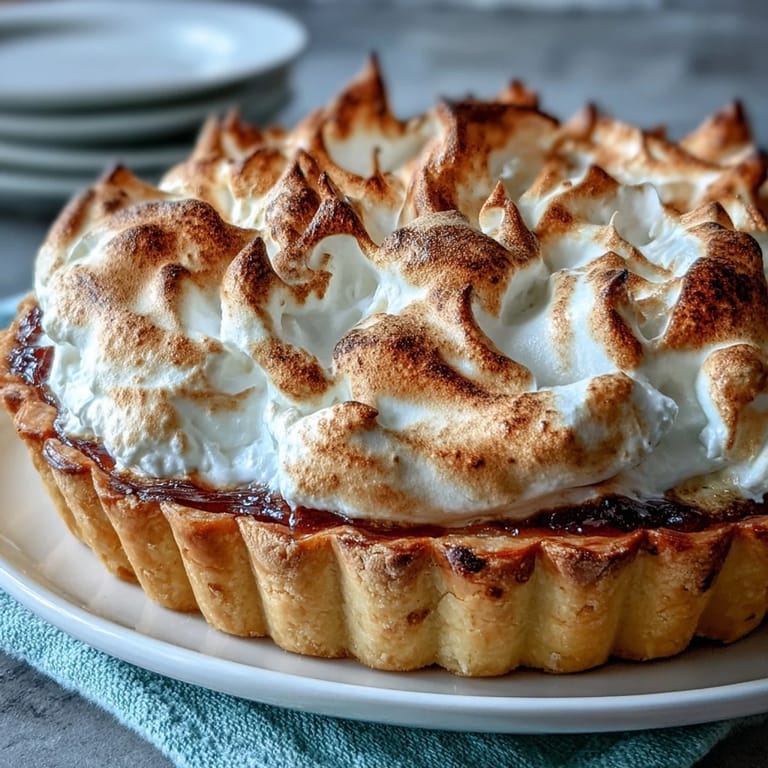
 My neighbor handed me a basket of lemons from her tree one Saturday morning, and I stood there wondering what on earth I'd do with twelve lemons. I'd never made a lemon meringue pie from scratch, mostly because the towering meringue always seemed like magic reserved for bakery windows. But that afternoon, with nothing but time and a pile of bright yellow fruit, I decided to try. The kitchen smelled like sunshine for hours, and when I pulled that golden-topped pie from the oven, I finally understood why people make such a fuss about this dessert.
I brought this pie to a family dinner once, and my uncle, who never has much to say about desserts, asked if I'd used my grandmother's recipe. I hadn't, but the fact that it tasted like a memory to him made me realize how certain flavors carry weight beyond ingredients. We ended up talking about her kitchen, the way she'd always zest lemons over a bowl to catch every drop of oil, and how she believed a pie wasn't done until the meringue had those perfect toasted peaks. That night, this pie became more than something I baked, it became a bridge to stories I'd almost forgotten.
Ingredients
- All-purpose flour: The foundation of a tender, flaky crust, and using cold butter is the secret to those buttery layers that shatter when you press your fork down.
- Cold unsalted butter: Cubed and kept icy, it creates pockets of steam as it bakes, giving you that crisp, golden shell that holds the filling without getting soggy.
- Ice water: Add it slowly, just enough to bring the dough together, because too much makes the crust tough and chewy instead of delicate.
- Granulated sugar (for filling): Balances the sharp pucker of lemon juice, and I've learned that measuring it exactly matters here or the filling can turn too sweet or too sour.
- Cornstarch: Thickens the lemon custard into that glossy, spoonable texture, and it works faster than flour without making the filling taste starchy.
- Egg yolks: Give the filling its rich, velvety body, and tempering them slowly keeps them from scrambling into sweet lemon scrambled eggs.
- Lemon zest: This is where the real lemon flavor lives, in those tiny flecks of peel that smell like summer and make the whole filling sing.
- Freshly squeezed lemon juice: Bottled juice will never give you that bright, clean tang, so I always use fresh lemons and roll them on the counter first to get every drop.
- Egg whites: Whip up into glossy peaks that tower over the pie, and they need to be at room temperature or they won't reach their full volume.
- Cream of tartar: Stabilizes the meringue so it doesn't weep or deflate, and a tiny pinch is all it takes to make a difference.
- Vanilla extract: A half teaspoon in the meringue adds a gentle warmth that rounds out the sweetness without competing with the lemon.
Tired of Takeout? 🥡
Get 10 meals you can make faster than delivery arrives. Seriously.
One email. No spam. Unsubscribe anytime.
Instructions
- Mix the Crust:
- Whisk the flour, salt, and sugar together, then use your fingertips or a pastry cutter to work in the cold butter until it looks like coarse sand with a few pea-sized bits still visible. Drizzle in ice water one tablespoon at a time, tossing gently with a fork until the dough just holds together when you squeeze it.
- Chill and Roll:
- Pat the dough into a flat disk, wrap it tightly, and let it rest in the fridge for at least an hour so the gluten relaxes and the butter firms up. When you roll it out on a floured surface, aim for an even circle about 12 inches across, then drape it over your pie dish and press it into the corners without stretching.
- Blind Bake the Crust:
- Prick the bottom with a fork, line it with parchment, and fill it with pie weights or dried beans to keep it flat. Bake at 400°F for 15 minutes, then remove the weights and bake another 8 to 10 minutes until it's golden and smells toasty.
- Cook the Lemon Filling:
- Whisk sugar, cornstarch, and salt in a saucepan, then slowly add water until smooth and cook over medium heat, stirring constantly, until it thickens and bubbles. Temper the egg yolks by whisking in a little hot mixture first, then pour everything back into the pan and cook for 2 more minutes before stirring in the lemon zest, juice, and butter.
- Fill the Crust:
- Pour the warm lemon custard into the cooled crust, smoothing the top with a spatula. Let it sit while you make the meringue so the filling stays warm enough to bond with the topping.
- Whip the Meringue:
- Beat the egg whites and cream of tartar on high speed until soft peaks form, then gradually add the sugar and keep beating until the meringue is stiff, glossy, and holds peaks that stand straight up. Fold in the vanilla at the end.
- Top and Seal:
- Spread the meringue over the warm filling, making sure it touches the crust all the way around to seal it and prevent shrinking. Use the back of a spoon to create swoops and peaks for texture.
- Bake and Cool:
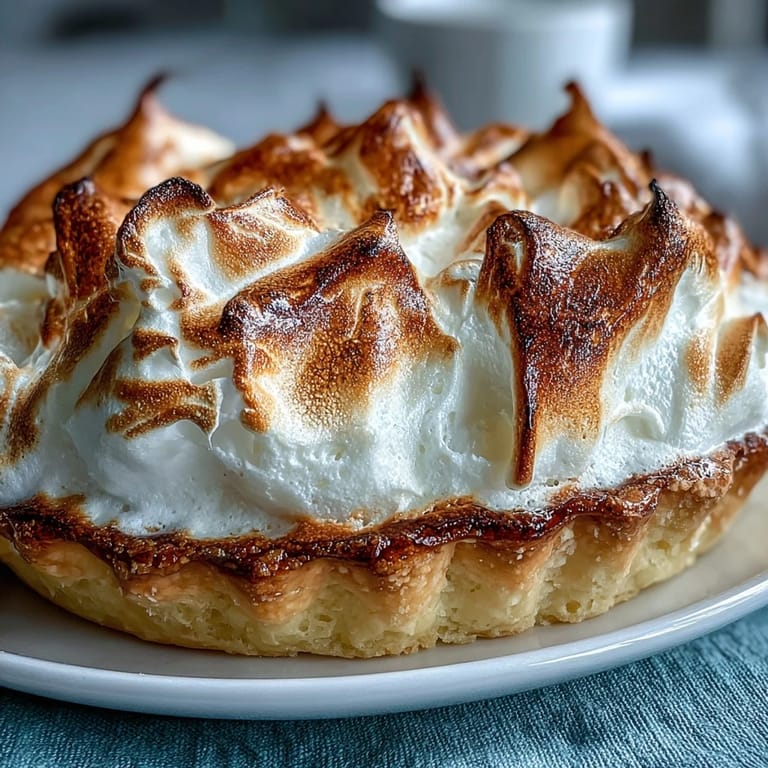
- Bake at 350°F for 15 to 18 minutes until the meringue is golden brown with toasted tips. Let the pie cool to room temperature, then chill it for at least 2 hours so the filling sets and slices cleanly.
 Save to Pinterest
 There's a moment right after you cut into this pie when the fork glides through the meringue, meets the resistance of the tart custard, and then breaks through the crust with a soft crack. My dad used to say that sound was the sign of a pie done right. The first time I heard it in my own kitchen, I called him just to tell him about it, and he laughed and said he knew I'd get there eventually.
Choosing Your Lemons
I used to grab whatever lemons were on sale, but I learned that thin-skinned, heavy lemons give you the most juice and the best zest. Meyer lemons are sweeter and more floral, which can be lovely if you want a gentler tang, but classic Eureka or Lisbon lemons give you that sharp, wake-up-your-taste-buds punch that makes this pie unforgettable. Roll them firmly on the counter before you cut them, and you'll be surprised how much more juice you get. If you can, zest them before juicing because it's nearly impossible to zest a juiced lemon half without slipping and scraping your knuckles.
Storing and Serving
This pie is best eaten within a day or two because the meringue softens and can start to weep if it sits too long. I've tried covering it with plastic wrap, but that always smooshes the peaks, so I use a cake dome or a large overturned bowl instead. If you have leftovers, keep them in the fridge, and know that the crust might lose a bit of its crispness but the flavor will still be there. I've also learned that cutting with a hot, wet knife, dipping it in water and wiping it between slices, gives you clean edges and keeps the meringue from sticking and tearing.
Make-Ahead Strategy
You can bake the crust and make the filling a day ahead, storing the filling in the fridge with plastic wrap pressed directly on the surface to prevent a skin. When you're ready to serve, gently rewarm the filling in a saucepan over low heat, stirring often, then pour it into the crust and top with freshly whipped meringue. This way, the meringue is at its peak fluffiness and the crust stays crisp, and you don't have to juggle everything at the last minute.
- Brush the baked crust with a thin layer of beaten egg white before filling to create a moisture barrier that keeps it extra crisp.
- If you're nervous about the meringue, practice whipping a single egg white first so you know what stiff peaks look like before committing to the full batch.
- A kitchen torch is optional but fun for adding extra browning to the meringue peaks after baking, giving you those dramatic, caramelized tips.
 Save to Pinterest
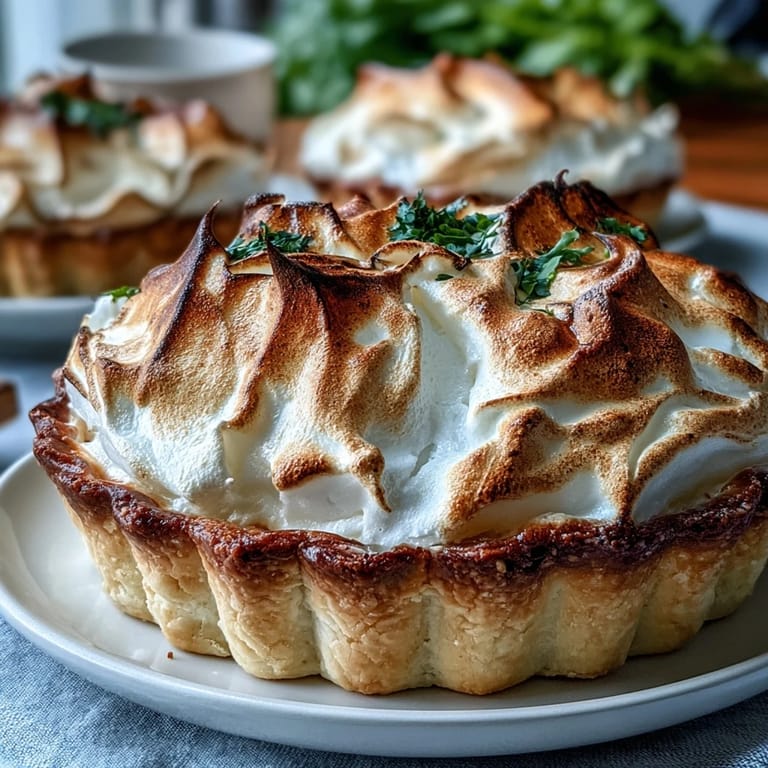
 Every time I make this pie, I think about how something as simple as lemons, eggs, and sugar can turn into a dessert that stops conversation and makes people reach for seconds. It's the kind of recipe that reminds you why baking is worth the mess.
Recipe FAQs
- → How do I prevent my meringue from weeping?
Spread the meringue over the warm lemon filling and make sure to seal it completely to the crust edges. This prevents moisture from forming underneath. Also, avoid overbaking and allow proper cooling time.
- → Can I make the crust ahead of time?
Yes, you can prepare and blind-bake the crust up to 2 days in advance. Store it covered at room temperature. Fill it the day you plan to serve for best results.
- → What's the best way to get stiff peaks for meringue?
Use room temperature egg whites in a completely clean, grease-free bowl. Beat with cream of tartar until soft peaks form, then gradually add sugar while continuing to beat until stiff, glossy peaks form.
- → How long does lemon meringue pie last?
Store covered in the refrigerator for up to 2 days. The meringue is best the day it's made, as it can become soggy over time. For cleanest slices, chill for at least 2 hours before cutting.
- → Can I use bottled lemon juice instead of fresh?
Fresh lemon juice is highly recommended for the best flavor and authentic tangy taste. Bottled juice often contains preservatives that can affect the filling's texture and overall brightness of flavor.
- → Why do I need to temper the egg yolks?
Tempering gradually raises the temperature of the egg yolks by mixing them with a small amount of hot filling first. This prevents them from scrambling when added to the hot mixture, ensuring a smooth, creamy lemon filling.