 Save to Pinterest
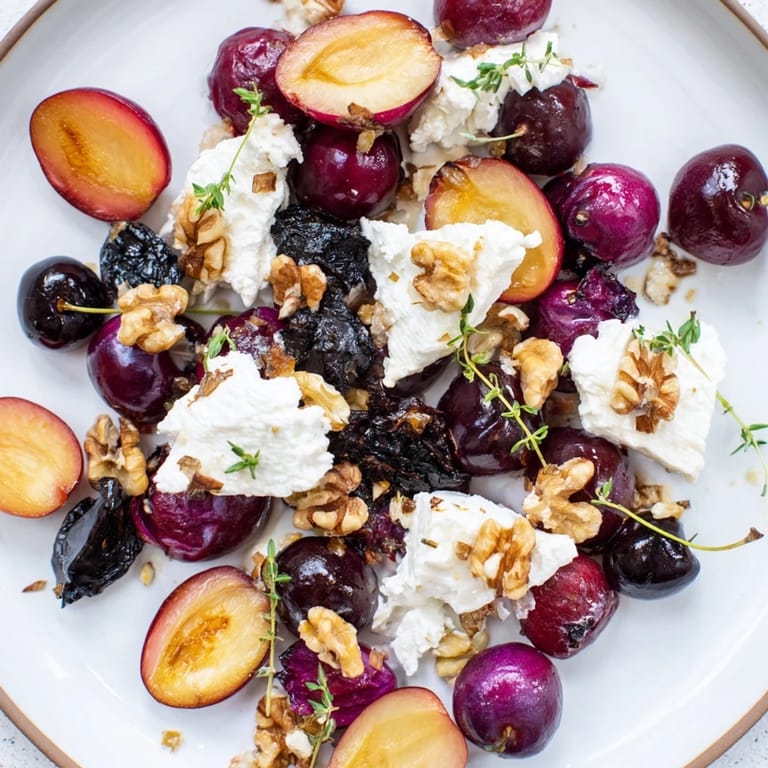
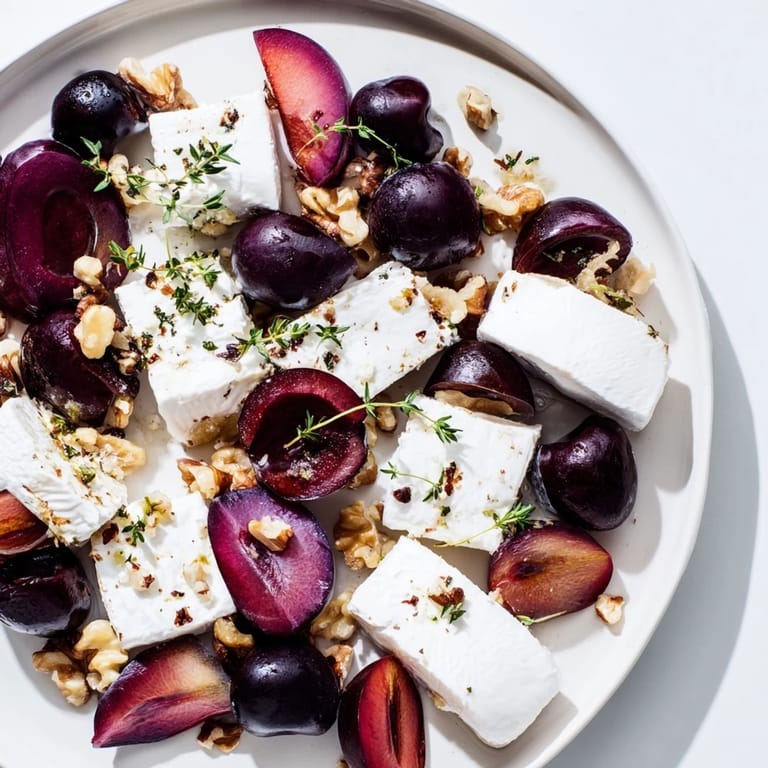
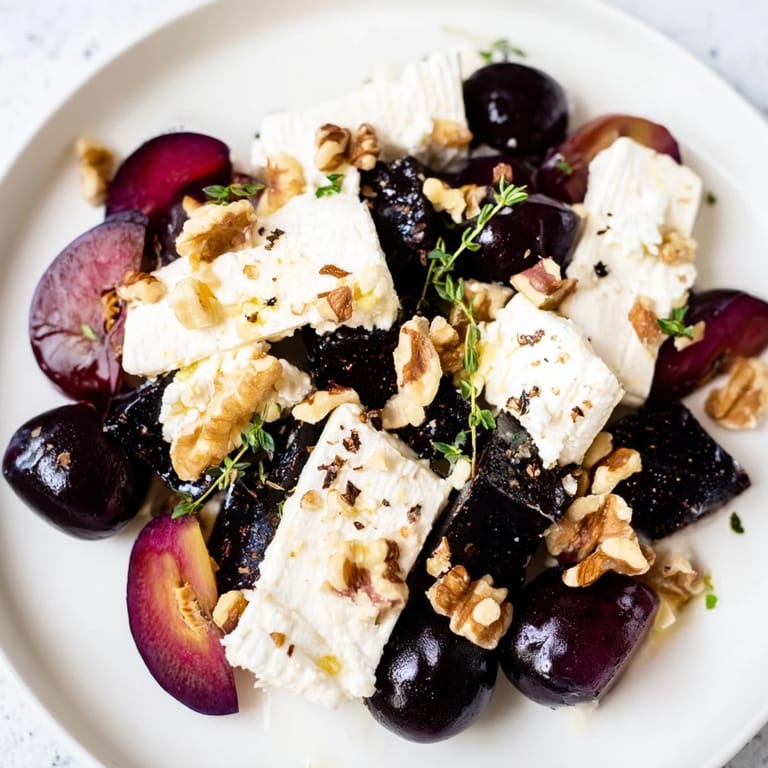
 There's something about arranging fruit and cheese on a board late in the evening that feels like staging a small still life. I discovered this platter one autumn when a friend arrived unexpectedly with a bottle of sparkling wine, and I found myself pulling dark cherries and a wedge of ash-coated goat cheese from the fridge, almost on instinct. The contrast between the deep purple fruits and that chalky, elegant cheese became something I kept returning to, especially when I wanted to serve something that looked thoughtfully composed without fussing over a hot stove.
I remember setting this out for a dinner party once and watching people instinctively reach for it first, before anything else on the table. My grandmother caught me rearranging the grapes for the third time and gently nudged my hand away, reminding me that perfection isn't the point—generosity is. That platter sat there barely touched while we talked, then disappeared in minutes once people actually started eating.
Ingredients
- Dark cherries: These should be fully ripe and deeply colored, almost black if you can find them—they taste sweeter and their color becomes the anchor of your whole board.
- Ripe plums: Look for ones with skin that gives slightly to pressure; underripe plums taste mealy and sour, but truly ripe ones have an almost floral sweetness.
- Purple grapes: I prefer the Concord varieties because they're meatier and have more personality than seedless grapes, though either works fine.
- Black-ashed goat cheese: The ash isn't just decoration—it's a sign the cheese has been treated traditionally, and it often means it has a more complex flavor than plain goat cheese.
- Toasted walnuts: Toasting them yourself makes a real difference; raw walnuts taste flat and slightly bitter compared to walnuts that have been warmed until fragrant.
- Honey: A tiny drizzle brings everything into focus, especially if you find a honey with character, like wildflower or chestnut honey.
- Fresh thyme: This is your final flourish—the herbaceous note that elevates the whole thing from cheese board to considered dish.
Tired of Takeout? 🥡
Get 10 meals you can make faster than delivery arrives. Seriously.
One email. No spam. Unsubscribe anytime.
Instructions
- Prep your fruit with intention:
- Pit and halve the cherries right before you assemble everything, or they'll oxidize and turn dull. Slice the plums just as you're about to build the platter so they stay fresh and their cut sides stay bright.
- Create visual rhythm on your board:
- Instead of scattering everything randomly, group each type of fruit in its own small section—this lets the deep purples, darker reds, and warm cherry tones speak to each other. The cheese becomes the counterpoint, creamy and pale against all that color.
- Layer in the textures:
- Scatter the walnuts across the fruit in a way that feels generous but not fussy. Their warmth and earthiness should peek through but not overwhelm.
- Add the honey with a light hand:
- Drizzle just enough to catch light and add sweetness without making anything feel heavy or cloying. A small bowl of extra honey on the side lets people add more if they want it.
- Crown it with herbs:
- Tuck fresh thyme sprigs around the platter so they're both beautiful and accessible—people can grab a sprig to eat alongside a bite if they like, or just admire them as garnish.
 Save to Pinterest
 This platter became my answer to the question I used to dread: 'Can you bring something?' because it transformed my anxiety into elegance. There's comfort in knowing that simple ingredients treated with care can create something that makes people pause and smile.
The Ceremony of Assembly
Building this board is one of those rare kitchen moments where the doing is as meaningful as the eating. I've found that the act of arranging—choosing where each cluster of grapes goes, deciding how much space the cheese needs—actually makes you notice the fruit more carefully. You see the plums' skin, the exact shade of each cherry, the particular way light catches the ash on that cheese. It's a kind of meditation, really, one that takes fifteen minutes and costs almost nothing.
Pairing and Serving
This platter comes alive with the right beverage beside it. A dry sparkling wine cuts through the richness of the cheese and lifts the sweetness of the fruit, while a lighter red wine like a Pinot Noir brings out the earthiness of the thyme and walnuts. Even a crisp white works beautifully. The key is something with enough structure to stand up to the goat cheese's tang but delicate enough not to bully the subtle fruit flavors.
Making It Your Own
Once you understand the basic architecture of this board—fruit, cheese, crunch, herb—you can play with it endlessly. I've made it with figs and ricotta in summer, with persimmons and aged gouda in fall, with pears and blue cheese when I wanted something more robust. The magic is in the contrast, not in rigid rules, so trust your instincts and your farmers market finds.
- If you can't find black-ashed goat cheese, any quality goat cheese works, though you'll lose that visual drama.
- For a vegan version, look for cashew-based cheese alternatives—they have a similar creamy texture and won't taste sad the way some commercial vegan cheeses do.
- This tastes just as good on crusty bread or with thin crackers if you want to make it more of a composed plate than a sharing board.
 Save to Pinterest
 This is the kind of dish that reminds you why you cook—not to impress, but to create a moment where people feel cared for. Serve it with confidence and watch how something so simple becomes the thing everyone remembers.
Recipe FAQs
- → What fruits are featured in the Midnight Orchard platter?
The platter includes dark cherries, ripe plums sliced into wedges, and halved purple grapes.
- → What type of cheese complements the fruit selection?
Black-ashed goat cheese provides a creamy, slightly tangy contrast to the sweet fruits.
- → Are there suggested garnishes to enhance the flavors?
Toasted walnuts add crunch, honey offers a touch of sweetness, and fresh thyme sprigs provide aromatic notes.
- → How long does it take to prepare the platter?
The entire preparation requires approximately 15 minutes with no cooking needed.
- → Can this platter accommodate dietary restrictions?
Yes, it suits vegetarian and gluten-free diets. For a vegan option, a plant-based ash-coated cheese can be used.
- → What drinks pair well with this fruit and cheese combination?
Dry sparkling wines or light-bodied red wines complement the flavors beautifully.