 Save to Pinterest
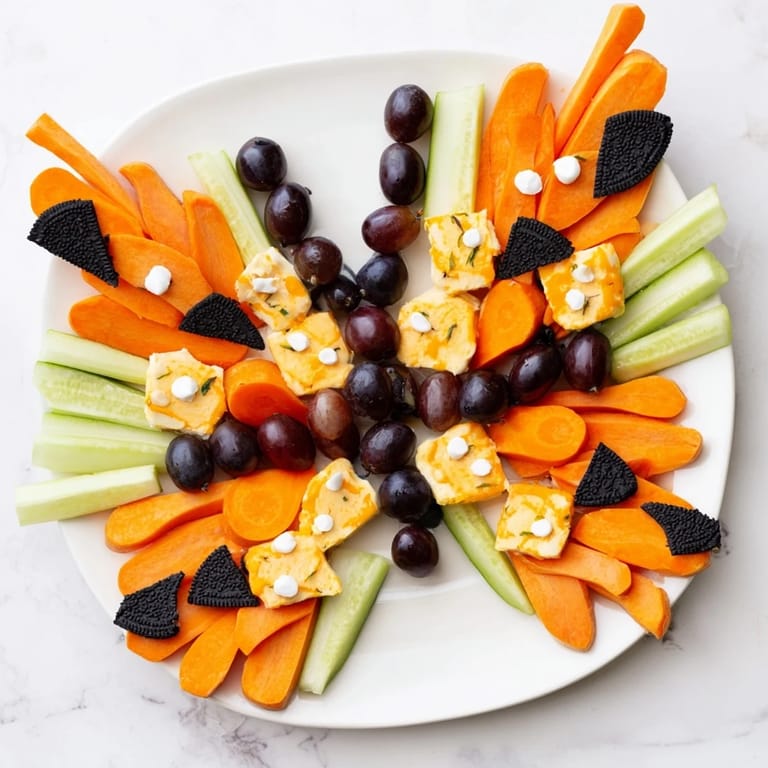
 I'll never forget the moment my niece walked into the kitchen and gasped when she saw the Monarch Butterfly Wings platter I'd spent the afternoon arranging. She was eight, obsessed with insects, and had just finished a school project on monarch migrations. Watching her eyes light up—not just because it was beautiful, but because it celebrated something she loved—that's when I realized this wasn't just an appetizer. It was edible art that tells a story, and every gathering since then has started with someone asking if I'd make those butterfly wings again.
My best friend Sarah brought her three kids to a garden party, and they actually sat down together to eat vegetables without complaining—because they were too busy admiring the butterfly before digging in. That's when I knew this recipe was pure magic. It transforms simple ingredients into an experience that makes people slow down and appreciate the care you've taken.
Ingredients
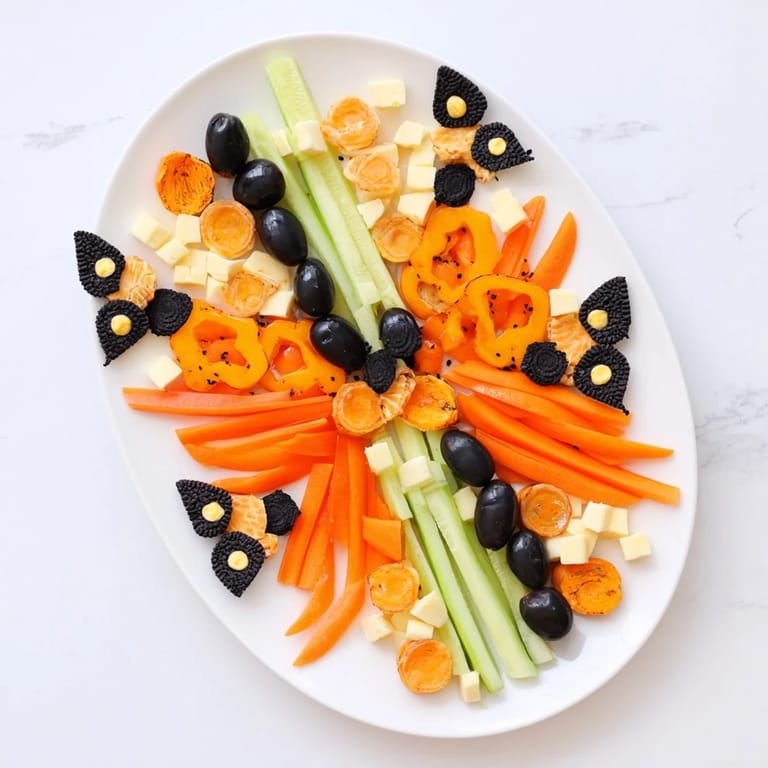
- Sweet potato: Roasted until just tender, these create that rich, warm orange that forms the heart of the upper wings. I learned to slice them thin so they're delicate enough to pick up but sturdy enough not to fall apart.
- Carrot rounds: Raw carrots add a crisp sweetness that keeps the platter from feeling heavy. The natural rings create a beautiful nested pattern.
- Orange bell pepper strips: These bring both color and a subtle sweetness that plays beautifully against the creamy cheese and briny olives.
- Cheddar cheese cubes: Sharp and satisfying, they're the protein anchor that makes this actually substantial enough for an appetizer spread.
- Black olives: Halved and scattered along the edges, these create the dramatic black borders that give the butterfly its dramatic silhouette.
- Black grapes: This was my secret discovery—they add a burst of sweetness and look like little jewels when you halve them. They're also the safest element for kids who might not love olives.
- Black crackers: These ground the platter in texture and make it interactive—people naturally want to build bites with them.
- Balsamic glaze: Just a whisper of this over the black sections deepens the color and adds an elegant, slightly sweet-tart note.
- Cucumber sticks: The body of your butterfly, running down the center. Slice them lengthwise to create natural lines that guide the eye.
- Cream cheese: Your secret ingredient for detail work. Those little white dots you'll dot around the black edges? That's what authentic monarch wings have, and it's the detail people notice and remember.
- Fresh dill or microgreens: The antennae that complete the illusion. Even a small garnish transforms the whole piece from beautiful to unmistakably butterfly-shaped.
Tired of Takeout? 🥡
Get 10 meals you can make faster than delivery arrives. Seriously.
One email. No spam. Unsubscribe anytime.
Instructions
- Prep with intention:
- Start by preparing every element before you touch the platter. Roast your sweet potato slices at 400°F for about 15 minutes until they're just tender—you want them pliable but not mushy. While they cool, slice your vegetables and cheese. This is where good knife work matters; thin, consistent slices make the whole presentation sing. Halve your olives and grapes, and have your cream cheese at room temperature so it's soft enough to create clean dots.
- Create the foundation:
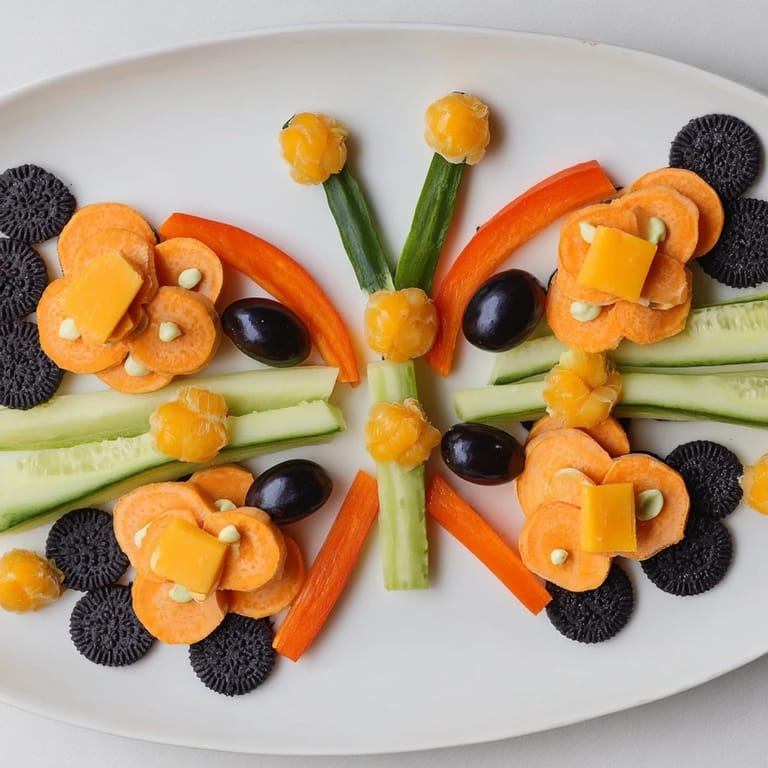
- Find your largest platter, preferably rectangular or oval. Lay your cucumber sticks down the center like the body of your butterfly—this is your anchor line, so take a moment to center it properly. Step back and look at it. This simple line is going to organize everything else.
- Fan the wings:
- Now for the meditative part. Starting with your roasted sweet potato slices, arrange them in a fanned, slightly symmetrical pattern on both sides of the cucumber body. Think of how monarch wings actually fold and overlap. Don't aim for perfect symmetry—nature rarely is, and that's what makes it beautiful. Leave some negative space; you're not covering every inch.
- Build the black contrast:
- Here's where the magic happens. In the spaces you left, strategically place your black olives, black grapes, and crackers. The olives should cluster along the outer edges of your orange sections—this mimics the dramatic black borders of an actual monarch wing. Your eye should travel from the orange center outward to that bold black edge.
- Add the details:
- Soften your cream cheese to room temperature and, using a small spoon or your fingers, place tiny dots along the black sections. These aren't random—place them where the black meets the orange, like the authentic wing spots. This detail is what transforms it from pretty to unmistakably monarch-like.
- Finish with flourish:
- If using balsamic glaze, drizzle it very sparingly over the black sections—you're not painting; you're adding subtle depth and sheen. Finally, top the cucumber body with your dill or microgreens, standing them up slightly to create antennae. This final touch should happen just before serving so it stays fresh.
- Serve with ceremony:
- Bring it to the table with a moment of pause. Let people admire it. Then invite them to build their own bites, mixing colors and textures. This is as much about the experience as the eating.
 Save to Pinterest
 I served this at my cousin's bridal shower, and one of the guests—a woman in her seventies who never eats appetizers—stood there for five minutes just looking at it before taking a photo. She told me later that her mother used to paint monarchs, and seeing this on a plate made her remember being in her mother's studio as a little girl. That's when food becomes memory, when it becomes something that connects people across time.
Making It Your Own
This is a recipe begging for personalization. Substitute roasted butternut squash or orange cherry tomatoes for sweet potato if that's what's in your kitchen. Add thin slices of purple carrot or roasted beet for extra color complexity. Some friends add a drizzle of honey mixed with a tiny bit of hot sauce over the cheese for sweetness with a subtle kick. The beauty is that the structure—the colorful wings, the dark edges, the body—remains instantly recognizable even as you make it your own.
Timing and Pairing
This is the kind of appetizer that works because it's not heavy or complicated. It pairs beautifully with crisp white wines like Sauvignon Blanc or Pinot Grigio, sparkling water with fresh citrus, or even a light rosé if you're leaning into the garden-party vibe. I like to serve it early in a gathering, before everyone's palate is tired, because the bright colors and fresh vegetables deserve a moment of full attention.
The Story Behind the Presentation
Food plating became an art form for a reason—our eyes eat first. When you take time to arrange something thoughtfully, even simple ingredients, you're saying to your guests: you matter enough for me to create something beautiful for you. This butterfly platter is that message made edible. It works for children's parties, bridal showers, garden gatherings, or any moment where you want to turn appetizers into an experience.
- If you're making this for a themed event, you can create multiple small butter-wing platters instead of one large one—it's more intimate and easier to manage.
- Keep the components separate until the last moment, then assemble quickly so everything tastes fresh and looks pristine.
- Remember that kids and non-adventurous eaters will gravitate toward the crackers and cheese, while others will dive into everything—this platter welcomes all appetites.
 Save to Pinterest
 This platter reminds me why I love cooking: not because it's complicated, but because it connects us. Every time someone gasps at the butterfly and then takes a photo, I remember why the small moments of beauty matter. Make this for people you love, and watch how a simple arrangement of vegetables becomes a memory they'll carry.
Recipe FAQs
- → What ingredients create the orange elements?
Orange elements include roasted sweet potato slices, thin carrot rounds, orange bell pepper strips, and cubed cheddar cheese.
- → How is the central line of the platter formed?
The body line is created with cucumber sticks arranged lengthwise down the platter’s center.
- → What adds the black accents resembling butterfly wings?
Black olives, black grapes, and black sesame or rice crackers form the distinctive dark edges and spots.
- → How are the white dots created along the wings?
Small dollops of softened cream cheese are placed on the black edges to replicate white spots.
- → Are there recommended alternatives for the orange elements?
Yes, roasted butternut squash or orange cherry tomatoes can substitute for some orange components.
- → What utensils are helpful for assembling the platter?
Using a sharp knife, vegetable peeler, and small spoon for the cream cheese dots ensures precise arrangement.