 Save to Pinterest
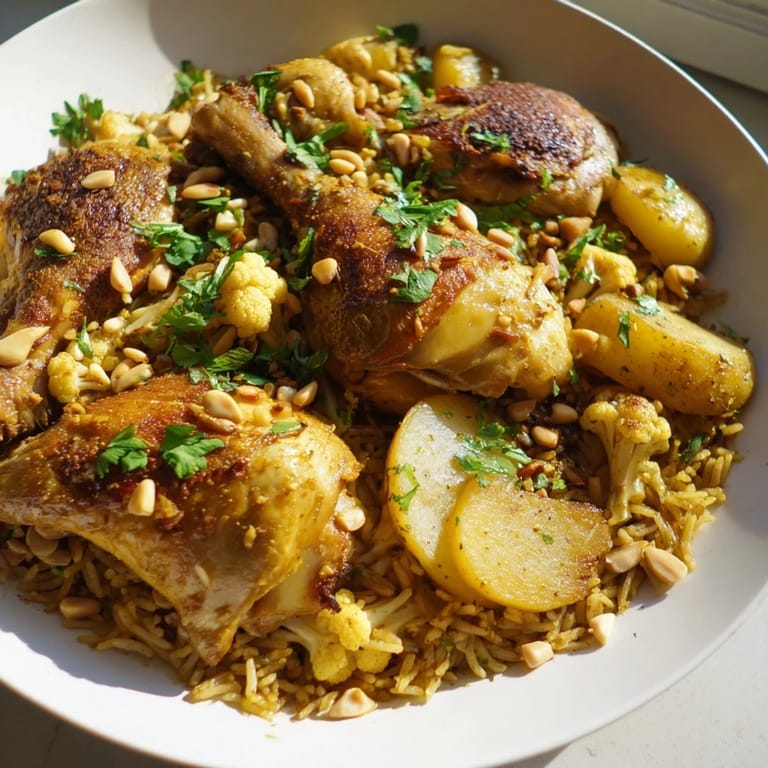
 My friend Amira taught me maklouba on a humid summer afternoon when her kitchen smelled like toasted spices and anticipation. She'd been promising to show me this dramatic Palestinian dish for months, and when I finally arrived, the pot was already sizzling with golden cauliflower and crispy potatoes. The real magic, she said, came at the end, when we'd flip the entire pot onto a platter in one bold motion. I was nervous, she was calm, and somehow that nervousness made the moment feel important.
Years later, I made this for a dinner party and watched my guests lean back in their chairs with that specific look of satisfaction you only get from food that feels both special and comforting. One person asked if it was restaurant-quality, and I realized that maklouba isn't fancy because of ingredients or technique—it's fancy because it asks you to trust the process and then rewards that trust with something beautiful. That's what keeps me coming back to it.
Ingredients
- Bone-in chicken pieces (1.2 kg): The bones add depth to the dish as it cooks, and dark meat stays tender in the long cooking time.
- Basmati rice (2 cups): Long-grain rice separates nicely instead of turning mushy, and soaking it first helps prevent clumping.
- Cauliflower florets and potatoes: These are your textural anchors—fried until crispy, they hold up beautifully in the layers and give you something to bite into.
- Spice blend (cumin, coriander, cinnamon, turmeric, allspice, cardamom): Each spice plays a role; together they're warm and slightly sweet without any harshness.
- Fresh onion and garlic space: The onion mellows during cooking and becomes almost part of the aromatics that perfume everything.
- Chicken stock (5 cups): Use something flavorful because there's nowhere for watery broth to hide.
Tired of Takeout? 🥡
Get 10 meals you can make faster than delivery arrives. Seriously.
One email. No spam. Unsubscribe anytime.
Instructions
- Soak and prepare:
- Rinse your rice under cold running water until the water runs mostly clear, then soak it with salt for 30 minutes. This removes starch and helps each grain cook separately.
- Brown the chicken:
- Heat olive oil in your pot until it's hot enough that the chicken sizzles immediately when it hits the pan. Don't move it around—let it sit and develop that golden crust, about 3 minutes per side. You're building flavor here, not rushing.
- Build the spice base:
- Once the chicken is out, add sliced onion to the same pot and let it soften and turn translucent. Toast your spices in that oil for just a minute—you'll smell the change right away, when they become fragrant and almost alive.
- Simmer the chicken:
- Return the chicken to the pot, add your stock, and let it bubble gently for about 20 minutes. The chicken will cook through and the broth will become infused with spice and chicken flavor.
- Fry vegetables until golden:
- While the chicken simmers, heat oil in a separate deep pan and fry your cauliflower and potato slices in batches until they're deep golden brown and crispy at the edges. Don't crowd the pan or they'll steam instead of fry.
- Layer with intention:
- In your heavy-bottomed pot, arrange potato slices on the bottom as your foundation. Layer the cooked chicken on top, then the fried cauliflower, then the drained rice, pressing gently so everything nestles together.
- Cook low and slow:
- Pour broth over the rice until it's just covered—about 4 to 5 cups. Once steam starts rising, cover tightly and drop the heat to low. The magic happens here: rice absorbs the broth, steam cooks everything through, and flavors meld together. Don't peek.
- Rest before the flip:
- When the timer goes off, turn off the heat and let the pot sit for 10 to 15 minutes. This gives the rice a chance to set and makes the whole dish more likely to stay together when you invert it.
- The dramatic finale:
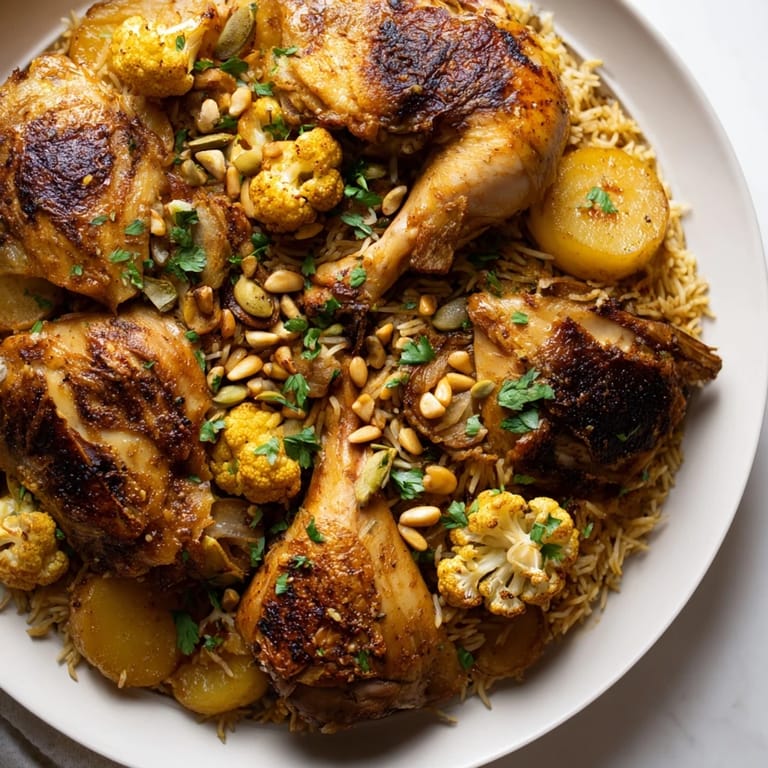
- Place a large serving platter over the pot opening, take a breath, and in one confident motion flip the entire pot upside down. Lift it away slowly and you'll have a golden-topped dome of maklouba sitting perfectly on your platter.
 Save to Pinterest
 The best part isn't actually the eating, though that's wonderful. It's the moment right before the flip when everyone gathers around the table, sensing something exciting is about to happen. There's anticipation in the air, and that's when you know a recipe has become more than sustenance—it's become a story you get to tell every time you make it.
Why This Dish Works
Maklouba succeeds because it respects layering and timing. The potatoes at the bottom crisp up and create a sturdy base. The chicken sits in the middle where the steam is most intense, cooking gently and staying succulent. The rice absorbs all the broth and spice flavor without drying out because it's sitting on top where the heat is gentler. Each ingredient has its moment and its place, and they all come together in the final dish.
Variations Worth Trying
Once you've made the classic version, you can start experimenting. Add eggplant slices fried alongside the cauliflower, or include thinly sliced carrots for a softer sweetness. Some families use lamb instead of chicken, or make it fully vegetarian by skipping meat and using vegetable broth instead. Each variation changes the flavor slightly, but the technique and structure stay the same. The beauty of maklouba is that it's flexible enough to reflect your kitchen and your preferences.
Serving and Storage
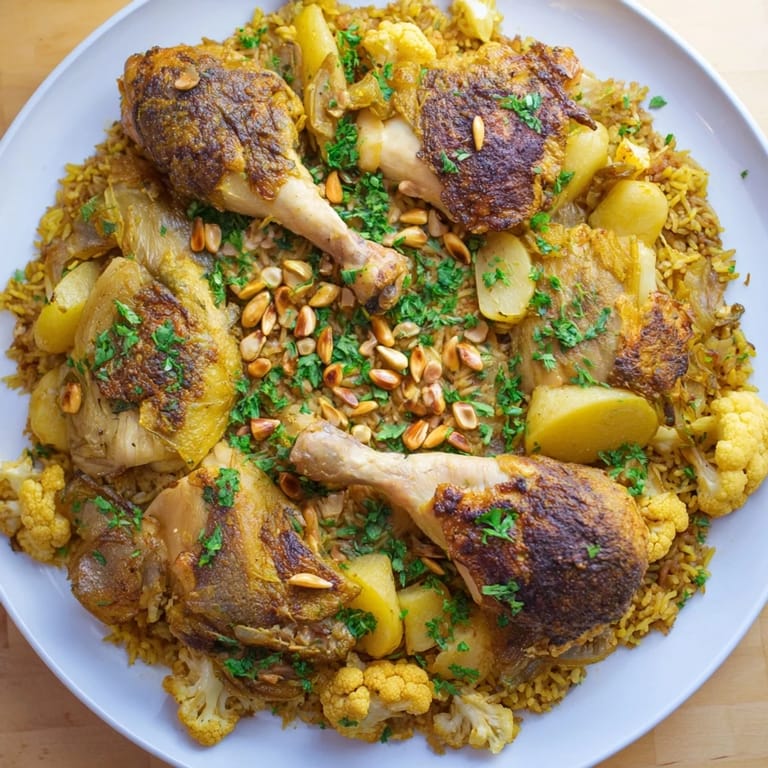
Maklouba is best served hot, fresh from the platter while the rice is still steaming and the vegetables still have some structure. Scatter toasted pine nuts and fresh parsley across the top just before bringing it to the table—they add brightness and a little crunch. On the side, serve plain yogurt for cooling contrast, or a crisp Arabic salad with tomatoes, cucumbers, and lemon dressing. Leftovers can be covered and refrigerated for a few days, though the textures shift slightly when reheated.
- If you have leftover maklouba, you can reheat it gently in a covered pot over low heat with a splash of water.
- Some families crumble the leftovers and fry them again with an egg for breakfast, which is honestly even better than the original.
- Make sure your pot is truly heavy-bottomed so the rice cooks evenly and doesn't scorch at the bottom.
 Save to Pinterest
 There's something deeply satisfying about making a dish that asks you to be a little bit brave. Maklouba rewards that bravery with layers of flavor and a moment of theater that lingers long after the meal ends.
Recipe FAQs
- → What is the key to achieving distinct layers in Maklouba?
Proper frying of the vegetables and careful layering in the pot ensures the layers remain separate when inverted.
- → Can I use boneless chicken instead of bone-in pieces?
Bone-in chicken adds flavor and moisture, but boneless can be used; adjust cooking time accordingly.
- → How do the spices influence the dish's flavor profile?
Spices like cumin, coriander, cinnamon, and turmeric create a warm, aromatic base that complements the tender chicken and vegetables.
- → Is it necessary to soak the rice before cooking?
Soaking basmati rice helps achieve a fluffier, less sticky texture after cooking.
- → Can Maklouba be prepared without meat?
Yes, by substituting chicken with vegetable broth and adding more vegetables like eggplant or carrots.
- → What is the best way to invert the dish without breaking it?
Use a large heavy-bottomed pot and a serving platter; flip quickly and carefully to keep layers intact.