 Save to Pinterest
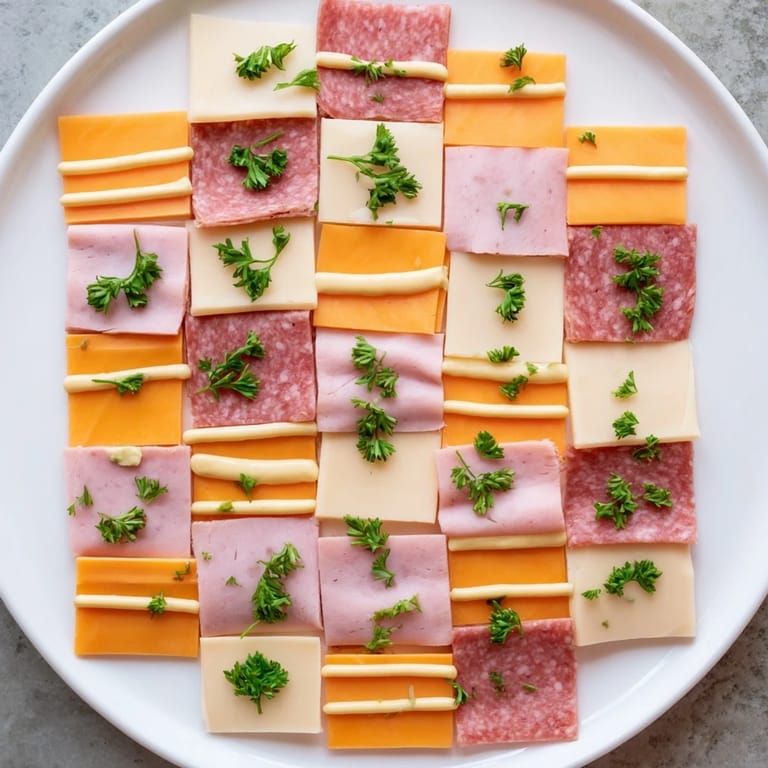
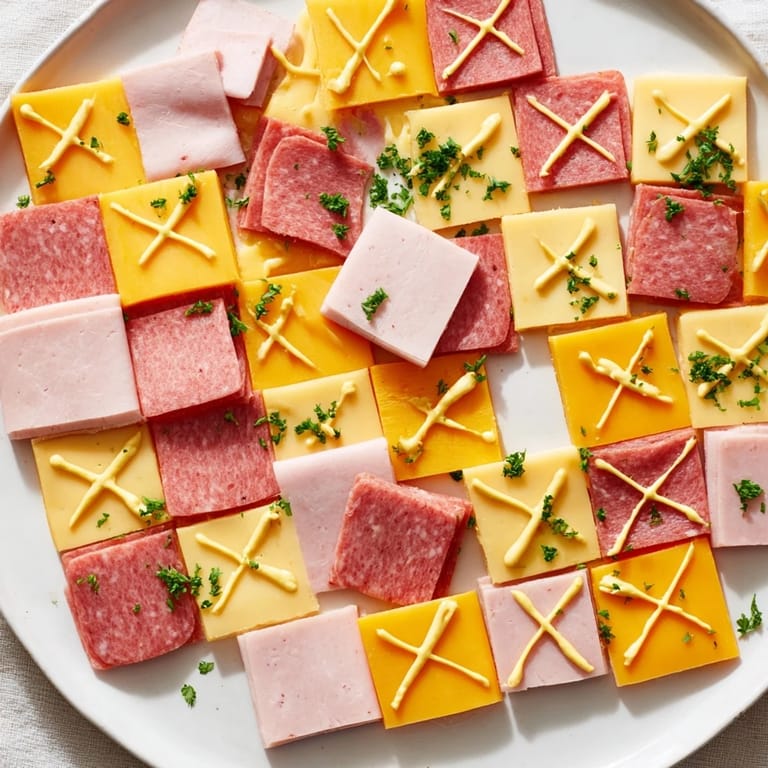
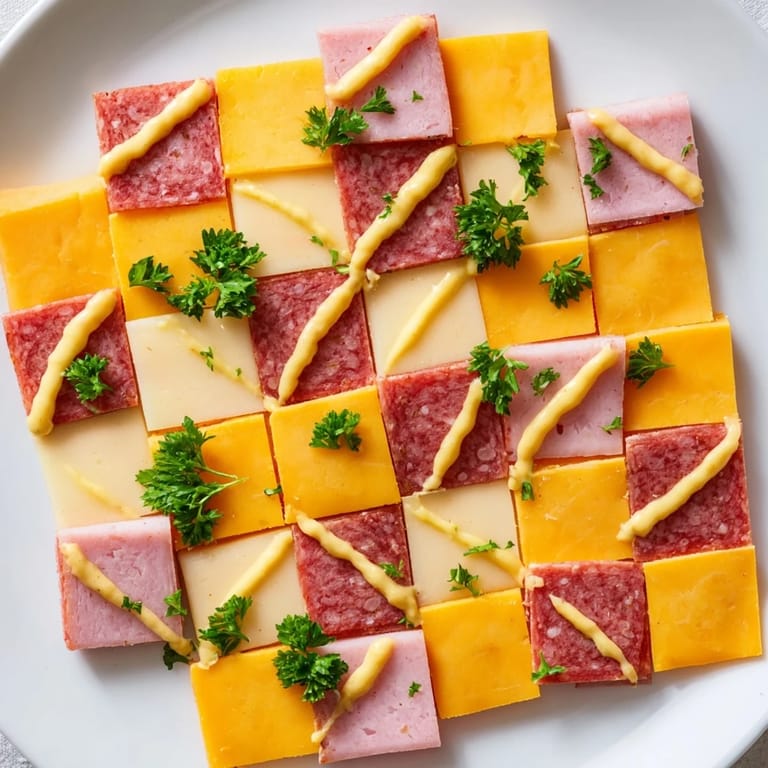
 There's something deeply satisfying about turning a charcuterie board into an actual art project. I was hosting a casual dinner when I realized I had all these colorful meats and cheeses scattered across the counter, and instead of just heaping them onto a board like usual, I thought, what if I made them into something intentional? The Patchwork Quilt came to life that evening—arranged like a game board, stitched together with mustard lines that made everyone stop and actually look before eating.
I made this for my sister's book club, and watching six women lean in closer to examine the pattern before anyone touched it told me I'd stumbled onto something. One of them laughed and said it looked too nice to eat, then immediately grabbed a corner piece anyway. That's when I knew this wasn't just appetizer logistics—it was a conversation starter.
Ingredients
- Smoked turkey breast (100 g, sliced): The lightest note in your quilt, it bridges flavors without overwhelming. Ask your deli counter to slice it thin enough to fold into squares—thicker slices get tough.
- Salami (100 g, sliced): This is your color pop and your umami anchor. The slight grease it releases actually protects adjacent cheeses from drying out, which I discovered by accident.
- Ham (100 g, sliced): It stays tender and mild, offering a gentler counterpoint to the sharpness of the cheeses.
- Swiss cheese (100 g, sliced): Nutty and delicate, it pairs effortlessly with everything else and won't overpower. Deli counter slices work better than pre-packaged here.
- Sharp cheddar (100 g, sliced): Your bold statement. It's assertive enough to stand up to the salami and adds golden tones to the arrangement.
- Provolone (100 g, sliced): Creamy and slightly tangy, it's the diplomatic cheese that makes every meat taste better.
- Whole grain mustard (2 tbsp): Those little seed bursts add texture and a subtle sweetness that cuts through the richness of the meats beauli>
- Dijon mustard (2 tbsp): Sharper and smoother, it provides visual contrast in your mustard lines and a different flavor note between each alternation.
- Fresh parsley or chives (finely chopped, optional): Just a whisper of green catches the light and reminds everyone this is thoughtfully made, not thrown together.
Tired of Takeout? 🥡
Get 10 meals you can make faster than delivery arrives. Seriously.
One email. No spam. Unsubscribe anytime.
Instructions
- Cut everything into uniform squares:
- Aim for 2-inch squares across meats and cheeses—uniformity is what makes the patchwork actually look like a quilt. A sharp knife and a steady hand matter here; dull knives tear delicate cheeses.
- Arrange in your pattern:
- Start from one corner and work across like you're playing checkers, alternating meats and cheeses. The symmetry doesn't have to be perfect, but it should feel intentional. Step back after each row and look at it from across the room.
- Stitch your mustard lines:
- A squeeze bottle or piping bag gives you control that a spreading knife won't. Thin lines between squares look elegant; thick globs look accidental. Alternate between whole grain and Dijon so the stitching itself becomes part of the visual pattern.
- Garnish and serve:
- A light scatter of chopped parsley catches the eye and adds a fresh note. Have toothpicks standing by so people can pick up individual squares without the whole thing collapsing.
 Save to Pinterest
 What surprised me most was how this simple arrangement changed the eating experience. Instead of grazing mindlessly, people were actually tasting how salami and sharp cheddar complement each other, how the mustard brings it all together. It transformed a spread into a moment of attention.
The Art of the Board
Patchwork isn't just a cute name—it's a real design principle that works for appetizers. When you mix colors, textures, and flavors in a deliberate pattern, each element stands out instead of blending into a jumble. The careful arrangement also helps people navigate what they're tasting, which matters when you're trying to impress.
Flavor Balance Matters
Three meats and three cheeses might sound like a lot, but they were chosen to balance each other. Smoked turkey is the quiet opener, salami brings richness, ham adds familiarity. The cheeses follow a similar arc—Swiss is approachable, sharp cheddar is bold, provolone bridges the two. The mustards tie everything together without stealing the show. It's like composing a conversation where everyone gets to talk.
Making It Your Own
This quilt is a template, not a rule. I've made versions with roasted red pepper squares tucked in for color, added sliced pepperoni for spice, or used fresh mozzarella for creaminess. The structure stays the same, but the personality shifts. Trust your taste and your eye.
- Roasted vegetables like red peppers or sun-dried tomatoes add visual drama and a different texture entirely.
- If you want to lean into sharper flavors, try aged gouda, manchego, or even a crumbly aged cheddar instead of Swiss.
- The squeeze bottle is your best friend—practice your lines once or twice on a spare plate before committing to the platter.
 Save to Pinterest
 The Patchwork Quilt proves that appetizers don't have to be complicated to feel special. It's just thoughtfulness arranged beautifully, and somehow that matters more than we realize.
Recipe FAQs
- → How do I create the patchwork pattern?
Cut all meats and cheeses into uniform squares then arrange them alternately in a checkerboard pattern on a platter.
- → What types of mustard are recommended?
Use a combination of whole grain and Dijon mustards to pipe between squares, adding tang and texture.
- → Can this dish accommodate dietary restrictions?
Yes, it’s gluten-free and low-carb as designed; cheese and meats are the main components.
- → What tools are useful for assembling?
A sharp knife, cutting board, and a squeeze bottle or piping bag for mustard are helpful.
- → How should this be served?
Serve immediately, optionally with fresh parsley or chives and toothpicks or small forks for easy tasting.