 Save to Pinterest
 There's something about the sound of a wooden spoon scraping against the bottom of a pot that signals comfort is coming. My kitchen filled with steam one chilly afternoon, and I found myself chopping vegetables almost without thinking, muscle memory taking over from years of making soup on days when nothing else felt quite right. This potato and vegetable soup emerged not from a craving but from a quiet need to simmer something nourishing while the rain drummed against the window. Every vegetable that goes in carries its own small promise of tenderness, each one softening into the broth until the whole thing becomes greater than its parts.
I made this for a friend who'd had a rough week, and watching her face soften as she tasted it reminded me that soup is really about showing up for people. She asked for seconds before finishing her first bowl, and somehow that small moment felt like the whole point of cooking anything at all.
Ingredients
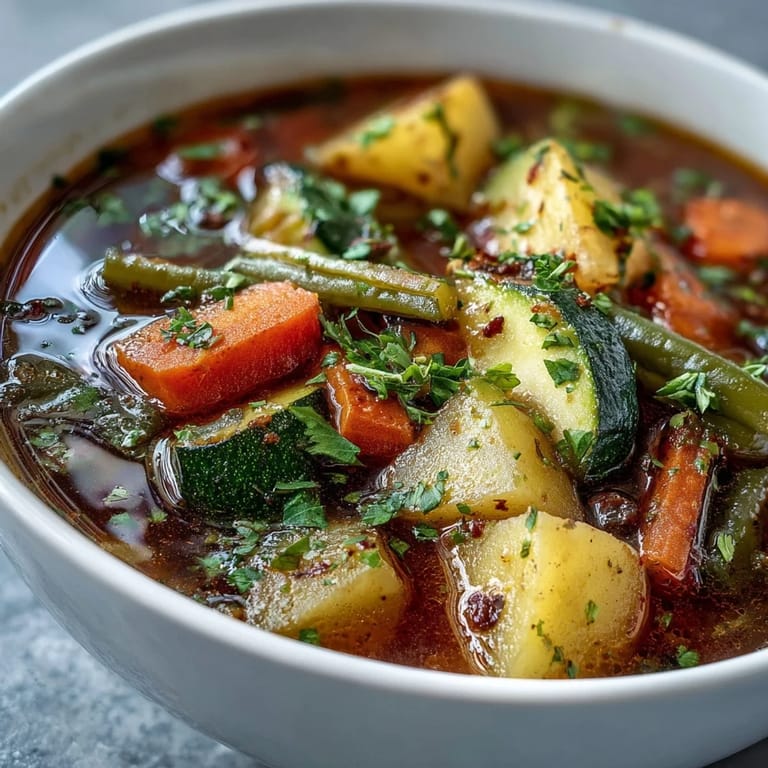
- Potatoes: Three medium ones, diced into cubes that'll cook through in about twenty minutes—not too small or they'll dissolve, not too big or they'll lag behind everything else.
- Carrots: The natural sweetness that balances the earthiness, sliced so they soften at roughly the same pace as the potatoes.
- Celery: Those two stalks are your quiet backbone, adding a subtle flavor that ties the whole thing together without announcing itself.
- Onion: One medium onion chopped fine, because it's the first thing that hits the oil and starts building all the flavor underneath.
- Zucchini: Diced into half-inch pieces, staying delicate and almost melting into the broth by the end.
- Green beans: Cut into one-inch pieces so they stay distinct and slightly snappy rather than turning to mush.
- Garlic: Two cloves minced, just enough to whisper through the whole pot without overpowering.
- Vegetable stock: Six cups of good quality stock—this is where the soup's soul lives, so taste it first and make sure you'd drink it on its own.
- Bay leaf: Leave it whole so you remember to fish it out at the end, but it perfumes everything while it's there.
- Thyme and parsley: Dried herbs that wake up the moment they meet the hot broth, filling the air with something almost floral.
- Salt and black pepper: Half a teaspoon of pepper sounds like nothing until you taste the difference it makes.
- Olive oil: Two tablespoons to start everything off with a gentle sizzle.
- Frozen peas: A full cup stirred in at the very end so they stay bright and almost tender-crisp.
- Fresh parsley: Optional, but it catches the light on top and makes the whole bowl look like you put thought into it.
Tired of Takeout? 🥡
Get 10 meals you can make faster than delivery arrives. Seriously.
One email. No spam. Unsubscribe anytime.
Instructions
- Wake up the aromatics:
- Heat that olive oil in a large pot over medium heat until it shimmers slightly, then add your onion, carrots, and celery. Let them soften for about five minutes, stirring every now and then—you're looking for the onion to turn translucent and the kitchen to start smelling like home.
- Invite the garlic:
- Add your minced garlic and let it cook for just one minute, just long enough to release all that pungent magic without letting it burn and turn bitter. Your nose will tell you when it's right.
- Build the foundation:
- Stir in the potatoes, green beans, and zucchini, give everything a gentle stir, and let it cook for two minutes so the vegetables start to get acquainted with the heat. You're not trying to cook them yet, just waking them up.
- Add the broth and seasonings:
- Pour in your vegetable stock and add the bay leaf, thyme, parsley, salt, and pepper all at once. Stir everything so the seasonings are distributed and the whole pot becomes one cohesive thing.
- Let it simmer:
- Bring the pot to a boil—you'll see the surface start to bubble and roil—then reduce the heat, put the lid on, and let it simmer gently for twenty to twenty-five minutes. This is when patience pays off, as the potatoes soften and the flavors become more intimate.
- Finish with brightness:
- Stir in that full cup of frozen peas and cook for another two to three minutes until they're heated through and tender but not gray. Then fish out the bay leaf before anyone bites into it.
- Serve with intention:
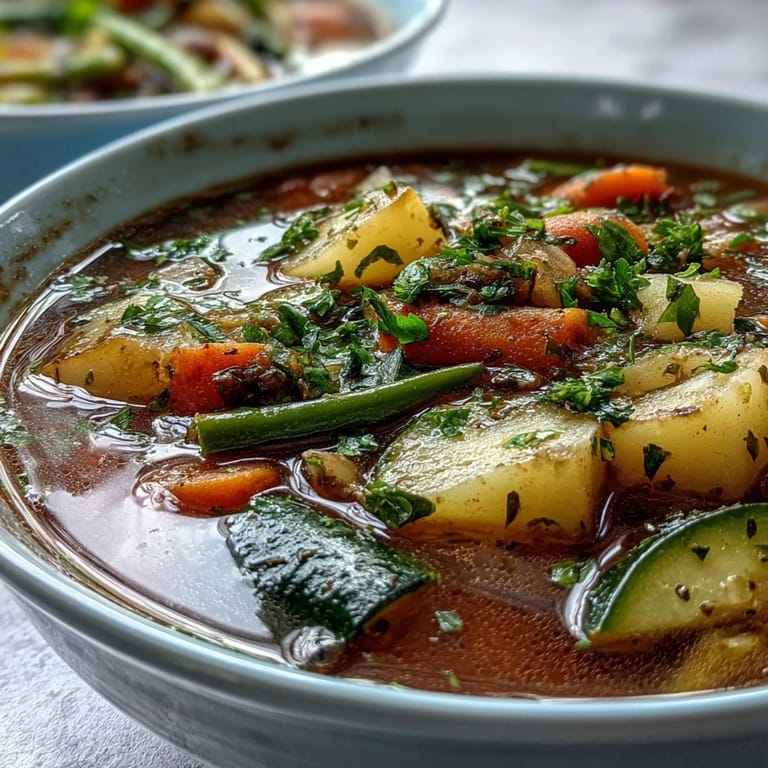
- Ladle the soup into bowls and scatter some fresh parsley on top if you have it, then serve it while it's still steaming and holding onto all that warmth.
 Save to Pinterest
 There was a moment when my niece, who usually picks around everything on her plate, asked for the recipe so she could make it at her place. That's when I realized this soup had become something she felt confident enough to attempt, which somehow felt more meaningful than any compliment.
When to Swap in Your Own Vegetables
The beauty of this soup is its flexibility, so don't feel married to exactly what's written here. If it's summer and you have corn, throw that in instead of some of the green beans. Spinach or kale stirred in at the very end adds something green and slightly mineral that feels sophisticated. Diced bell peppers add sweetness and color. Root vegetables like parsnips or turnips can replace some of the potatoes. The soup will taste different every season, which is exactly the point—it learns from what's available.
Making It Richer
If you want to turn this into something more luxurious, there are gentle ways to do it. A splash of cream stirred in just before serving creates a softer, more velvety texture that catches on your tongue differently. Some people swear by a handful of grated Parmesan stirred in right at the end, and honestly they're not wrong—the cheese melts into ribbons and adds a savory depth. For something vegan, coconut milk works beautifully, adding richness without any animal products. None of these additions are necessary, but they're there if you need the soup to feel like an occasion.
Storage and Company
This soup tastes even better the next day once everything has gotten to know each other a bit longer. It keeps beautifully in the refrigerator for four or five days, and it freezes well too—just leave out the fresh parsley and add it after reheating. Serving it with crusty bread and maybe a simple salad turns a bowl of soup into a meal that feels complete and intentional.
- If the soup thickens up in the refrigerator, a splash of water or stock when reheating brings it back to life.
- Taste it again before serving because flavors can shift and you might want to adjust the seasoning one more time.
- A warm bowl in your hands on a difficult day is its own kind of medicine.
 Save to Pinterest
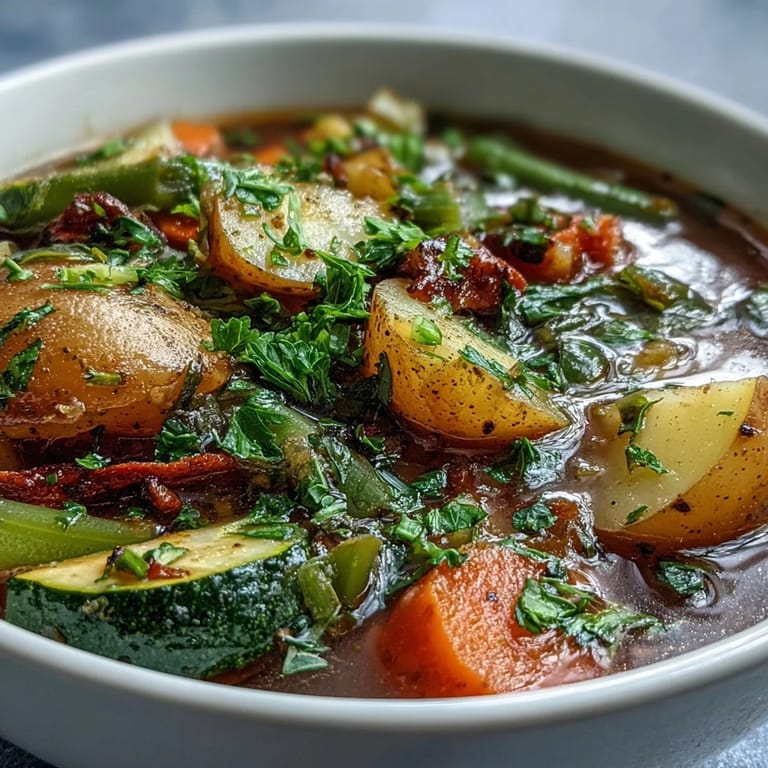
 This is the kind of soup that asks nothing of you except time and a few vegetables, and somehow gives back comfort and nourishment in return. Make it often enough and it becomes less a recipe you follow and more a second language you speak without thinking.
Recipe FAQs
- → Can I freeze this soup?
Yes, this soup freezes well for up to 3 months. Cool completely before transferring to freezer-safe containers. Thaw overnight in the refrigerator before reheating.
- → What vegetables work best?
Potatoes, carrots, celery, onions, zucchini, and green beans are classic choices. You can also add corn, spinach, kale, or whatever seasonal vegetables you have on hand.
- → How do I make it creamier?
Stir in a splash of heavy cream during the last 5 minutes of cooking, or blend a portion of the soup and return it to the pot for added texture.
- → Is this suitable for meal prep?
Absolutely. The flavors actually improve after a day or two. Store in airtight containers in the refrigerator for up to 5 days.
- → Can I use dried herbs instead of fresh?
Yes, dried thyme and parsley work beautifully. Use about one-third the amount of dried herbs compared to fresh, as they're more concentrated.
- → What should I serve with this?
Crusty bread makes an excellent accompaniment for dipping. A simple side salad also complements the soup nicely for a complete meal.