 Save to Pinterest
 The first time I made these protein snack boxes, I was standing in my kitchen at 6 a.m., staring at leftover rotisserie chicken and wondering how to make lunch prep feel less like a chore. It hit me that morning—why not treat it like building a charcuterie board, but for actual nutrition? Now these boxes have become my secret weapon for staying on track when life gets chaotic.
I brought these to work one day, and my coworker asked if I was trying to show everyone else up with how organized I was. Honestly, it felt good knowing I'd made something that looked intentional, tasted amazing, and kept me full until dinner without the 3 p.m. energy crash I used to get from sad desk lunches.
Ingredients
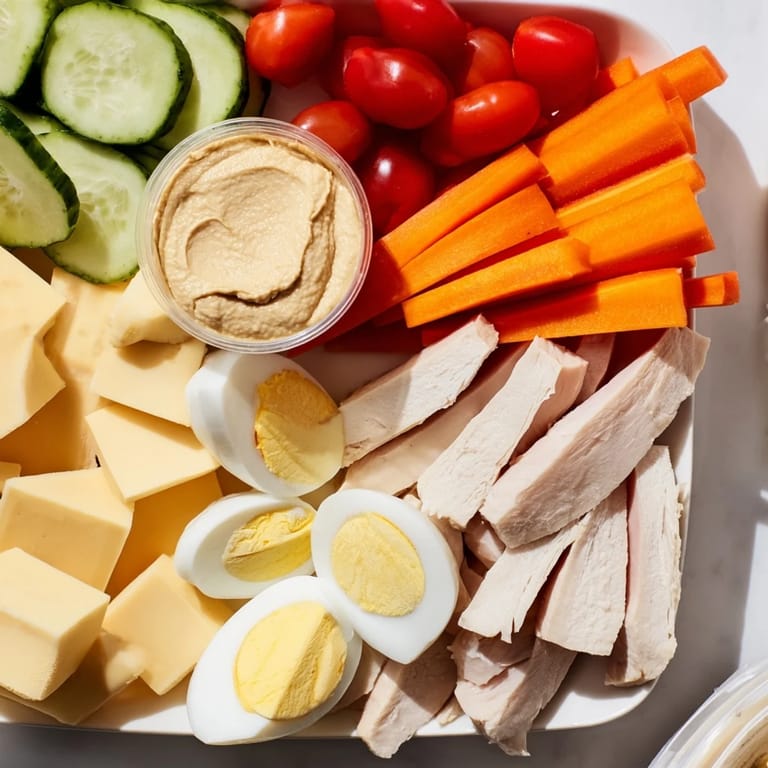
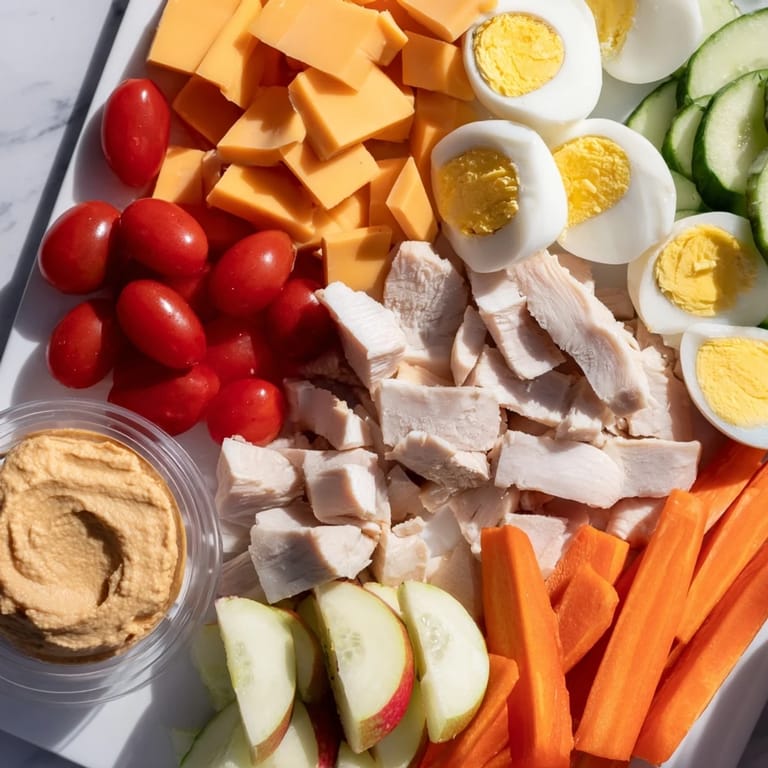
- Cooked chicken breast, sliced: This is your protein anchor—I use a rotisserie chicken when I'm lazy, or poach my own the night before if I want to control the seasoning.
- Hard-boiled eggs, peeled and halved: They add richness and keep you full longer; I boil a batch every Sunday for the whole week.
- Sliced turkey or ham: The salty, savory element that makes this feel like an actual meal instead of just rabbit food.
- Cheddar cheese, cubed: Aged cheddar has more flavor, so you need less to feel satisfied.
- Cherry tomatoes: Pick ones that are firm and sweet; watery tomatoes will turn soggy by day three.
- Cucumber slices: Cut them thick enough that they stay crisp, not paper-thin paper-thin versions get mushy.
- Baby carrots: Raw and sweet, they're the reliable constant that makes every box feel complete.
- Apple slices, tossed with lemon juice: The lemon juice prevents browning and adds brightness; this was a game-changer once I learned it.
- Hummus: Divided into separate containers so it doesn't touch everything and turn everything beige.
- Whole-grain crackers: Kept separate from wet ingredients, they stay crispy for days.
- Mixed nuts: A tablespoon gives you crunch and healthy fats that keep you satisfied.
Tired of Takeout? 🥡
Get 10 meals you can make faster than delivery arrives. Seriously.
One email. No spam. Unsubscribe anytime.
Instructions
- Set up your containers:
- Line up your meal prep boxes on the counter like you're about to create four tiny masterpieces. If your containers have compartments, you're already ahead of the game.
- Layer your proteins:
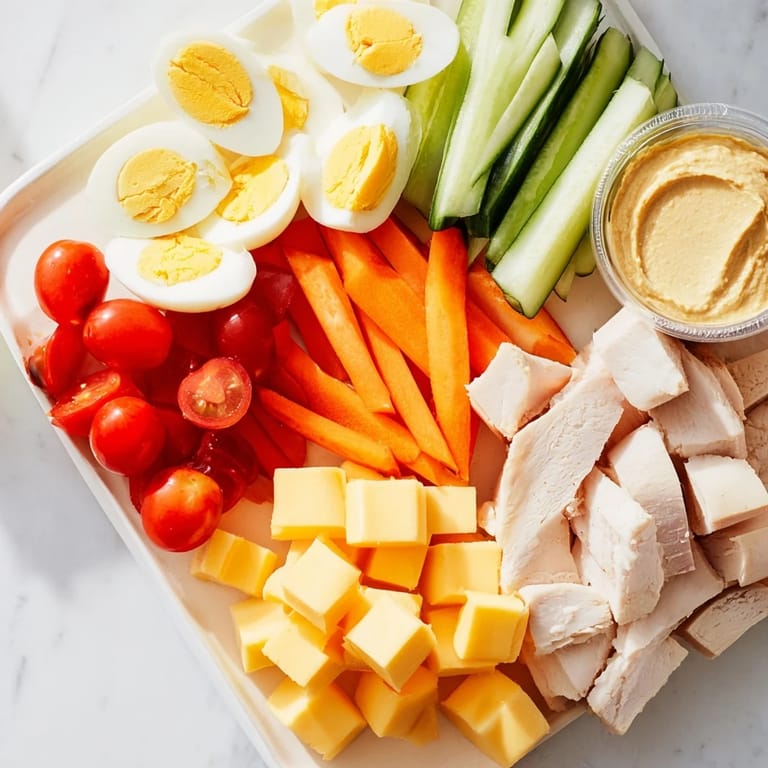
- Divide the chicken, turkey, eggs, and cheese evenly among the boxes. I do this first so everything else fits nicely around them.
- Add your vegetables and fruit:
- Arrange the tomatoes, cucumbers, carrots, and apple slices in whatever way feels good to you. There's no wrong way here, just make it look appealing enough that you'll actually want to eat it.
- Portion out the hummus:
- Keep hummus in separate small containers so it stays contained and your crackers don't get soggy. This is non-negotiable if you want these to last three days.
- Pack the crackers and nuts separately:
- Toss 4 crackers and a tablespoon of nuts into each box, but keep them in a separate compartment or spot. On the day you eat it, mix them in for the best texture.
- Seal and refrigerate:
- Close everything up tight and stick them in the fridge. They'll stay fresh for 3 to 4 days, though I usually eat them faster than that.
 Save to Pinterest
 There was a moment last month when my friend opened one of these at lunch and said, unprompted, that she felt like someone actually cared about her eating well. That stuck with me—these boxes aren't just meal prep, they're a small act of kindness to your future self.
Customization Ideas
The beauty of these boxes is how flexible they are once you understand the basic structure. Swap proteins around based on what you have: grilled shrimp works beautifully if you're tired of chicken, tofu if you're going vegetarian, or plant-based deli slices if you want something leaner. For extra crunch, throw in snap peas, bell pepper strips, or radishes instead of—or alongside—the carrots. If you want to take these Mediterranean, olives and marinated artichoke hearts transform the whole vibe without adding much time.
Storage and Freshness
These boxes peak when eaten within 3 to 4 days, and that timeline matters more than it seems. By day five, the vegetables start losing their snap, and the whole thing feels less inviting. I've learned to make two batches of four boxes instead of one giant batch of eight, which sounds like more work but actually keeps everything fresher and me more likely to stick with eating them.
Making Them Travel-Ready
When I take these on the road, I pack a small ice pack underneath to keep everything food-safe for the day. The boxes stay cold enough through lunch, and nothing gets warm or suspicious-looking by midday. If you're taking these to the gym or on a hike, they're stable enough in a regular lunch bag, and the compartments keep everything from getting mushed together.
- Pack an ice pack on the bottom if you're out for more than a few hours in warm weather.
- Keep the hummus container upright so it doesn't leak into your crackers—this one detail changes everything.
- Eat the apple slices first so they don't turn brown while sitting in your bag.
 Save to Pinterest
 These boxes have genuinely changed how I eat during the week. They're proof that healthy eating doesn't need to be complicated or boring.
Recipe FAQs
- → What proteins are included in the snack boxes?
Cooked chicken breast, sliced turkey or ham, hard-boiled eggs, and cheddar cheese provide a diverse protein selection.
- → Can I customize the vegetable and fruit selection?
Yes, cherry tomatoes, cucumber slices, baby carrots, and apple slices are suggested, but you can swap for snap peas, bell pepper strips, or radishes for extra crunch.
- → How should the snack boxes be stored?
Seal the containers and refrigerate. Consume within 3-4 days to maintain freshness and flavor.
- → Are there options for gluten-free snack boxes?
Using gluten-free crackers instead of regular ones makes the boxes suitable for a gluten-free diet.
- → What dips are included in the snack boxes?
Hummus is divided into small containers for each box to add creamy flavor without sogginess.