 Save to Pinterest
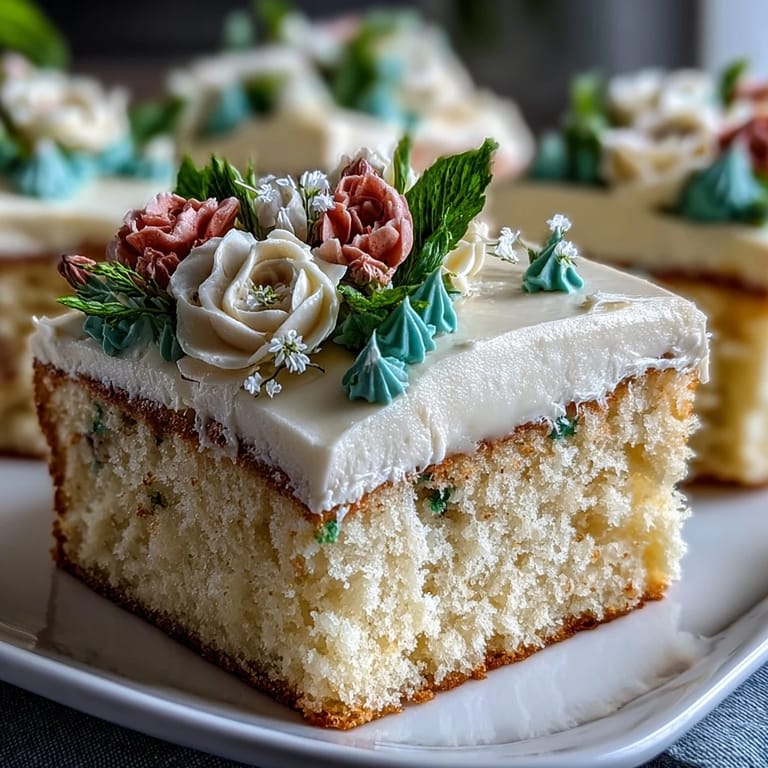
 My cousin's daughter was turning seven, and her mother asked if I'd bake something special for her First Communion celebration. Standing in the kitchen that morning, measuring flour while sunlight streamed through the windows, I decided on a simple sheet cake—the kind that lets buttercream flowers be the real star. There's something about vanilla cake that feels timeless for these moments, neither too fussy nor forgettable. I wanted her to remember the taste as much as the day itself.
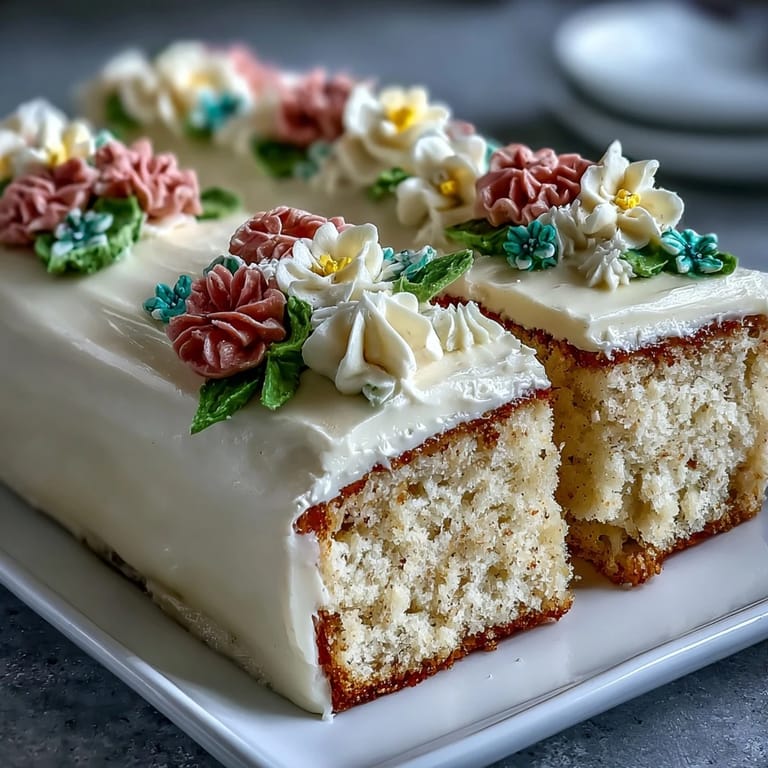
I'll never forget watching her grandmother peer at the cake as I set it down on the dessert table, flowers catching the afternoon light. She leaned in closer, genuinely amazed that the buttercream roses were homemade, and that small moment—someone recognizing the care baked into something simple—made all the piping practice worth it.
Ingredients
- All-purpose flour: The foundation that keeps the crumb tender rather than dense; make sure it's fresh by measuring it lightly and leveling with a knife.
- Baking powder: Room temperature dry ingredients distribute more evenly, so don't skip that step of whisking them together.
- Unsalted butter: Softened properly (you should be able to press your finger through it easily) creates that light, fluffy texture that makes people think you went to culinary school.
- Granulated sugar: The three-minute beating time with butter is non-negotiable—it's where the magic of aeration happens.
- Room temperature eggs: Cold eggs won't incorporate smoothly into the batter, and you'll end up with a grainy crumb; let them sit on the counter while you prep.
- Pure vanilla extract: Genuine vanilla tastes cleaner and brighter than imitation; it matters more in simple recipes like this.
- Whole milk: The fat content keeps the cake moist without making it greasy, especially important since you're not using oil.
- Powdered sugar for buttercream: Sift it even if the box says it's already sifted; lumps will ruin your piping consistency.
- Food coloring: Gel colors won't thin your buttercream the way liquid coloring does, and the hues stay vibrant without looking watery.
Tired of Takeout? 🥡
Get 10 meals you can make faster than delivery arrives. Seriously.
One email. No spam. Unsubscribe anytime.
Instructions
- Set the stage:
- Preheat your oven to 350°F and grease that 9x13 pan with butter, then line it with parchment paper hanging slightly over the sides—this makes lifting the cooled cake out so much easier. You'll want everything ready before you start mixing because once the batter comes together, it doesn't love waiting around.
- Build the dry foundation:
- Whisk flour, baking powder, and salt in a medium bowl until they're evenly combined. This simple step prevents dense pockets of flour from hiding in your batter.
- Cream butter and sugar into clouds:
- Beat softened butter with sugar for about three minutes until the mixture looks pale and fluffy, almost mousse-like. This is where you're literally trapping tiny air bubbles that will make your cake tender and light.
- Welcome the eggs:
- Add eggs one at a time, beating well after each one so they fully incorporate. If you dump all four in at once, you'll end up with a separated batter that never quite comes together.
- Fold in flavor:
- Mix in your vanilla extract until it's evenly distributed throughout the butter mixture.
- The three-part dance:
- Add one-third of the flour mixture, then half the milk, then another third of flour, then the remaining milk, then the last bit of flour—always starting and ending with flour. Mix on low speed just until combined; overmixing develops the gluten and makes the cake tough.
- Into the oven:
- Pour the batter into your prepared pan and smooth the top with a spatula so it bakes evenly. Bake for 28 to 32 minutes until a toothpick in the center comes out clean with maybe just a tiny crumb or two.
- Cool with intention:
- Let the cake rest in the pan for 10 minutes—this lets the structure set slightly so it doesn't fall apart when you turn it out. Then flip it onto a wire rack and let it cool completely before frosting, which usually takes an hour or so.
- Buttercream perfection:
- Beat softened butter until it's pale and creamy, then gradually add sifted powdered sugar alternating with milk. The gradual approach prevents you from creating a powdered sugar cloud in your kitchen and ensures a silky texture.
- Tint with intention:
- Divide your buttercream into small bowls and add gel food coloring in tiny amounts, stirring until you get the shades you want. Remember that the color deepens slightly as you mix, so start lighter than you think.
- Frost and decorate:
- Spread a generous base layer of plain white buttercream over the cooled cake, then fill your piping bags with colored buttercream. Pipe flowers, leaves, and any special touches—focus on corners and edges for a classic, balanced look.
 Save to Pinterest
 That cake sat proudly at the reception, and watching children's eyes light up when they bit into it—that tender crumb, that sweet vanilla, that smooth buttercream—reminded me why simple recipes matter. Some of the best celebrations taste like butter, sugar, and care.
Why This Cake Works for Special Occasions
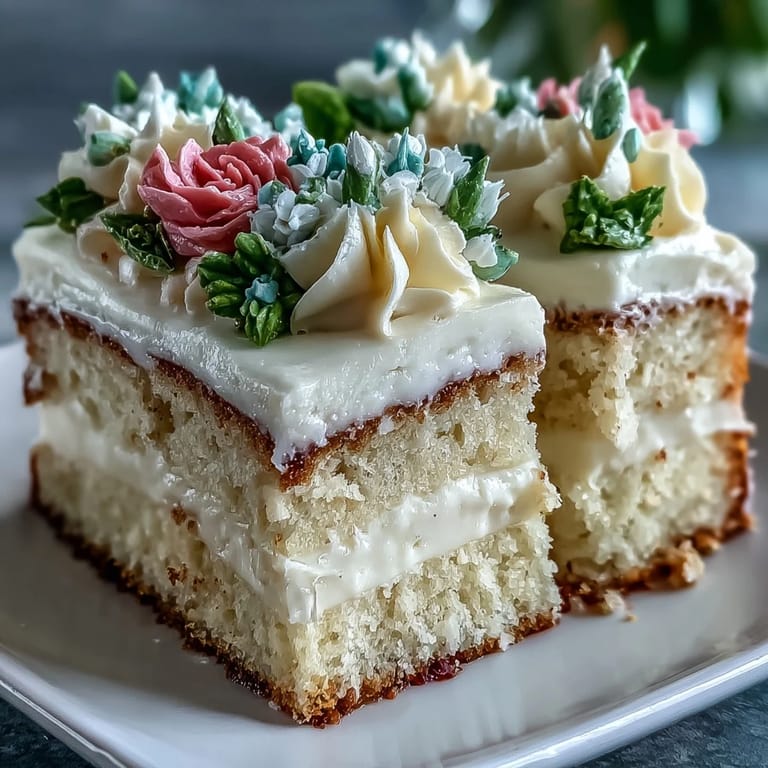
A sheet cake is the unsung hero of celebration baking. It feeds a crowd, travels well, and looks elegant without requiring you to be a professional baker. The buttercream flowers elevate it from casual to special—people genuinely think you spent hours decorating when really you just needed a piping bag and a bit of patience. For First Communions specifically, this cake feels reverent without being stuffy; it's beautiful because it's homemade, not because it's pretentious.
Making It Your Own
The recipe is flexible enough to bend to your style. If almond extract calls to you, add half a teaspoon to the batter for a subtle depth. If you want to pipe a small cross or the child's name on top, use a round piping tip and white buttercream for contrast. You could also add lemon zest to the batter or brush the cake layers with a light simple syrup to keep it extra moist—these small tweaks make the recipe feel like yours.
Timing and Storage Wisdom
The beauty of this cake is that it actually improves a day after baking; the crumb continues to settle and the flavors meld together. You can bake it the day before, cover it loosely at room temperature, and decorate it the morning of the party. This takes a huge chunk of stress out of entertaining, especially when you're juggling other celebration details.
- Frosted cake lasts three to four days covered on the counter before the buttercream starts to separate.
- If you need to transport it, place the cake on a sturdy base and keep it away from heat and direct sunlight.
- Room temperature cake always tastes better than cold cake, so pull it out of storage an hour before serving.
 Save to Pinterest
 Baking this cake for someone's milestone feels like offering a small piece of your attention in edible form. That's what makes it worth the effort.
Recipe FAQs
- → How do I ensure the cake stays moist?
Alternating the flour and milk in the batter and avoiding overmixing helps maintain moisture. Baking until a toothpick comes out clean prevents dryness.
- → What type of butter is best for the buttercream?
Unsalted butter softened to room temperature creates a smooth, creamy buttercream that holds piped decorations well.
- → Can I use gel food coloring for the decorations?
Yes, gel food coloring is preferred as it provides vibrant colors without thinning the buttercream.
- → What is the best way to pipe the floral decorations?
Use piping bags fitted with flower and leaf tips. Practice piping on parchment first to master flower shapes and leaves placement.
- → Can the cake be prepared ahead of time?
The cake can be made a day in advance and stored covered at room temperature to retain freshness before decorating.