 Save to Pinterest
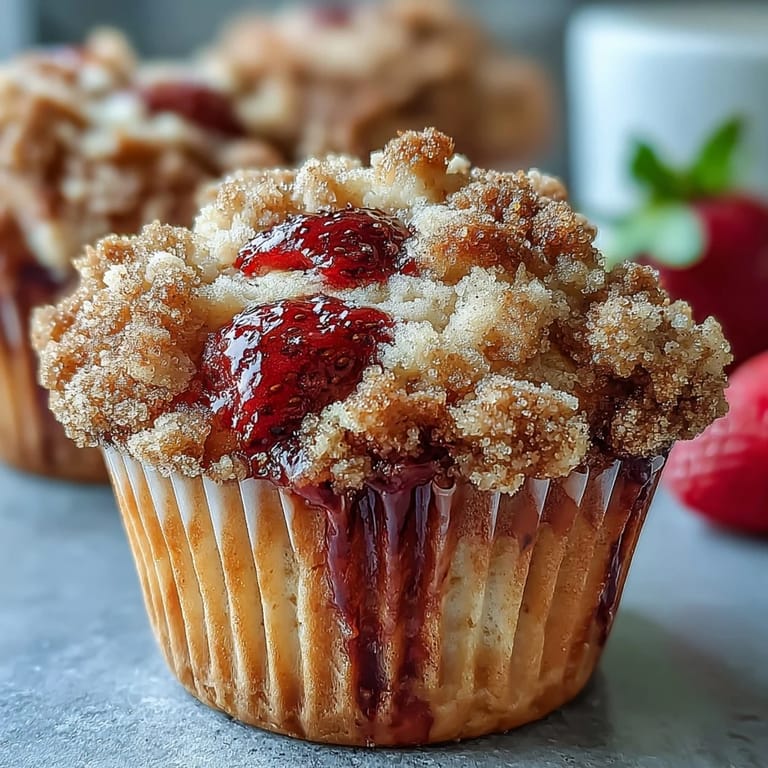
 My sourdough starter had been sitting in the fridge for weeks, neglected and accusatory, when I decided it needed redemption in the form of breakfast muffins. There's something almost magical about folding that tangy, bubbly discard into batter and watching it transform into something tender and alive. The strawberries add bursts of brightness that play beautifully against the subtle sourness—not overpowering it, just whispering alongside it. My kitchen smelled like a farmers market and a bakery had a quiet conversation, and honestly, that's when I knew this recipe was worth keeping.
I brought these to a Sunday gathering where someone's kid ate three in a row without saying anything, which felt like the highest compliment. Later, a friend asked if they were from a bakery, and I let her think I was more talented than I actually am. When she came back for the recipe, I realized these muffins had become the kind of thing people ask for—the unofficial signature dish you never planned on having.
Ingredients
- All-purpose flour (2 cups): The backbone here—don't overthink it, but do spoon and level rather than scooping straight from the bag, which can pack in extra flour and make things dense.
- Baking powder and baking soda (1 tsp and 1/2 tsp): These work together to lift the muffins gently; they're especially important since sourdough starter is thick and needs help rising.
- Sourdough starter (1 cup discard): Use the unfed kind you'd normally throw away—it has more tang and acidic power than fed starter, which is exactly what you want here.
- Granulated sugar (1/2 cup): Balances the sourness and keeps the crumb tender; this is where sweetness actually matters.
- Vegetable oil or melted butter (1/3 cup): Oil keeps things moist longer, but melted butter adds richness if you're willing to trade slight longevity for flavor.
- Eggs and milk (2 large and 1/2 cup): These bind everything together and create structure; don't skip or substitute here without thinking it through.
- Fresh strawberries (1 1/4 cups, diced): Pat them dry before folding in or you risk making the batter too wet and soggy muffins; this step feels small but matters.
- Brown sugar and cold butter for topping (1/3 cup and 1/4 cup): The cold butter is essential—warm butter won't create those precious crumbs, just a dense layer.
- Ground cinnamon (1/2 tsp): Adds warmth and depth without announcing itself loudly.
Tired of Takeout? 🥡
Get 10 meals you can make faster than delivery arrives. Seriously.
One email. No spam. Unsubscribe anytime.
Instructions
- Set the stage:
- Preheat your oven to 375°F and line a muffin tin with paper liners or grease it well. This takes two minutes and saves you from the heartbreak of muffins sticking.
- Combine your dry team:
- In a medium bowl, whisk together flour, baking powder, baking soda, salt, and sugar. This is where you're building the foundation, so don't skip the whisking—it distributes everything evenly.
- Create the sourdough mixture:
- In a separate bowl, whisk together sourdough starter, oil or melted butter, eggs, milk, and vanilla until smooth and cohesive. You want it to look like you've actually whisked, not just given it a lazy stir.
- Bring it together gently:
- Pour the wet mixture into the dry ingredients and mix just until combined—this is not the time to be thorough. Overmixing develops gluten and creates tough, dense muffins that nobody asked for; stop while streaks of flour are still visible.
- Fold in the strawberries:
- Add your diced strawberries with a light hand, folding them through the batter carefully so they don't break apart and bleed into everything. A few soft edges are fine and add character.
- Fill the muffin cups:
- Divide batter evenly, filling each cup about three-quarters full. This leaves room for rise and prevents overflow that will burn on your oven floor and smell sad.
- Make the crumb topping:
- In a small bowl, mix flour, brown sugar, cinnamon, and salt, then cut in your cold butter with a fork or your fingertips until the mixture looks like coarse breadcrumbs. The texture should feel loose and pebbly, not pasty.
- Top and bake:
- Sprinkle the crumb topping generously over each muffin—don't be shy here—and slide the tin into your preheated oven. Bake for 22 to 25 minutes until a toothpick inserted into the center comes out clean with maybe a tiny crumb or two clinging to it.
- Cool with patience:
- Let the muffins rest in the pan for 5 minutes so they set slightly, then transfer to a wire rack to cool completely. This prevents them from steaming themselves into sogginess.
 Save to Pinterest
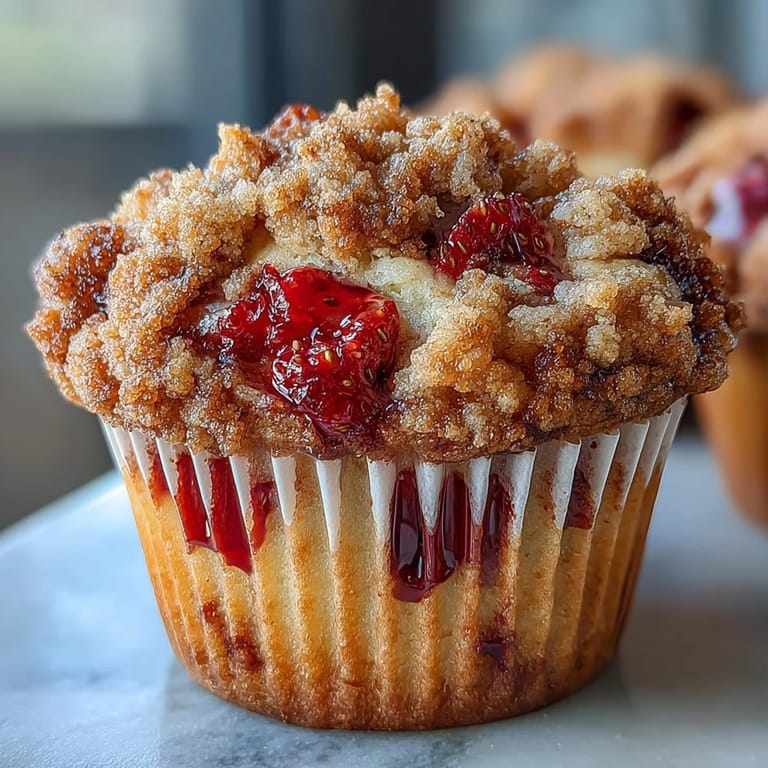
 There's a moment right when these muffins come out of the oven where the kitchen fills with this smell that's unmistakably sourdough but somehow sweeter, lighter, more inviting. You realize the starter that's been a chore transformed into something celebratory, and maybe that's what cooking is really about—taking what feels burdensome and finding its better version.
The Sourdough Advantage
Using sourdough starter instead of regular milk and acidic additions like buttermilk creates a subtle tang that somehow makes strawberries taste more like themselves. The fermentation adds complexity that reads as depth, even though you're literally just using starter you were about to throw out. It's one of those cooking moments where the shortcut becomes the secret ingredient.
Why the Crumb Topping Matters
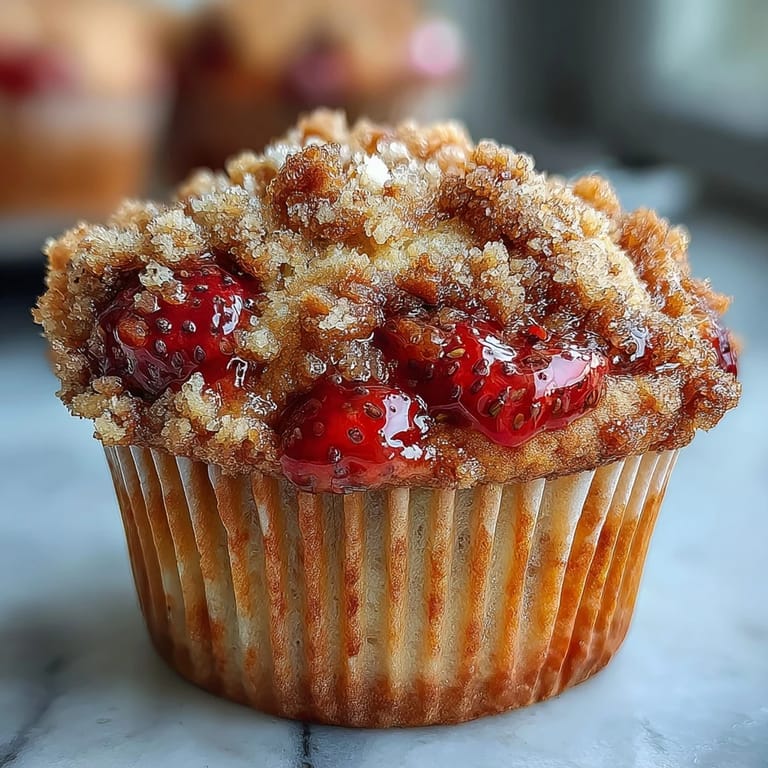
A plain muffin is fine, but a muffin with a crunchy, buttery topping that stays crunchy through baking is something you actually want to eat. The brown sugar brings molasses notes that play nicely with the cinnamon, and the whole thing becomes textural—not just another crumbly breakfast item. I learned this the hard way after making too many flat muffins and wondering why they felt forgettable.
Storage and Serving Ideas
These muffins hold up beautifully for 3 to 4 days in an airtight container, though they're honestly best within the first day when the crumb topping is at its crunchiest. Warm them briefly in the oven before serving if they've been sitting, and consider a thin glaze or pat of butter for extra richness.
- Freeze the baked muffins for up to a month—they thaw quickly and still taste fresh.
- Make a simple glaze with powdered sugar and lemon juice if you want to push them toward dessert territory.
- Blueberries or raspberries work just as well if strawberries aren't what you have on hand.
 Save to Pinterest
 These muffins represent that sweet spot between using what you have and creating something worth making again. Enjoy them with someone, or keep them for quiet mornings when you need something that tastes like care.
Recipe FAQs
- → What does the sourdough starter add to the muffins?
The sourdough starter imparts a subtle tangy flavor and tender crumb, enhancing the overall depth without overpowering the sweetness.
- → Can I substitute other berries for strawberries?
Yes, blueberries or raspberries can be used as alternatives, offering a similar burst of fruity flavor and moisture.
- → How do I achieve the crumb topping texture?
Combine cold diced butter with flour, brown sugar, cinnamon, and salt, then cut it in until coarse crumbs form, which bake to a crunchy topping.
- → What is the ideal baking temperature and time?
Bake the muffins at 375°F (190°C) for 22 to 25 minutes, or until a toothpick comes out clean from the center.
- → Are these muffins suitable for vegetarians?
Yes, these muffins contain no meat products and are appropriate for a vegetarian diet.