 Save to Pinterest
 There's something about assembling this salad that stops me mid-week rush—suddenly I'm slowing down, arranging golden fruits like I'm composing a painting. A friend brought it to a summer potluck, and what struck me wasn't just how it looked, but how it tasted: bright, herbaceous, alive in a way that made everyone ask for the recipe before they'd finished eating. Now I make it whenever I need to feel like I'm eating something that matters, not just something quick.
I served this at a dinner party last summer when my garden basil was going wild, and a guest actually set down her fork halfway through to say it tasted like sunshine. That moment—the sincerity of it, the way everyone went quiet—that's when I realized food doesn't have to be complicated to feel special.
Ingredients
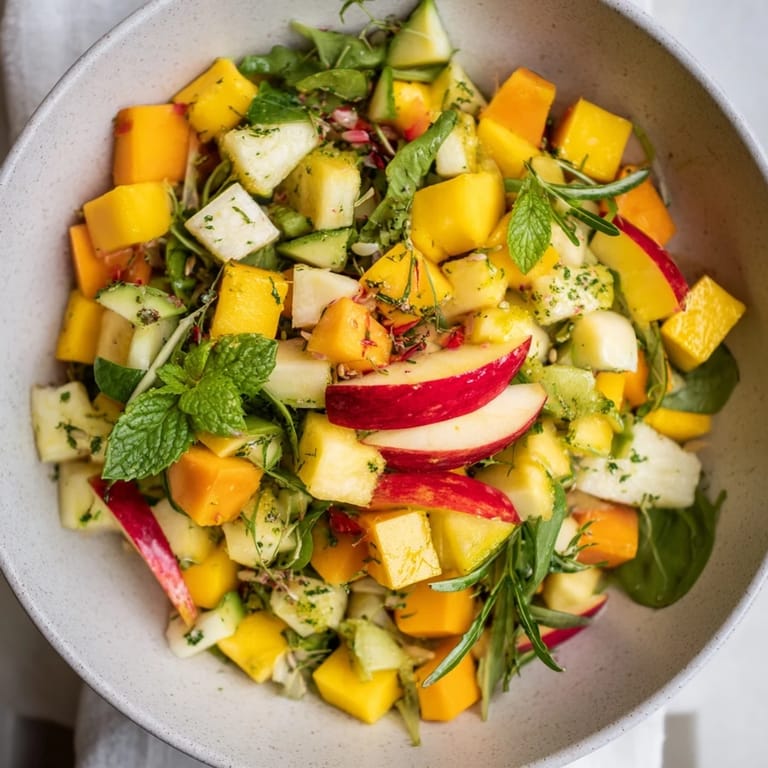
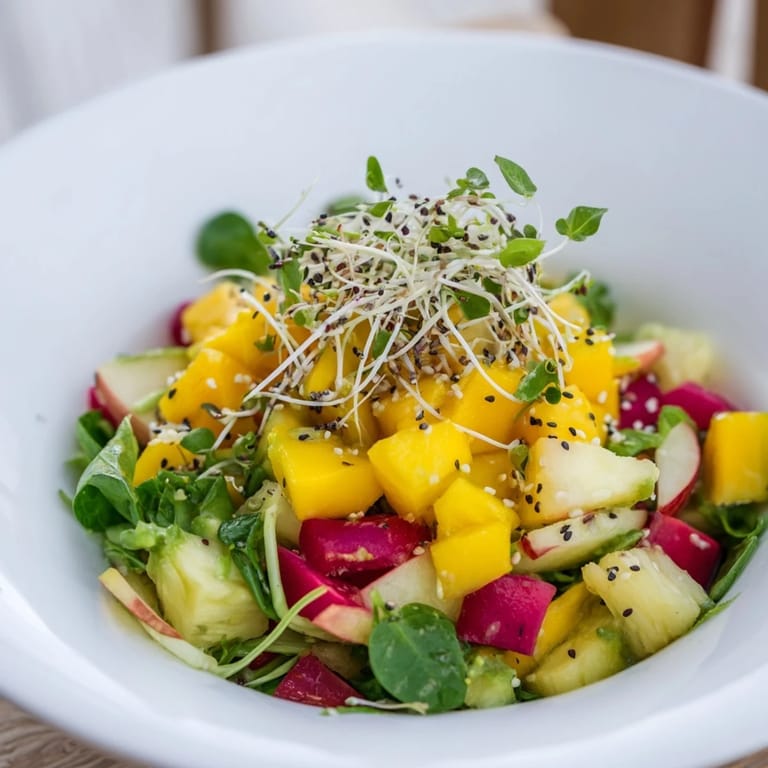
- Mango, pineapple, golden apple, and yellow peach: These are your centerpiece—the "glade" of the salad—so pick fruits that are ripe but still have some firmness, or they'll turn to mush when you cut them. The sweetness needs to balance the herbs and mustard dressing.
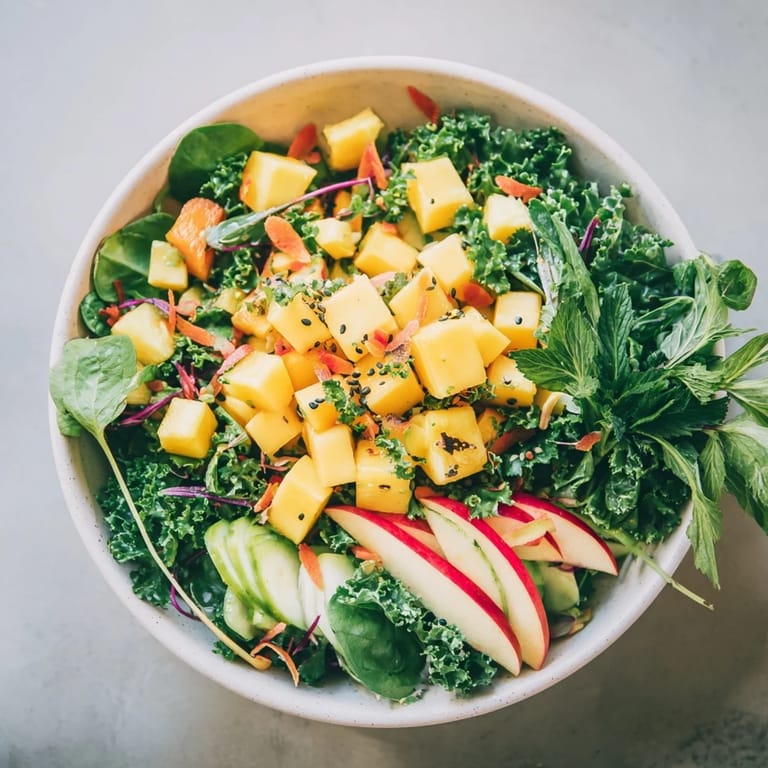
- Kale, baby spinach, parsley, mint, and basil: The greens do the heavy lifting here; massaging the kale softens it without wilting, while the herbs add complexity that keeps each bite interesting. Don't skip the mint—it's the surprise that makes people wonder what they're tasting.
- Extra-virgin olive oil and fresh lemon juice: Use a good olive oil you'd actually drink, because you taste it directly; skip the bottled lemon juice and squeeze fresh, which makes a real difference in brightness.
- Maple syrup, Dijon mustard, salt, and pepper: These balance sweetness with tang in a way that coaxes flavor out of everything else without overpowering the delicate herbs.
- Toasted pumpkin seeds and lemon zest: Optional but worth it—they add texture and a final pop of flavor that transforms the salad from simple to intentional.
Tired of Takeout? 🥡
Get 10 meals you can make faster than delivery arrives. Seriously.
One email. No spam. Unsubscribe anytime.
Instructions
- Whisk the dressing together:
- In a small bowl, combine the olive oil, lemon juice, maple syrup, Dijon mustard, salt, and pepper, whisking steadily until the oil and lemon juice emulsify and the mustard dissolves. You'll feel it come together—it should taste bright and a little sharp, like it's trying to wake up your taste buds.
- Soften the kale with your hands:
- Place the shredded kale in a large bowl and pour half the dressing over it, then massage it with your fingertips for about a minute or two until the leaves darken and become tender. It's meditative, and you'll feel it relax under your hands.
- Build the greens layer:
- Add the baby spinach, parsley, mint, and basil to the massaged kale and toss gently so everything mingles without getting bruised. The goal is to coat everything evenly while keeping the leaves whole and vibrant.
- Create the forest and glade:
- Spread the dressed greens around the outer edge of a wide, shallow serving bowl to form a thick, lush ring—this is your forest. Pile the diced yellow fruits in the very center, creating a contrast between the deep green and the bright yellow.
- Finish and serve:
- Drizzle the remaining dressing over the fruit and greens, scatter toasted pumpkin seeds and lemon zest if you're using them, and serve right away so the kale stays crisp. Everything should taste fresh and intentional, never soggy.
 Save to Pinterest
 One evening a friend brought her young daughter to dinner, and the child actually asked for seconds of salad—not reluctantly, but eagerly. Watching her understand that food could be this vibrant, both visually and in taste, felt like passing something important forward.
Why the Colors Matter
The visual arrangement isn't just for show; it actually shapes how you experience eating. When your eye sees those rings of green and that golden center, your brain is already primed for freshness and brightness before the first bite. The presentation makes you slow down and appreciate what you're eating, which changes everything about the meal.
The Herb Trick Nobody Talks About
Fresh herbs in salads usually get overshadowed or disappear, but when you tear basil and mint by hand instead of chopping them, they release more volatile oils and stay visible and bold throughout the salad. It's a small gesture that respects the herbs and keeps them from turning dark and bruised-looking on the plate.
Variations That Feel Natural
This salad is forgiving without being boring—you can swap seasonal fruits as they come into your life, which means this recipe stays fresh even when you make it a dozen times. If you want creaminess, a few avocado slices fit perfectly into the center glade without overwhelming the brightness.
- Trade the golden apple for yellow kiwi or papaya in summer, when those are riper and more vibrant.
- Add crushed pistachios or toasted sunflower seeds if you want more texture and earthiness.
- A splash of white wine vinegar instead of some of the lemon juice deepens the dressing if you like it more assertive.
 Save to Pinterest
 This salad taught me that sometimes the most memorable meals aren't the most complicated—they're the ones where you show up with intention and let good ingredients speak for themselves. Make it once and it becomes a conversation, not just a recipe.
Recipe FAQs
- → What yellow fruits are best for this salad?
Ripe mango, pineapple, golden apple, and yellow peach create a sweet and tangy blend. Alternatives like yellow kiwi or papaya work well too.
- → How should the kale be prepared?
Remove stems and finely shred the kale, then massage it gently with part of the dressing to soften its texture before combining with other greens.
- → Can the dressing be customized?
Yes, the dressing combines olive oil, lemon juice, maple syrup, Dijon mustard, salt, and pepper, but you can adjust sweetness or acidity to taste.
- → What optional garnishes enhance this dish?
Toasted pumpkin seeds add crunch, while lemon zest contributes a fresh citrus aroma.
- → Is this salad suitable for special diets?
It’s vegan and gluten-free, making it a good choice for those dietary preferences.