 Save to Pinterest
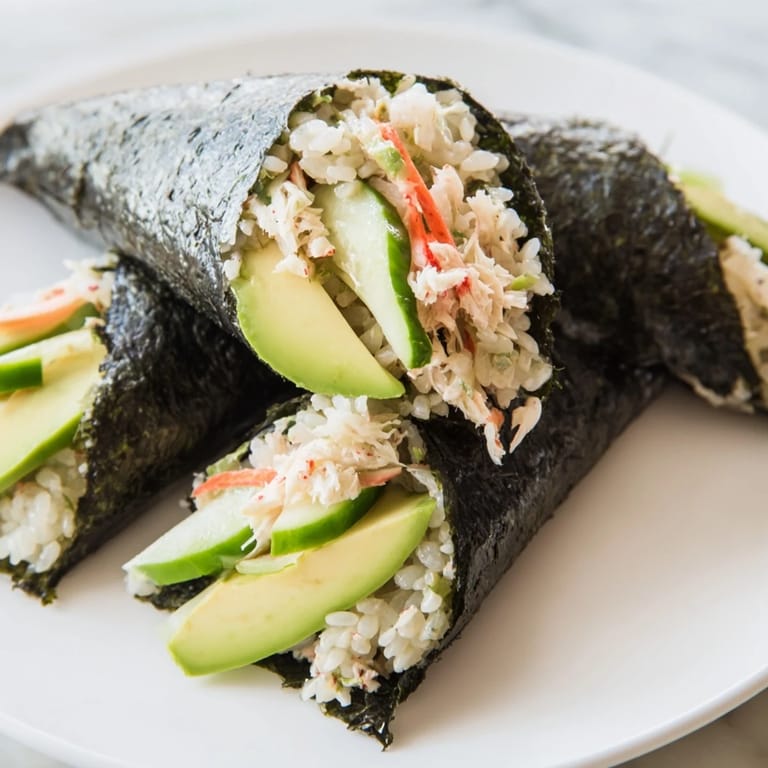
 The first time I attempted hand rolls at home, I made the rookie mistake of overstuffing them until they burst at the seams. My kitchen looked like a rice explosion, but we laughed through the messy dinner and learned by doing. Now I keep the fillings modest and let each ingredient shine. Theres something so satisfying about eating with your hands, assembling each bite exactly how you want it.
I hosted a make your own hand roll night last spring, laying out bowls of fillings family style. The conversation flowed as naturally as the sake, with people comparing their rolling techniques and ingredient combinations. Watching friends discover that they could make restaurant quality sushi at home was genuinely rewarding.
Ingredients
- Sushi Rice: Short grain Japanese rice is non negotiable here. The starch content creates that signature sticky texture that holds everything together.
- Rice Vinegar: This seasoned vinegar mixture is what transforms plain rice into sushi rice. Dont skip it.
- Nori Sheets: Cut them in half before starting. Full sized sheets are too unwieldy for hand rolls.
- Ripe Avocado: Should yield slightly to gentle pressure but not feel mushy.
- English Cucumber: Fewer seeds and thinner skin mean better texture in every bite.
- Crab Meat: Real lump crab is luxurious, but imitation works perfectly fine and saves money.
Tired of Takeout? 🥡
Get 10 meals you can make faster than delivery arrives. Seriously.
One email. No spam. Unsubscribe anytime.
Instructions
- Rinse the Rice:
- Wash the rice under cold water until it runs clear, about 3 to 4 rinses. This removes excess starch for perfectly fluffy grains.
- Cook the Rice:
- Combine rice and water in a saucepan. Bring to a boil, then reduce heat to low, cover, and simmer for 15 minutes. Let stand covered for 10 minutes off heat.
- Season the Rice:
- Mix rice vinegar, sugar, and salt until dissolved. Fold gently into the cooked rice. Cool to room temperature before using.
- Prep Your Fillings:
- Slice avocado into thin strips. Julienne the cucumber. Shred the crab and mix with mayonnaise if you like it creamy.
- Start Rolling:
- Hold a half sheet of nori shiny side down in your palm. Spread about 2 tablespoons of rice diagonally across one corner.
- Add the Good Stuff:
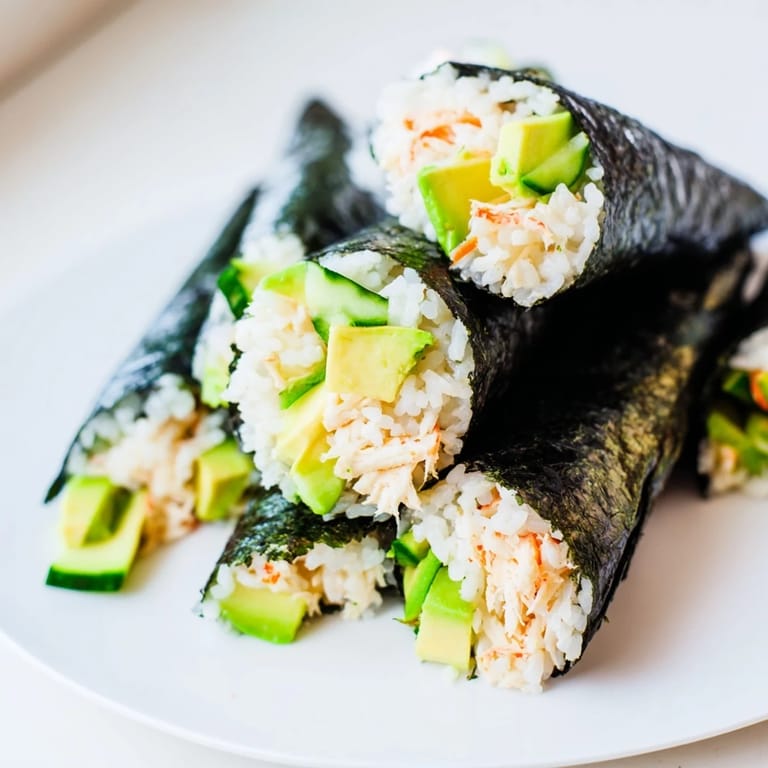
- Layer avocado, cucumber, and crab on top of the rice. A few sesame seeds on top never hurt anyone.
- Form the Cone:
- Roll from the filled corner into a cone shape, keeping it tight but gentle. Seal the edge with a grain of rice or water.
 Save to Pinterest
 My daughter now requests these for her birthday dinner every year. We set up a little assembly line in the kitchen, and she takes such pride in teaching her friends how to roll them properly. Its become more than a meal, its a memory we make together.
Choosing Your Nori
Not all nori is created equal. Look for sheets that are dark green almost black and have a slight sheen. Cheap nori can be tough and chewy, while quality sheets should toast slightly in your hand and have a delicate crispness. Store extras in an airtight container with a desiccant packet to keep them fresh.
Rice Temperature Matters
Room temperature rice is ideal. If its too warm, the nori will wilt immediately and become difficult to roll. Too cold and the rice loses that pleasant sticky quality. I usually spread the cooked rice on a baking sheet to speed up cooling while I prep the fillings.
Make It Your Own
The beauty of hand rolls is their versatility. Once you master the basic technique, the flavor combinations are endless. Some of our favorite variations include spicy tuna, pickled vegetables, or even just a simple cucumber roll for lighter appetites.
- Try adding a tiny dollop of Sriracha to your crab mixture for subtle heat
- Leftover grilled salmon or shrimp makes excellent fillings the next day
- Set out small bowls of different ingredients and let everyone customize
 Save to Pinterest
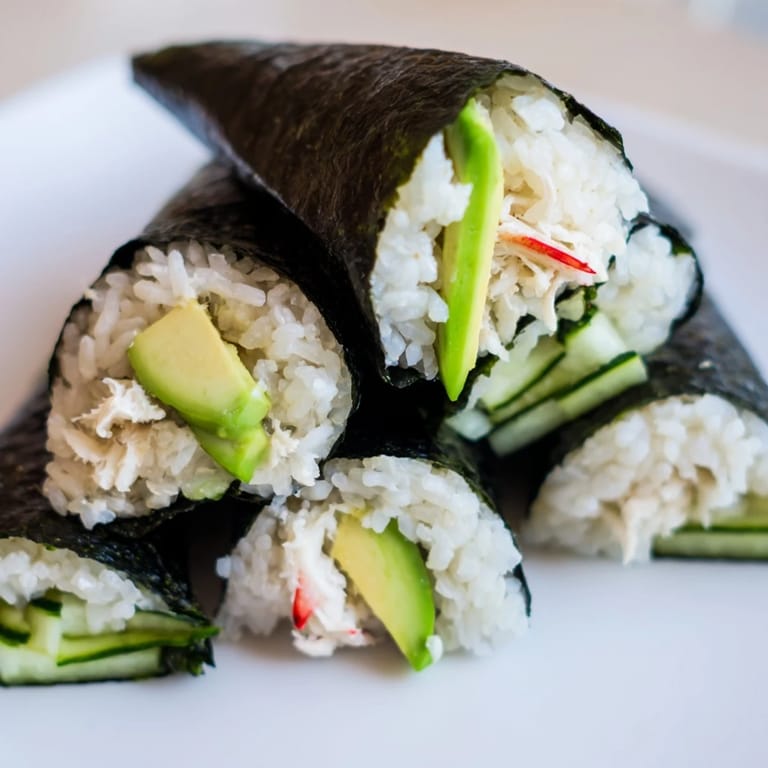
 Gather your favorite people around the table and enjoy making these together. The imperfect rolls are often the most delicious.
Recipe FAQs
- → What makes sushi rice different from regular rice?
Sushi rice is a short-grain Japanese variety that becomes sticky when cooked, allowing it to hold together in rolls. The seasoning of rice vinegar, sugar, and salt gives it its characteristic tangy-sweet flavor that complements the fillings.
- → Can I make these ahead of time?
These are best enjoyed immediately after assembly, as the nori will soften over time. You can prepare the rice and fillings up to 4 hours ahead, but roll them just before serving for optimal texture.
- → What's the best way to spread the rice?
Use damp fingers or a rice paddle to spread about 2-3 tablespoons of rice diagonally across one corner of the nori. Keep the layer thin to ensure proper rolling and balanced texture.
- → Can I substitute the crab?
Yes, cooked shrimp, smoked salmon, or even grilled chicken work well as alternatives. For a vegetarian option, use marinated tofu or additional vegetables like julienned carrots and bell peppers.
- → How do I prevent the rolls from falling apart?
Roll tightly from the rice-filled corner, forming a cone shape. Seal the edge with a few grains of sticky rice. Hold each roll by the cone tip when eating to maintain structure.
- → What's the difference between hand rolls and cut rolls?
Hand rolls (temaki) are conical and meant to be eaten immediately by hand, while cut rolls (maki) are cylindrical and sliced into bite-sized pieces. Hand rolls are more casual and allow diners to customize their own.