 Save to Pinterest
 My first muhammara came from a small Syrian restaurant tucked away in the old part of town, where the owner insisted I watch her make it fresh. Watching those red peppers char under the broiler changed something—suddenly I understood that this dip wasn't just food, it was about coaxing sweetness from the peppers and balancing it with the sharp pomegranate molasses. I've been making it ever since, and each time the kitchen fills with that distinctive smoky aroma, I'm transported back to that kitchen.
I brought this to a potluck once and watched a friend take one bite, go quiet, and then say, "Why have I been eating store-bought hummus my entire life?" That moment—when something homemade suddenly seems obvious—stayed with me. Now I make it whenever I want people to understand that dips don't have to be complicated to be memorable.
Ingredients
- Red bell peppers (3 large): These are the soul of muhammara; roasting unlocks a deeper sweetness that raw peppers simply can't deliver.
- Walnuts (1 cup, lightly toasted): Toasting them first wakes up their flavor and keeps the dip from tasting flat or one-dimensional.
- Garlic (2 cloves): Just two, because this is about subtlety—too much garlic drowns out everything else.
- Breadcrumbs (2 tbsp): They're your texture secret, giving the dip body without making it heavy; swap to gluten-free if you need to.
- Pomegranate molasses (2 tbsp): This is the tangy-sharp note that makes people ask what's in it; there's no real substitute, so hunt it down.
- Smoked paprika (1/2 tsp): Even this small amount adds a whisper of campfire smokiness that rounds everything out.
- Aleppo pepper or red chili flakes (1/2 tsp): Adjust this up or down depending on whether you want gentle warmth or a bolder kick.
- Cumin (1 tsp): It ties the whole dish together with earthiness that feels Middle Eastern in the best way.
- Extra virgin olive oil (2 tbsp, plus more for drizzling): Quality matters here because it's tasted directly; don't skip on this.
- Lemon juice (1–2 tbsp): Start with less and taste as you go; it's the final brightness that brings everything into focus.
- Salt and black pepper (to taste): These are your tools for making sure every spoonful tastes intentional.
- Toasted sesame seeds (optional): A light sprinkle on top adds visual contrast and a subtle nuttiness if you have them.
Tired of Takeout? 🥡
Get 10 meals you can make faster than delivery arrives. Seriously.
One email. No spam. Unsubscribe anytime.
Instructions
- Roast the peppers until their skin blisters and blackens:
- Preheat your oven to 220°C (425°F) and lay the whole peppers on a baking tray. Watch them turn from shiny red to wrinkled and charred as they roast for 20–25 minutes, turning them every few minutes so they blister evenly all over.
- Steam them just enough to loosen the skin:
- Transfer the hot peppers to a bowl and cover it tightly with plastic wrap or a plate; this traps the steam and makes the skin peel away easily after about 10 minutes. Once they're cool enough to touch, slide the blackened skin off with your fingers, and remove the seeds and stem gently.
- Pulse everything until coarse and chunky:
- Combine the roasted peppers, toasted walnuts, garlic, breadcrumbs, cumin, smoked paprika, Aleppo pepper, salt, and black pepper in a food processor and pulse several times until the mixture is broken down but still has texture—this is not a purée.
- Finish with the tangy and silky ingredients:
- Pour in the pomegranate molasses, olive oil, and lemon juice, then process until the dip is smooth and cohesive but still keeps some of its rustic character. Taste as you go and adjust the molasses or lemon to find your balance between tangy and deep.
- Serve with personality:
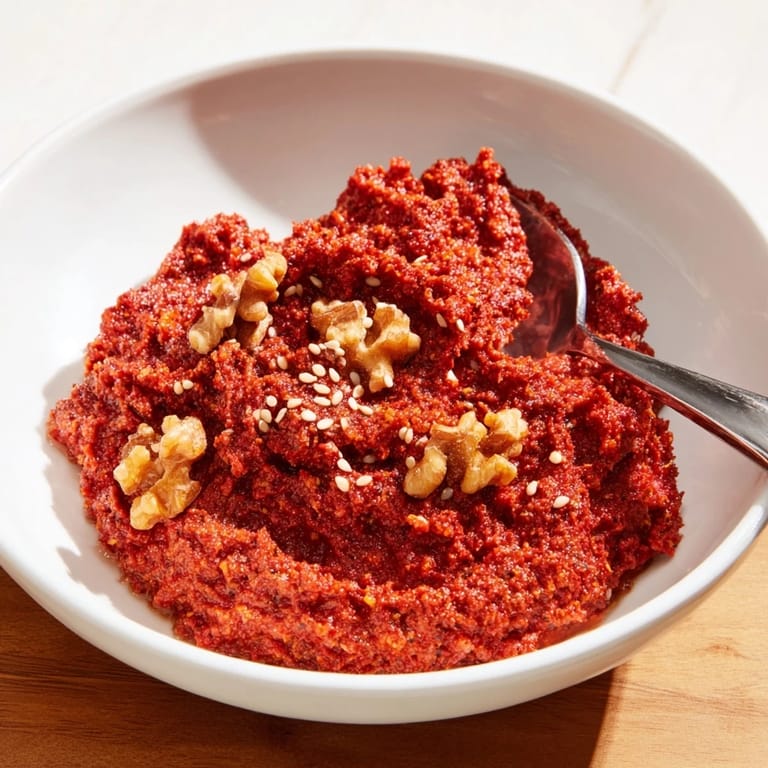
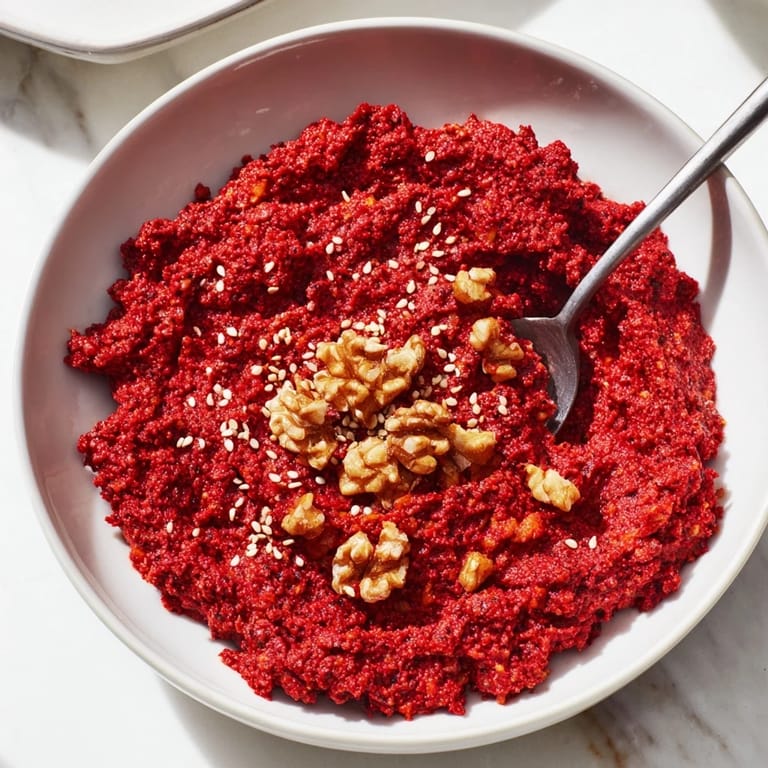
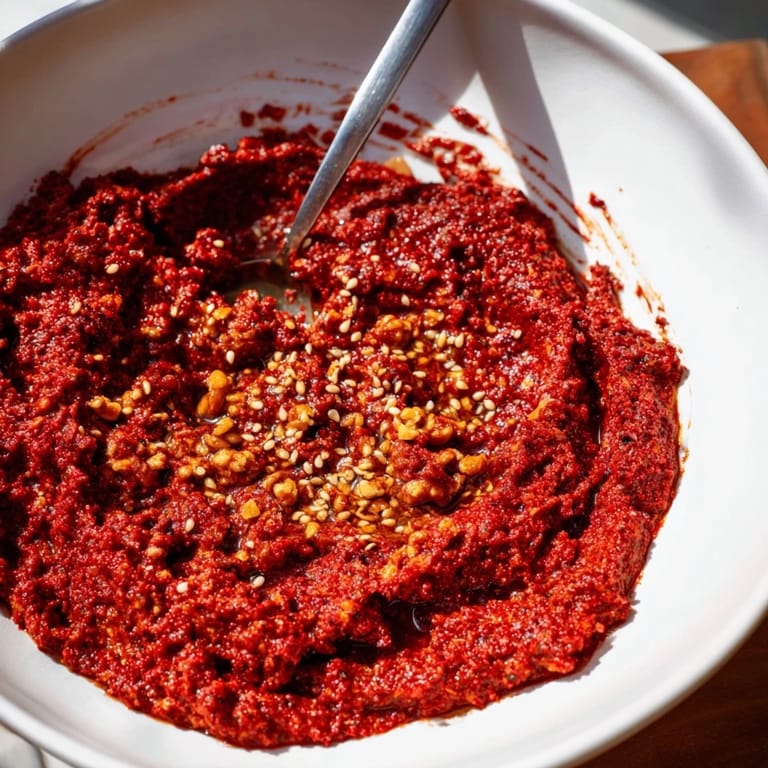
- Spoon the finished muhammara into a shallow bowl, drizzle generously with more olive oil in a thin pool around the edges, and scatter toasted sesame seeds on top if you have them. Surround it with warm pita, crackers, or crunchy vegetable sticks.
 Save to Pinterest
 There's a moment when muhammara stops being ingredients and becomes something alive—when the pomegranate molasses hits the walnuts and peppers in the food processor, and suddenly the whole thing smells like somewhere warm and distant. That's when you know you're close to something real.
The Flavor Balance
Muhammara lives in tension, and that's its beauty. The roasted peppers want to be sweet, the walnuts add earthy depth, the pomegranate molasses cracks through with sharp tanginess, and the spices—especially that smoked paprika—add a whisper of smoke that ties everything together. When you taste it, no single flavor should dominate; instead, they should take turns singing. This is why tasting and adjusting at the end matters so much.
How to Serve and Store
I serve muhammara in a shallow bowl with a generous drizzle of good olive oil pooled around the edges and sesame seeds scattered on top, not because it needs decoration but because the oil catches the light and sesame adds a subtle crunch that people don't expect. It sits beautifully on a mezze platter alongside hummus, baba ghanoush, olives, and fresh vegetables, or it can be a quiet appetizer on its own with just pita and good company. Stored in an airtight container in the refrigerator, it keeps well for up to five days, and the flavors actually deepen as it sits.
- Serve it cold or at room temperature, never hot—that's when all the careful flavors fade.
- If it's been refrigerated, let it sit out for ten minutes before serving so the olive oil softens and the flavors come alive again.
- It freezes beautifully for up to three months, so make a double batch when you're in the mood.
Variations and Confidence
Once you've made muhammara once, you'll find yourself adjusting it each time based on mood and what peppers you find at the market. Grilling the peppers over an open flame instead of roasting them gives it a deeper, more primal smokiness that's honestly worth trying. You can inch up the Aleppo pepper if you want heat that lingers, or stay gentle if you're cooking for people who prefer softer spices. The beauty of this dip is that it's forgiving within reason—it teaches you to taste as you go and trust your own palate over any recipe.
 Save to Pinterest
 Muhammara isn't just a dip; it's a small window into how Middle Eastern cooking thinks about flavor—building layers, balancing heat and tang, letting spices whisper instead of shout. Once you've made it, you'll keep making it.
Recipe FAQs
- → How do I roast peppers for best flavor?
Roast whole red peppers under high heat until skins are blistered and charred, then steam to loosen skins for easy peeling.
- → Can I adjust the heat level in this dip?
Yes, increase or reduce Aleppo pepper or red chili flakes to suit your preferred spice tolerance.
- → What substitutes work for walnuts if allergic?
Consider toasted sunflower seeds or pumpkin seeds as nut-free alternatives with similar texture and flavor.
- → How should I store the prepared dip?
Keep refrigerated in an airtight container for up to five days to maintain freshness and flavor.
- → What dishes pair well with this spread?
Works wonderfully with fresh pita, crackers, vegetable sticks, or as part of a mezze platter alongside hummus and baba ghanoush.