 Save to Pinterest
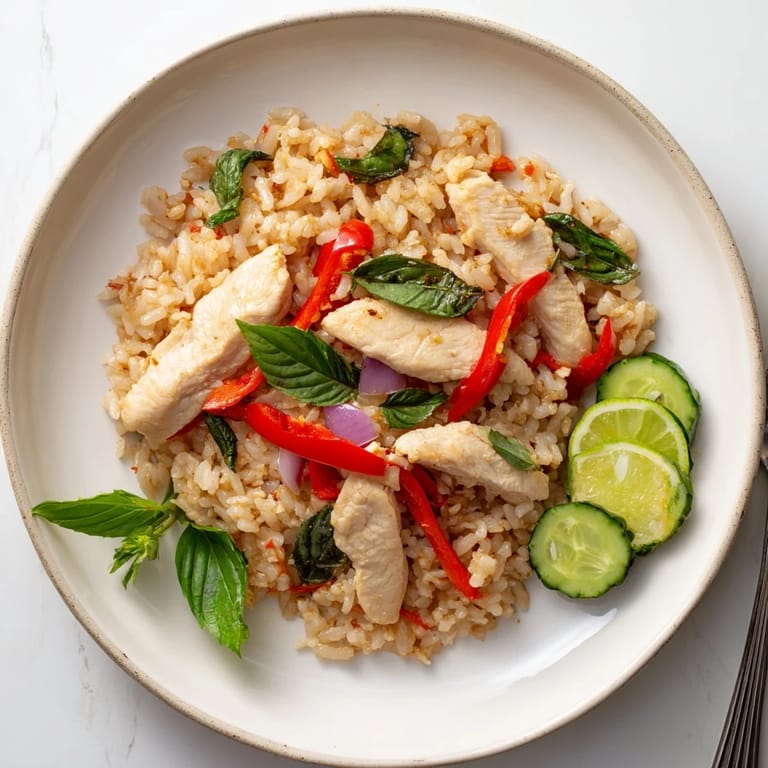
 The steam rising from my wok always transports me back to that cramped apartment kitchen where I first attempted Thai cooking, burning the garlic three times before getting the timing right. My roommate leaned against the doorframe, laughing as I frantically waved a dish towel at the smoke detector. By the fourth attempt, the holy basil hit the hot oil and suddenly I understood what all the fuss was about—that intoxicating aroma that makes your stomach growl from three rooms away. Now this dish is my go-to when life gets chaotic and I need something that feels special but comes together in the time it takes to set the table.
Last summer my sister came over after a brutal breakup, and I made this for her without really thinking about it. She took one bite, eyes closed, and told me it was the first thing that actually tasted good in weeks. We sat on the floor with our bowls, the air conditioning humming in the background, and she kept saying how the heat from the chilies made everything else fade away. Food has this way of showing up when words fall short.
Ingredients
- Chicken thighs or breasts: Thighs stay juicier in high-heat cooking, but if youre using breasts, slice them against the grain to keep them tender
- Day-old jasmine rice: Fresh rice turns to mush in the wok—those dried-out grains from yesterday are perfect for getting that signature fried rice texture
- Holy basil: This is non-negotiable for authentic flavor, the peppery, clove-like notes completely transform the dish compared to regular basil
- Thai chilies: Start with less if youre heat-sensitive, but remember these small peppers pack way more punch than jalapeños
- Fish sauce: Dont be scared of the smell—this is what gives the rice that deep, savory umami backbone
- Soy sauce: Use light soy sauce here, dark soy will make your rice look muddy and taste too heavy
- Oyster sauce: Adds this subtle sweetness and gloss that balances all the salty elements perfectly
Tired of Takeout? 🥡
Get 10 meals you can make faster than delivery arrives. Seriously.
One email. No spam. Unsubscribe anytime.
Instructions
- Get your wok screaming hot:
- Cold woks mean soggy fried rice—you want that oil shimmering and almost smoking before anything touches it
- Bloom your aromatics:
- Toss in garlic and chilies first, stirring constantly for just 30 seconds until the fragrance hits you
- Cook the chicken through:
- Spread the slices in a single layer and let them sear for a minute before stirring—this creates those gorgeous browned edges
- Add your vegetables:
- The onions and bell peppers only need a couple minutes, you want them to keep some crunch
- Introduce the rice:
- Break up clumps with your hands before adding, then use a tossing motion to coat every grain in the flavorful oil
- Season everything evenly:
- Pour your sauces around the edges of the wok so they heat up quickly, then toss the rice through them
- Finish with basil:
- Fold in the holy basil off the heat so it wilts gently without losing that incredible aroma
 Save to Pinterest
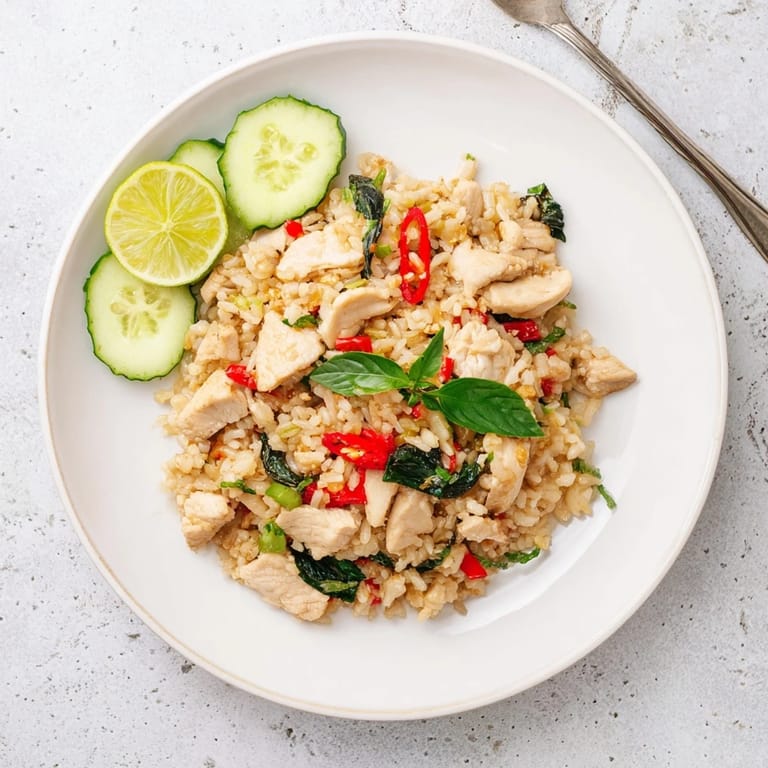
 My friend from college grew up in Bangkok and she told me that street vendors there make this dish in under three minutes flat. I timed myself once and clocked in at seven minutes, but honestly, the extra four minutes meant I didnt splatter hot oil all over my stove. Speed comes with practice, and theres no shame in being a little slower when youre learning.
Getting The Rice Right
The difference between restaurant-quality fried rice and a sad, clumpy mess at home almost always comes down to the rice. Spread your cooked rice on a baking sheet and let it air dry in the fridge overnight—those grains need to dehydrate slightly so they can crisp up in the wok instead of steaming. When youre ready to cook, break up any clumps with your hands, getting your fingers in there to separate individual grains.
Managing The Heat Level
Thai chilies are no joke, and Ive definitely served dishes that had my guests fanning their mouths and reaching for milk. Start with one chili, slice it paper-thin, and taste as you go. Remember that the heat will concentrate as the dish cooks, so what seems mild at the beginning might pack a serious punch by the end. If you accidentally go overboard, serve extra lime wedges—the acidity helps tame the fire.
Serving Suggestions That Work
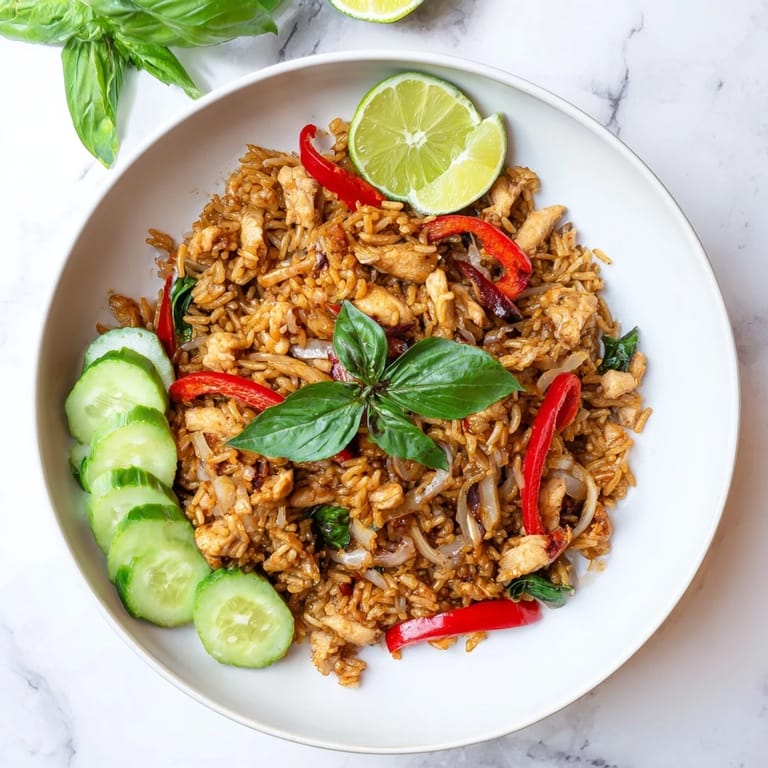
A cold cucumber salad on the side makes such a difference, cutting through the richness and cooling your palate between bites. I like to set out extra fish sauce and sliced chilies at the table so everyone can adjust their bowl to their own tolerance level. A cold Thai beer or sweet iced tea doesnt hurt either.
- Squeeze fresh lime over your bowl right before eating
- Crush a little extra white pepper on top if you love that subtle heat
- Top with a fried egg if you want to make it a complete meal
 Save to Pinterest
 Sometimes the simplest meals are the ones that become part of your story, the dishes that show up again and again until they feel like old friends. This fried rice is one of those recipes for me.
Recipe FAQs
- → What makes this dish authentic?
Holy basil (also called tulsi) provides the signature aromatic flavor that distinguishes this dish from other fried rice variations. Thai basil makes an excellent substitute if holy basil isn't available. The combination of fish sauce, oyster sauce, and soy sauce creates the authentic savory Thai flavor profile.
- → Why use day-old rice?
Day-old rice has dried out slightly, which prevents it from becoming mushy during stir-frying. Freshly cooked rice contains too much moisture and will result in a clumpy, soggy texture. If you must use fresh rice, spread it on a baking sheet and refrigerate for a few hours to dry out.
- → Can I adjust the spice level?
Absolutely. Start with one Thai chili and taste as you cook. You can always add more heat but cannot remove it. For those sensitive to spice, remove the chili seeds or substitute with milder peppers. A drizzle of chili oil at the end adds heat without changing the overall balance.
- → What protein alternatives work well?
Shrimp cooks quickly and pairs beautifully with basil. Thinly sliced pork or beef also work excellently. For a vegetarian version, use firm tofu cubes or increase the vegetables. Each protein may need slight timing adjustments but the overall technique remains the same.
- → How do I prevent the rice from sticking?
Use a well-seasoned wok or large skillet over high heat. Break up rice clumps with your hands before adding to the pan. Keep the rice moving constantly with a spatula. The oil helps create a non-stick surface, so don't be afraid to use the full amount specified.
- → What's the purpose of adding sugar?
A small amount of sugar balances the salty notes from the soy and fish sauces while enhancing the natural sweetness of the onions and bell peppers. It helps create that characteristic Thai flavor profile where sweet, salty, sour, and spicy elements coexist harmoniously.