 Save to Pinterest
 There's something quietly powerful about arranging food with intention. I discovered this while reorganizing my kitchen one afternoon, moving things around just to see how they'd look, when it hit me—the same principle applies to plating. Years later, I found myself drawn to this concept of balance and symmetry on a board, where every element has a mirror, and the empty space matters as much as what's there. It's less about cooking and more about creating a moment of visual peace before the first bite.
I made this for a friend who was overwhelmed by life, and watching her face soften as she took in the symmetry reminded me that sometimes food isn't really about hunger—it's about giving someone permission to breathe. She sat there for a full minute just looking at it, and that pause changed the whole meal.
Ingredients
- Fresh cucumber: Eight thin, crisp slices that catch the light—they're the foundation that anchors both sides.
- Baby carrots: Eight of them, raw and sweet, their natural color doing most of the visual work for you.
- Radishes, halved: Eight pieces that bring a peppery snap and those gorgeous pink and white tones.
- Goat cheese: Sixty grams shaped into small, delicate rounds—creamy and slightly tangy, the element that ties everything together.
- Gluten-free crackers: Eight crisp companions that give texture and a subtle base for tasting.
- Roasted almonds: Thirty grams scattered through—they add crunch and a whisper of nuttiness.
- Seedless red grapes: Eight jewel-like pieces that bring sweetness and a jeweled quality to the board.
- Fresh herbs: Whatever you have—chives, dill, or basil—just a few sprigs for that final flourish of green.
Tired of Takeout? 🥡
Get 10 meals you can make faster than delivery arrives. Seriously.
One email. No spam. Unsubscribe anytime.
Instructions
- Choose your canvas:
- Find a long wooden or slate board, at least 24 inches—something with presence. Place it where light hits it, because this is as much about how it looks as how it tastes.
- Build the first side:
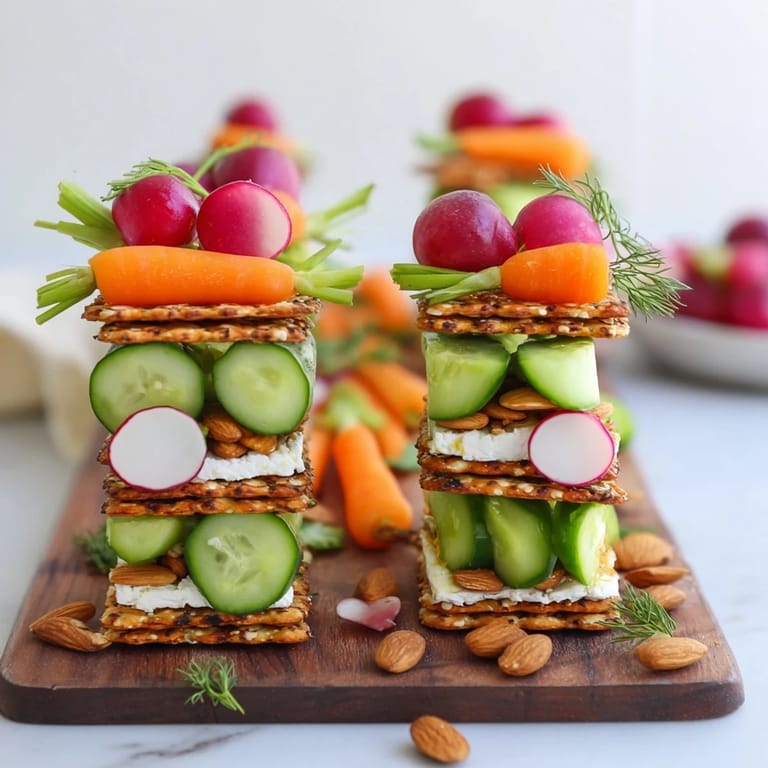
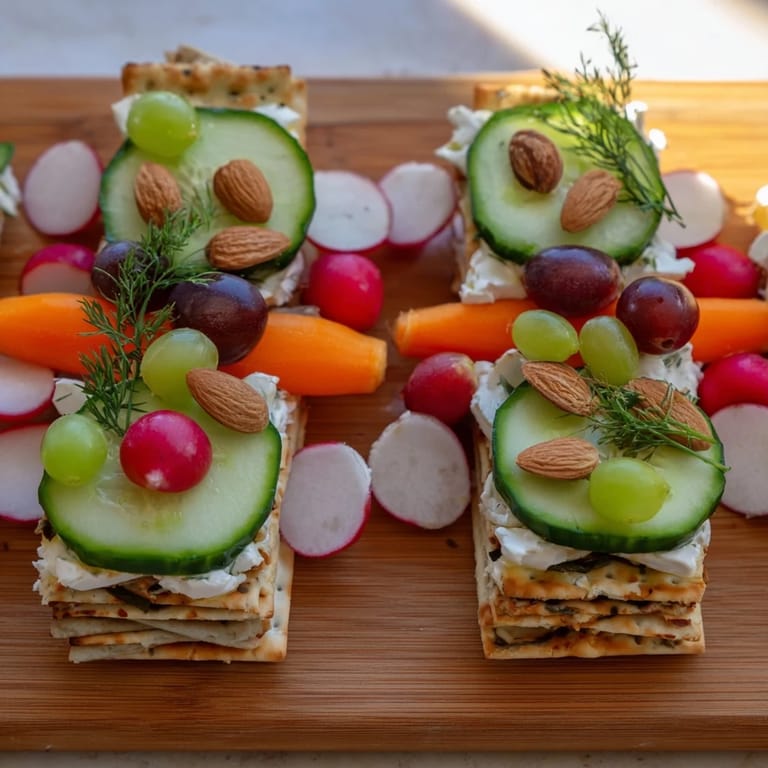
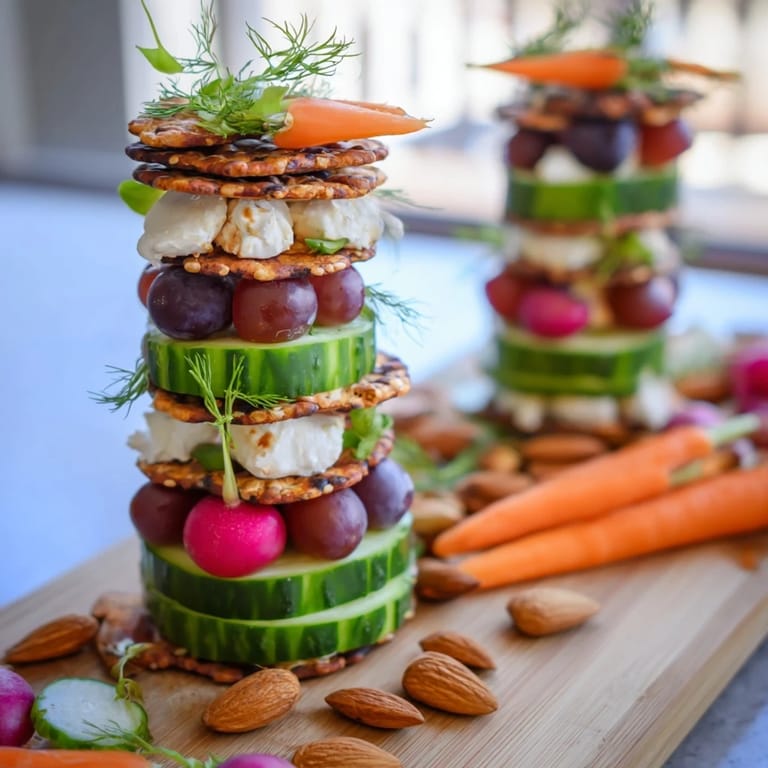
- At one end, start with your foundation of cucumber slices and crackers slightly overlapping. Layer the carrots, radishes, and grapes thoughtfully around them, then nestle your goat cheese rounds in like little treasures. Scatter half your almonds across the whole arrangement.
- Mirror the other half:
- Move to the opposite end and recreate the exact same composition with your remaining ingredients—this is where the meditation comes in, making sure both sides feel like twins.
- Garnish with intention:
- Place herb sprigs on each side with care, enough to add color but not so much it crowds the moment.
- Honor the empty space:
- The middle of the board stays completely bare. That emptiness is part of the design—it's what makes this whole thing work.
 Save to Pinterest
 A friend once told me that food presented this way makes her feel seen—like someone took time to think about how to make eating feel intentional. That's stayed with me.
The Art of Negative Space
In cooking, we're usually taught to fill every inch of the plate. Here, you're doing the opposite. That empty strip down the middle isn't laziness—it's restraint, which is its own kind of refinement. It gives your eye somewhere to rest and makes each side feel more important by contrast.
Pacing and Mindfulness
This isn't a dish you can rush. Arrange it too quickly and it loses its purpose. There's something grounding about the fifteen minutes it takes—your hands slow down, your breathing settles, and by the time you're done, you're already in the right headspace for eating it.
Seasonal and Personal Touches
While this recipe is exactly as written, it's also infinitely flexible if you want to adapt it. The only rule is that whatever you choose, mirror it perfectly. Some versions I love include roasted beets instead of radishes in autumn, or thinly shaved apple slices in late summer.
- Try substituting almonds with pistachios or walnuts depending on what you have or what season it is.
- For a vegan version, use a plant-based cheese alternative shaped the same way.
- Serve alongside a crisp white wine to let the flavors bloom even more.
 Save to Pinterest
 This is food as meditation, a reminder that sometimes the most nourishing thing on the table isn't the taste—it's the care that went into every deliberate placement. Serve it slowly.
Recipe FAQs
- → What board is best for serving this platter?
A long wooden or slate board, at least 60 cm in length, works best to showcase the symmetrical arrangement and balance.
- → Can I substitute the goat cheese for dietary preferences?
Yes, plant-based cheese can be used for a vegan option without altering the visual appeal.
- → How should the ingredients be arranged?
Place half of each ingredient neatly at one end of the board, then mirror the same arrangement at the opposite end to create symmetry.
- → What garnishes enhance this platter?
Fresh herbs like chives and dill add a pop of color and aroma, perfect for garnish.
- → What drink pairs well with this artful arrangement?
A crisp white wine such as Sauvignon Blanc complements the fresh and light flavors of this platter beautifully.
- → Is this platter suitable for gluten-free diets?
Yes, use certified gluten-free crackers to ensure the dish is gluten-free.