 Save to Pinterest
 The smell of browning beef is one of those kitchen signals that stops everyone mid-step. I used to skip the searing, thinking it was just extra cleanup, until a neighbor showed me her pot roast and I tasted the difference that deep caramelized crust makes in the gravy. Now I never rush that step. The sound of the meat hitting hot oil, the way the edges go dark and crusty, it all builds the foundation for something that tastes like youve been cooking all week even if you just started an hour ago.
I made this the first winter I had a Dutch oven, mostly because I wanted an excuse to use it. My sister came over halfway through and we sat in the kitchen with wine, talking while the pot bubbled quietly on the stove. By the time we pulled it out, the beef had practically melted into the sauce, and the carrots were sweet and glossy. We didnt even bother with plates at first, just stood there with forks, tasting straight from the pot.
Ingredients
- Beef chuck roast or blade roast (3 to 3.5 lb): The marbling is what makes this cut perfect for slow braising, it breaks down into buttery tenderness and keeps the meat juicy even after hours of cooking.
- Kosher salt and black pepper: Season generously before searing so the crust has flavor built in, not just on the surface.
- All-purpose flour (2 tbsp): A light dusting helps the beef brown evenly and adds body to the gravy later, use gluten-free flour if needed and it works just as well.
- Olive oil and unsalted butter: The oil keeps the butter from burning during the high-heat sear, and the butter adds a nutty richness you can taste in every spoonful of sauce.
- Yellow onion, garlic, carrots, celery, baby potatoes: These are your flavor base and your side dish all in one, they soften into the braising liquid and become almost as important as the beef itself.
- Tomato paste: Cooking it until it darkens and smells sweet releases deep umami that balances the richness of the meat.
- Dry red wine: It deglazes all those browned bits stuck to the bottom of the pot and adds acidity that cuts through the fat, but you can swap it for extra beef broth if you prefer.
- Low-sodium beef broth: This becomes the braising liquid, so quality matters, homemade or store-bought both work as long as its not overly salty.
- Worcestershire sauce: Just a teaspoon adds a subtle savory depth without announcing itself.
- Fresh rosemary, thyme, and bay leaves: These herbs infuse the liquid as it simmers, and pulling out the woody stems at the end leaves behind all their flavor without any bitterness.
- Cornstarch slurry (optional): If you like a thicker gravy that clings to the beef and vegetables, stir this in at the end and watch it transform in minutes.
- Fresh parsley: A handful of chopped parsley at the end brightens everything up and makes the dish look as good as it tastes.
Tired of Takeout? 🥡
Get 10 meals you can make faster than delivery arrives. Seriously.
One email. No spam. Unsubscribe anytime.
Instructions
- Preheat and prep the beef:
- Set your oven to 300°F if youre using it. Pat the roast completely dry with paper towels, then season every side with salt and pepper before dusting lightly with flour and shaking off the excess.
- Sear the roast:
- Heat 2 tablespoons of oil and the butter in a heavy pot over medium-high heat until shimmering. Lay the roast in carefully and let it sear undisturbed for 4 to 5 minutes per side until deeply browned, then brown the edges too before moving it to a plate.
- Cook the aromatics:
- Lower the heat to medium and add another tablespoon of oil if the pot looks dry. Toss in the onion wedges and cook until softened and golden, about 3 to 4 minutes, then add the garlic and stir for 30 to 60 seconds until fragrant.
- Build the base:
- Stir in the tomato paste and cook for 1 to 2 minutes until it darkens and smells sweet. Pour in the red wine and scrape up all the browned bits stuck to the bottom, letting it simmer for 2 to 3 minutes to reduce slightly.
- Add the braising liquid:
- Pour in the beef broth and Worcestershire sauce, stirring everything together. Drop in the rosemary, thyme, and bay leaves, then nestle the roast back into the pot so the liquid comes halfway up the meat.
- Braise low and slow:
- Bring the liquid to a gentle simmer over medium heat. Cover the pot tightly and either reduce the heat to low or slide it into the oven, then let it cook undisturbed for 1 and a half hours.
- Add the vegetables:
- After the first 1 and a half hours, turn the roast over and tuck the carrots, celery, and potatoes around it, pushing them into the liquid. Re-cover and cook for another 1 and a half to 2 hours until the beef is fork-tender and the vegetables are soft but still holding their shape.
- Rest and finish the gravy:
- Transfer the roast and vegetables to a platter and tent with foil. Skim any excess fat from the surface of the liquid, then bring it to a simmer and stir in the cornstarch slurry if you want a thicker gravy, cooking for 2 to 3 minutes until it coats the back of a spoon.
- Shred and serve:
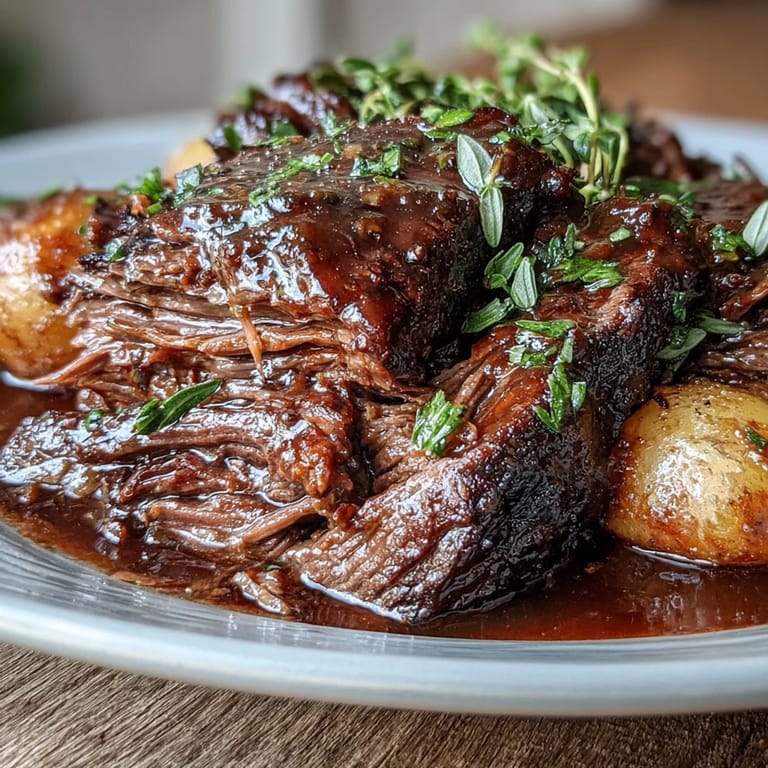
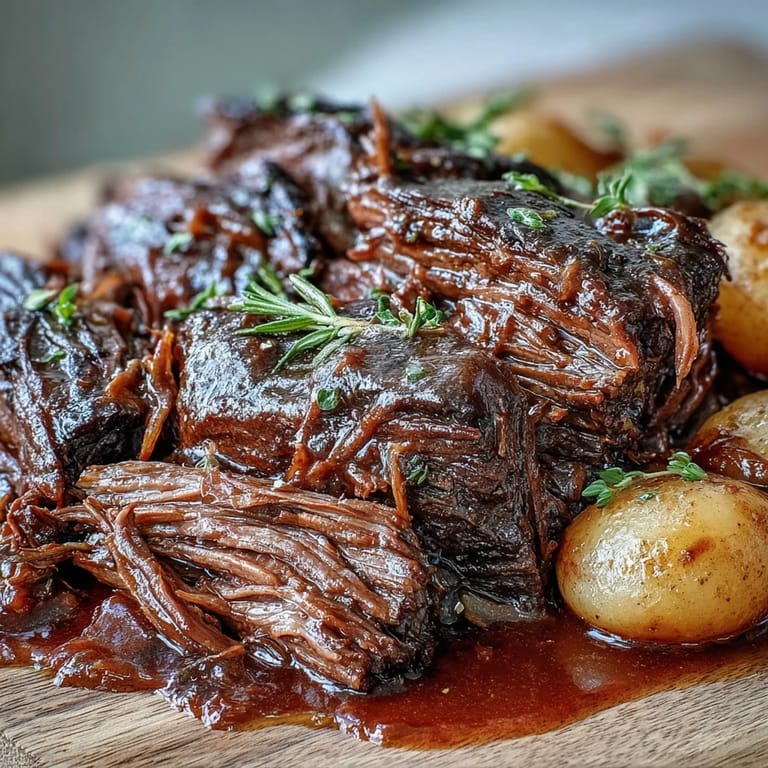
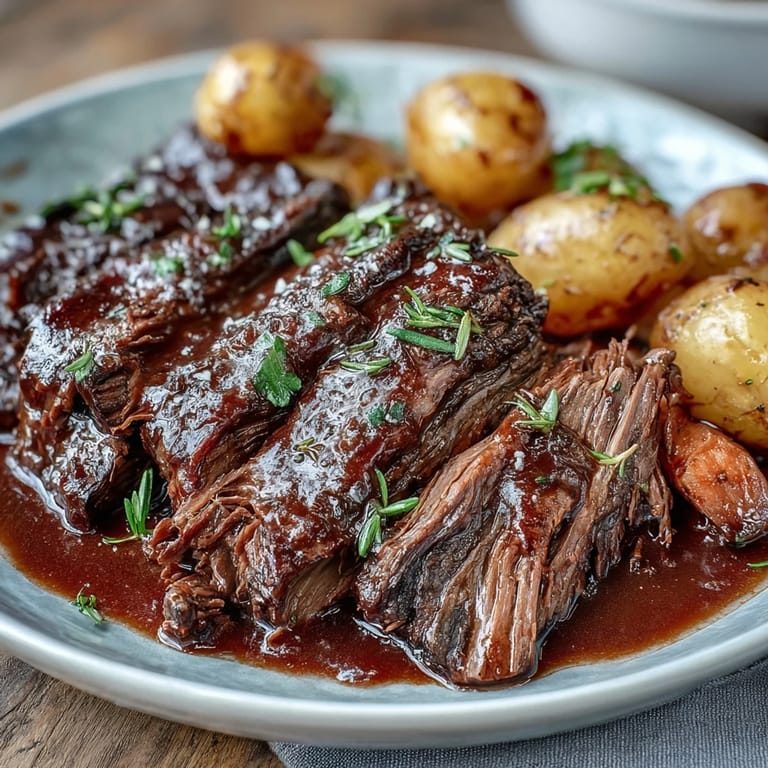
- Pull out the herb stems and bay leaves. Shred the beef into large chunks or slice it against the grain, then return it to the pot or arrange it over the vegetables and spoon the sauce generously on top, finishing with a sprinkle of fresh parsley.
 Save to Pinterest
 There was a Sunday afternoon when I made this for a group of friends who were all too tired to go out. We sat around the table for hours, sopping up gravy with crusty bread and refilling glasses, and nobody moved until the pot was empty. It wasnt fancy, but it felt like the kind of meal that makes people stay longer than they planned.
Making It in a Slow Cooker
If you want to use a slow cooker, sear the beef and cook the aromatics in a skillet first, then transfer everything to the slow cooker and set it on low for 8 to 10 hours or high for 5 to 6 hours. Add the vegetables halfway through if you want them firmer, or at the start if you like them completely soft. The texture will be a little different, more fall-apart tender, but the flavor is just as deep and you can walk away for the whole day.
Storing and Reheating Leftovers
Pot roast keeps beautifully in the fridge for up to four days, and honestly it tastes even better the next day after the flavors have had time to settle. Store the beef and vegetables in the gravy so they dont dry out, and reheat gently on the stovetop or in the oven until warmed through. You can also shred the beef and use it for sandwiches, tacos, or spooned over rice or polenta for a completely different meal.
What to Serve Alongside
This dish is hearty enough to stand on its own, but a few simple sides make it even more satisfying. Crusty bread is perfect for mopping up every drop of gravy, and buttered egg noodles or creamy mashed potatoes turn it into a full Sunday dinner. A simple green salad with a sharp vinaigrette balances the richness, and if you want something warm, roasted green beans or sauteed spinach work beautifully.
- Always taste the gravy before serving and adjust the salt, sometimes it needs just a pinch more to bring everything together.
- If the sauce tastes too acidic from the wine, a tiny pinch of sugar or an extra splash of broth will mellow it out.
- Donot crowd the pot with too many vegetables or theyll steam instead of braising, leave a little space around each piece so they cook evenly.
 Save to Pinterest
 This is the kind of recipe that fills your house with the smell of something slow and intentional, the kind of meal that reminds you why cooking at home is worth it. Once you pull that tender, glossy beef out of the pot, youll understand why pot roast never goes out of style.
Recipe FAQs
- → What cut of beef works best for pot roast?
Chuck roast or blade roast works best due to their excellent marbling and connective tissue that breaks down during slow braising, resulting in tender, flavorful meat. Look for a roast weighing 3 to 3.5 pounds with visible fat marbling throughout.
- → Can I make this in a slow cooker?
Yes, after searing the meat and sautéing the aromatics, transfer everything to a slow cooker. Cook on low for 8-10 hours or high for 5-6 hours. Add the vegetables halfway through cooking if you prefer them firmer.
- → How do I know when the pot roast is done?
The beef is ready when it's fork-tender and easily shreds or pulls apart. Internal temperature should reach around 190-205°F. The meat should break apart with minimal pressure and the vegetables should be soft but still hold their shape.
- → Can I substitute the red wine?
Absolutely. Use additional beef broth for a non-alcoholic version, or try balsamic vinegar mixed with broth for depth. The wine adds richness, but the dish will still be delicious with these alternatives.
- → How should I store and reheat leftovers?
Store the pot roast and vegetables in an airtight container with the gravy for up to 4 days in the refrigerator. Reheat gently on the stovetop or in the oven at 300°F until warmed through. The flavors actually improve the next day.
- → Why is searing the meat important?
Searing creates a deeply browned crust that adds complex flavors through the Maillard reaction. The caramelized bits that stick to the pot (fond) are deglazed with wine and become part of the rich gravy, adding significant depth to the final dish.