 Save to Pinterest
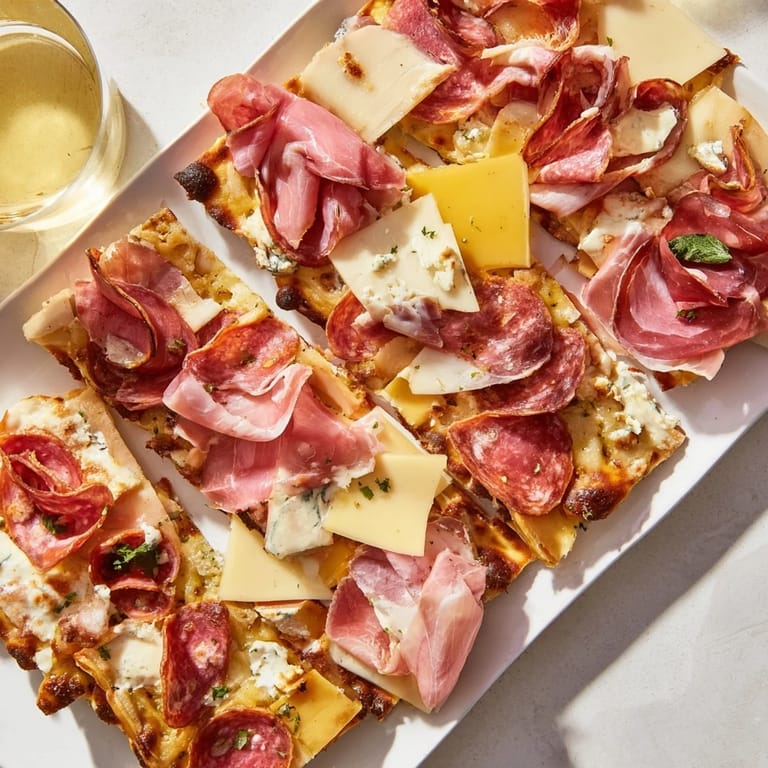
 I discovered the magic of flatbread boards at a bustling market in Barcelona, where vendors casually assembled these gorgeous edible platters right before customers' eyes. There's something about watching cured meats and cheese get layered onto warm bread that makes everyone lean in closer, suddenly animated and hungry. The beauty of this dish hit me then: it's not fussy or intimidating, yet it feels like you've done something impressive. When I brought the idea home and built my first version on a wooden board, my partner laughed and called them "rustic rafts," and the name stuck. Now it's become our go-to move for gatherings where we want something that looks abundant without requiring a complicated recipe.
I remember setting this out for the first time at a casual dinner and watching my usually quiet neighbor come alive talking about the combination of brie and prosciutto. People who normally pick at appetizers were standing around breaking off pieces and trying different combinations, mixing the honey with the blue cheese, stacking three meats on a single bite. That's when I realized this wasn't just about feeding people—it was creating a moment where everyone becomes a little chef, experimenting and sharing tastes without the pressure of formal dining.
Ingredients
- Flatbreads (3 large): Choose lavash, naan, or sturdy ciabatta—avoid thin crackers that'll snap under weight. I learned this after a disappointing collapse during my second attempt.
- Olive oil (2 tbsp): This brushed on before warming creates a subtle richness and helps the bread crisp just right.
- Garlic (1 small clove, minced): A light touch is key; it seasons without overpowering the delicate cheeses.
- Prosciutto (120 g): The silky texture and salty depth are essential—it's the backbone of flavor here.
- Salami (120 g): Choose a good quality version with visible marbling; the fat carries the taste you want.
- Smoked turkey breast (120 g, thinly sliced): This adds lean protein and a subtle smoky note that balances the richness.
- Soppressata or chorizo (120 g): One of these spiced cured meats brings personality and warmth to the board.
- Brie (120 g, sliced): It's creamy and mild, offering a luxurious base that won't compete with other flavors.
- Aged cheddar (120 g, sliced): Sharpness cuts through richness and adds a savory bite that people taste immediately.
- Manchego (120 g, sliced): Nutty and slightly firm, it provides textural contrast alongside the softer cheeses.
- Blue cheese (100 g, crumbled): Use this sparingly for impact—a little goes a long way with its bold, salty character.
- Seedless grapes (1 cup, halved): The sweetness and slight tartness act as palate cleansers between bites of cheese and meat.
- Cherry tomatoes (1 cup, halved): Fresh acidity balances the richness; halving them makes them easier to grab.
- Marinated olives (1/2 cup): Their brininess ties everything together—don't skip them.
- Roasted red peppers (1/2 cup, sliced): Silky and sweet, they add color and a gentle warmth that feels intentional.
- Fresh basil (1/4 cup): The green brings freshness and a hint of anise that brightens the whole board.
- Honey or fig jam (1/4 cup): This is your secret weapon—drizzled over brie or blue cheese, it transforms each bite into something almost dessert-like.
Tired of Takeout? 🥡
Get 10 meals you can make faster than delivery arrives. Seriously.
One email. No spam. Unsubscribe anytime.
Instructions
- Heat your oven and prepare the canvas:
- Preheat to 200°C (400°F). Brush each flatbread lightly with olive oil and scatter the minced garlic evenly—you want a whisper, not a shout. Warm them in the oven for 5–7 minutes until the edges just begin to crisp and the bread smells toasty.
- Arrange your rafts:
- Remove the flatbreads carefully and lay them on a large wooden board or platter, spacing them so there's room to work around each one. They should still be warm, which helps the cheese soften slightly as you layer.
- Build the landscape:
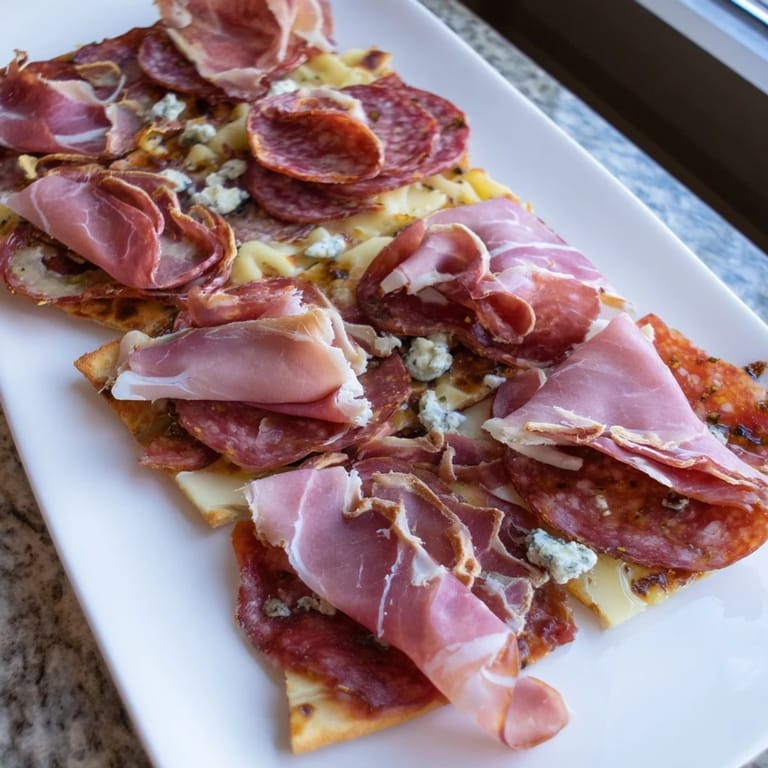
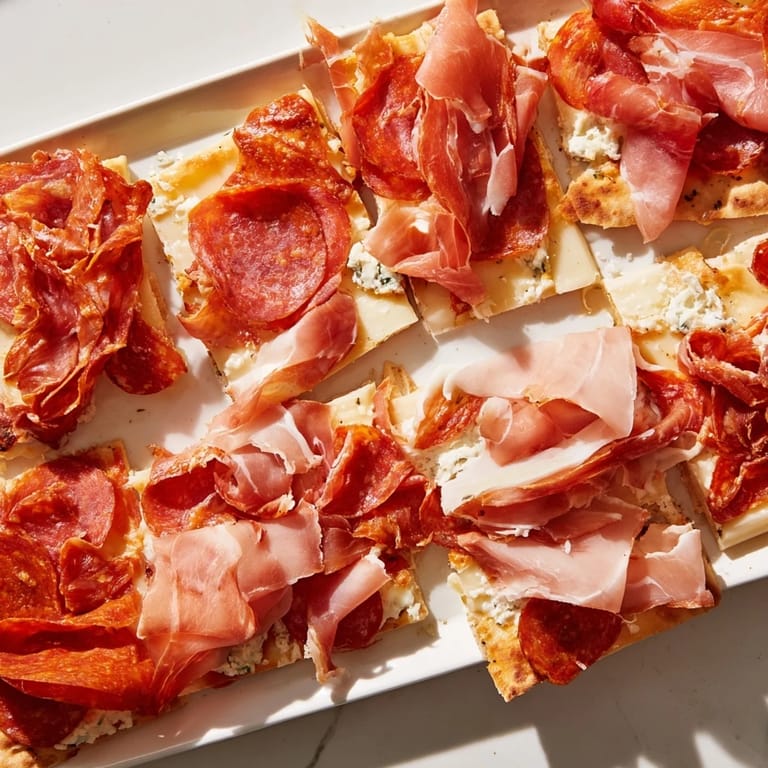
- Start layering meats and cheeses across each flatbread in whatever pattern appeals to you—I like alternating colors for visual interest, but there's no wrong way. Overlap the slices slightly so nothing looks sparse.
- Fill the spaces:
- Scatter grapes, halved cherry tomatoes, olives, and roasted red pepper slices in the gaps between and around the rafts. Think of these as the landscape features that make the board feel abundant and intentional.
- Add the finishing touch:
- Tear or sprinkle fresh basil leaves across everything, letting some stick to the cheese and others fall naturally. Place a small bowl or ramekin of honey or fig jam nearby for drizzling.
- Invite people to explore:
- Serve immediately while the flatbread is still warm enough to soften the cheese slightly. Encourage guests to break off pieces and build their own combinations—the best part is watching them discover flavor pairings you didn't expect.
 Save to Pinterest
 There was a moment at a dinner when someone combined a bite of manchego, prosciutto, and honey, closed their eyes, and said nothing for a few seconds. That quiet moment, where food stopped being fuel and became an experience, made me understand why this simple board matters. It's not about complexity; it's about permission—permission to slow down, to taste, to share without pretense.
Choosing Your Meats and Cheeses
The magic of this board lives in the contrast between salty and sweet, creamy and firm, bold and delicate. I've learned that you don't need expensive imports—what matters is variety in texture and intensity. A supermarket prosciutto works beautifully next to a really good aged cheddar. I once made this with whatever meats and cheeses were on sale and it was still spectacular because the idea itself—building a flavor journey on flatbread—is stronger than any single ingredient. The frame matters more than the individual pieces.
The Warmth Factor
Warm flatbread is non-negotiable because it softens the cheese just slightly, creating a more cohesive bite. Cold flatbread feels rigid and formal; warm feels generous and alive. I once forgot to toast the bread and the board felt more like a composed salad than an event. Those five to seven minutes in the oven are your investment in texture contrast and that subtle luxury of warm bread against cool cheese. Time it so you assemble immediately after removing from the heat—this window is brief but crucial.
Building Flavor Layers and Serving Suggestions
The sweetness of grapes and honey creates surprising harmony with cured meats; the briny olives anchor everything and prevent the board from feeling too rich. I often find that people discover combinations they'd never order in a restaurant, which is the whole point. This works with a crisp white wine like Pinot Grigio, but I've also served it alongside sparkling cider or even a light lager beer. The board pairs with almost anything because it's built on balance.
- Offer small plates or napkins nearby—people will break off pieces and you want them comfortable.
- If you're making this for a crowd, consider assembling two smaller boards instead of one huge one so guests can gather around without crowding.
- Keep the honey or jam in a small dish with a small spoon so people can drizzle their own rather than you deciding where it goes.
 Save to Pinterest
 This board has become my answer to the question "What should I bring?" because it looks like you've put in effort while asking almost nothing of you. It's honest food that brings people together without fuss, and somehow that feels like the best kind of generosity.
Recipe FAQs
- → What types of flatbreads work best?
Large rectangular flatbreads like lavash, naan, or ciabatta hold toppings well and crisp nicely in the oven.
- → Can I substitute the meats and cheeses?
Yes, feel free to swap meats or cheeses based on preference or availability to customize flavors.
- → How should I serve the flatbreads?
Arrange warm flatbreads spaced apart on a large serving board and layer toppings so guests can easily break off pieces.
- → What accompaniments complement this dish?
Fresh grapes, cherry tomatoes, marinated olives, roasted red peppers, and fresh basil add brightness and variety.
- → Are there any pairing suggestions?
A crisp white wine or light-bodied red pairs beautifully with the savory, layered flavors.
- → How do I add extra texture?
Incorporate nuts like Marcona almonds or pickled vegetables to enhance crunch and complexity.