 Save to Pinterest
 I'll never forget the first time I saw a vineyard grape cluster at a wine country harvest festival—it was stunning, almost too beautiful to eat. That moment sparked an idea that's now become my go-to showstopper for dinner parties: arranging fresh grapes into a cascading, vine-like sculpture that looks like it sprouted straight from nature's own table. The beauty of it is that it takes just twenty minutes but looks like you've spent hours perfecting the presentation.
Last spring, I served this at a wine tasting with friends who thought I'd hired a caterer. The way they gathered around, pulling grapes off the cluster with one hand and wine glass in the other, felt like we'd transported everyone straight to a vineyard in Tuscany. That's when I realized this wasn't just an appetizer—it was an experience.
Ingredients
- Seedless green grapes, 600 g (1.3 lbs): These provide the lighter, slightly tart notes and visual contrast. I've learned that buying them a day or two before serving gives them time to fully hydrate and become plump and juicy.
- Seedless red or black grapes, 600 g (1.3 lbs): The deeper color creates that lush, vineyard aesthetic. Red grapes tend to be sweeter, so they balance beautifully with the green ones.
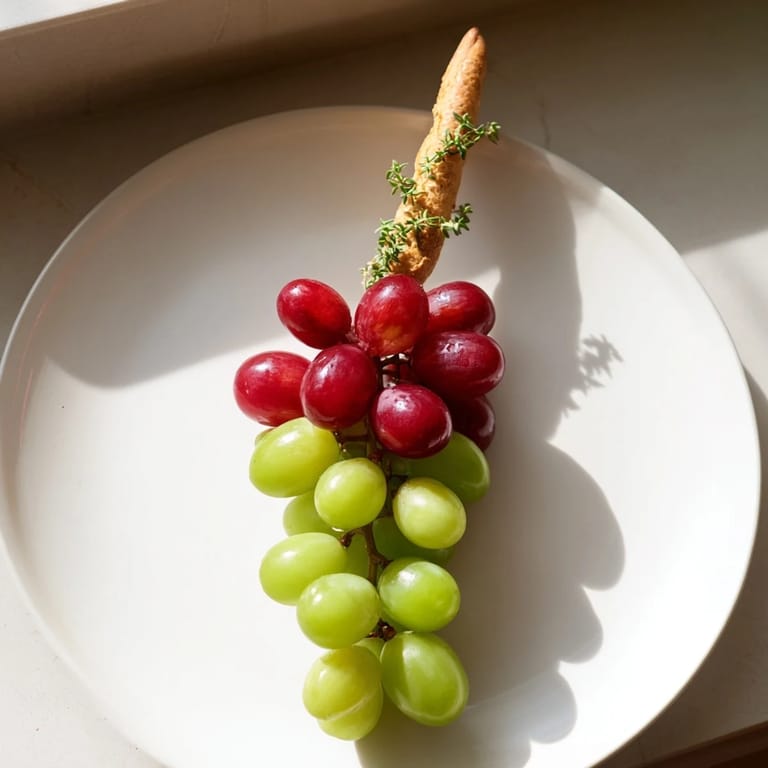
- Rustic baguette or breadsticks (1 baguette, cut in half at an angle, or 10-12 thin breadsticks): This becomes your grapevine stem. The rustic texture mimics real branches and tastes wonderful alongside the fruit. Choose one with a golden crust.
- Thin salami sticks, 150 g (5 oz) as an alternative stem: If you go this route (Italian grissini-wrapped varieties work beautifully), you're adding a savory depth that transforms the flavor profile entirely.
- Fresh herbs like thyme, rosemary, or grape leaves for garnish (optional): These aren't just decoration—they release subtle aromatics and reinforce the vineyard story you're telling with your platter.
Tired of Takeout? 🥡
Get 10 meals you can make faster than delivery arrives. Seriously.
One email. No spam. Unsubscribe anytime.
Instructions
- Prepare your grapes like a sommelier:
- Rinse each grape gently under cool water and pat them completely dry with a clean kitchen towel. This step matters more than it sounds—wet grapes won't hold their position as well on the platter. As you dry them, remove them from their stems, but try to keep small clusters of 3 to 5 grapes still clinging together when possible. These natural groupings create depth and make your arrangement feel organic, not sterile.
- Build your cascade from the ground up:
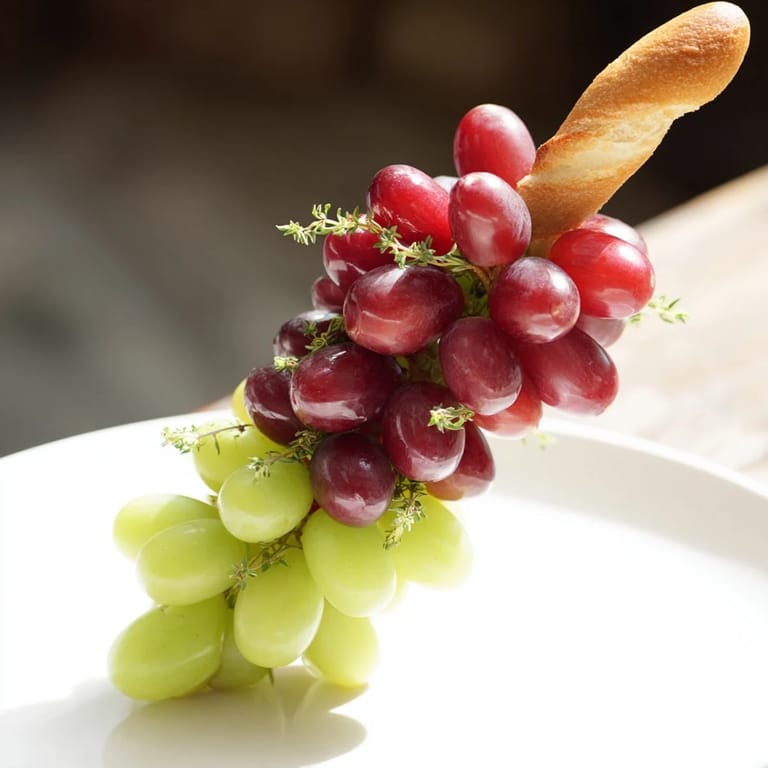
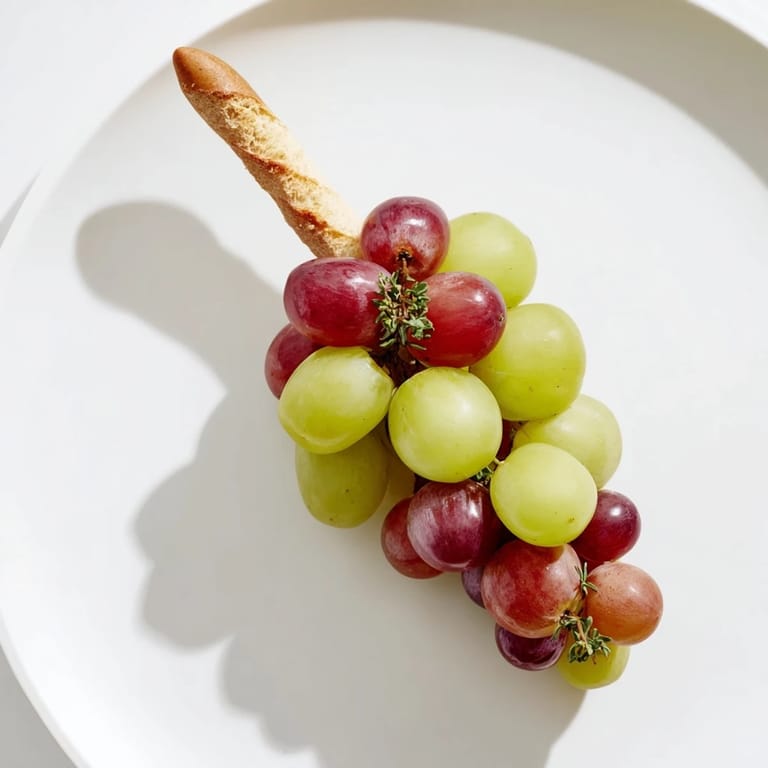
- Take your large platter or wooden board and imagine a teardrop shape pointing downward. Start at the widest part at the bottom and begin clustering your grapes tightly together, working your way upward as they taper. Think of it like building a pyramid, but flowing downward. Alternate between red and green grapes in gentle rows or sections—there's no wrong way here, but the interplay of colors is what makes people stop and stare.
- Crown it with your stem:
- At the narrow top of your grape cluster, position your baguette (cut at a 45-degree angle if using a full stick) or arrange your breadsticks so they angle upward naturally, like branches reaching out of the cluster. If using salami, fan them out slightly. This is your moment to make it feel sculptural and alive.
- Add the finishing touches:
- Tuck small sprigs of fresh thyme or rosemary around the grapes and into the crevices where the stem meets the fruit. If you have fresh grape leaves or can find them at a farmers market, nestle them in too. These herbs don't just look beautiful—they release their fragrance when guests move through the platter, adding an aromatic dimension.
- Serve with confidence:
- Place this creation at the center of your spread. The magic happens when guests realize they can simply pluck grapes and bread directly from the arrangement. It's interactive, it's tactile, and it transforms an appetizer into a moment.
 Save to Pinterest
 I once brought this to a potluck where someone's grandmother saw it and immediately started telling stories about grape harvests from her childhood in Naples. The appetizer became a bridge between generations, all because of how it looked sitting there on the table. That's the real magic of this recipe.
Choosing Your Stem
The stem choice changes everything about this dish. Bread brings warmth and pairs naturally with wine; it's the vegetarian-friendly choice that feels homey and rustic. Salami adds sophistication and a savory punch that makes your guests expect something fancier. I've done both, and honestly, they're equally stunning. Choose based on your crowd and what's already on your cheese board. A gluten-free option is as simple as swapping in gluten-free breadsticks or going full salami for a naturally grain-free presentation.
Making It Part of Your Spread
This grape cluster absolutely shines when it's the focal point of a larger platter. I like to surround it with soft cheeses, cured meats, and crispy crackers, but leave the center clear so the cluster is the star. The beauty of this arrangement is that it doesn't compete with other foods—it enhances them. Guests naturally gravitate toward it first, pull a few grapes, and then explore the rest of the board. If you're feeling adventurous, tuck cubes of cheese or toasted nuts between the grapes for pockets of surprise.
Wine Pairing and Timing
This is why this appetizer was born: it's the perfect excuse to open a crisp white wine or sparkling rosé. The sweetness of the grapes plays beautifully against dry or off-dry wines, and the acidity cleanses your palate between bites. Assemble this no more than two hours before serving—it stays fresh and vibrant on a cool platter, but you want those grapes to taste their best. If you're prepping for a big party, dry and arrange your grapes a few hours ahead, then add the stem and herbs right before guests arrive.
- A Sauvignon Blanc or Albariño mirrors the freshness of the grapes themselves
- Prosecco or Champagne adds sparkle and celebration to the moment
- Even a light Pinot Grigio feels like you're sitting at a vineyard somewhere beautiful
 Save to Pinterest
 There's something deeply satisfying about turning something as simple as grapes, bread, and herbs into edible art. Your guests will taste the freshness and enjoy the flavors, but what they'll really remember is the moment they first saw it on your table.
Recipe FAQs
- → How do I keep the grapes fresh longer?
Choose firm, seedless grapes and dry them thoroughly before arranging. Keep the cluster refrigerated until serving to maintain freshness.
- → Can I use different types of bread for the stem?
Yes, rustic baguettes, breadsticks, or gluten-free alternatives work well to form the stem structure and add texture.
- → Is it possible to substitute the salami stem for a vegetarian option?
Absolutely. Using a bread-based stem keeps the presentation vegetarian-friendly without compromising the rustic look.
- → How do I achieve the grapevine shape effectively?
Arrange clusters tightly in a teardrop shape, wider at the base and tapering upward, securing the stem at the narrow top for a natural effect.
- → What garnishes enhance the presentation and aroma?
Fresh herbs like thyme or rosemary, and grape leaves add color, aroma, and authenticity to the cluster display.