 Save to Pinterest
 I discovered the magic of the cascading board by accident during a dinner party when I ran out of table space. Rather than cramming everything onto one surface, I let the abundance spill over the edge, and suddenly what felt like a constraint became the entire point. My guests couldn't stop talking about it—not just the food, but the theatrical way it invited them to reach, explore, and claim pieces from both the board and the table below. That moment taught me that sometimes the best presentations come from embracing a little chaos.
I'll never forget the moment my mother-in-law reached down to grab a piece of prosciutto that had draped off the edge—she laughed and said it felt like treasure hunting at a dinner party. That's when I realized this board wasn't just about feeding people; it was about creating a moment where everyone felt a little more playful and less formal. The abundance and the playfulness gave permission for everyone to enjoy themselves without pretense.
Ingredients
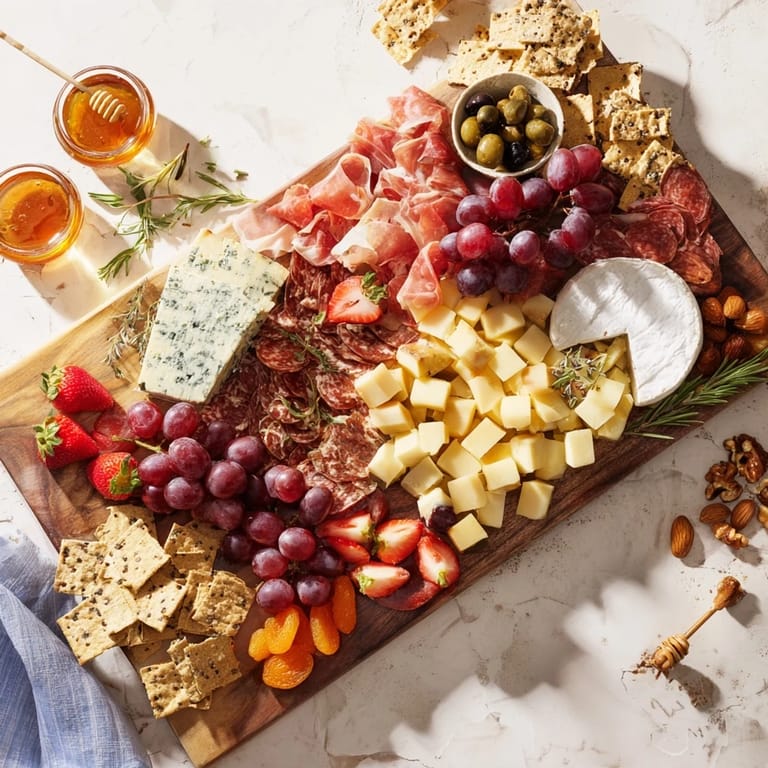
- Brie, sliced (150 g): The soft, creamy foundation that melts beautifully when guests layer it on warm toast, so slice it thickly enough that pieces hold their shape.
- Aged Cheddar, cubed (150 g): Sharp and sturdy, these golden cubes stay beautiful throughout the event and provide textural contrast.
- Blue cheese, crumbled (100 g): A little goes a long way with its bold flavor, so don't be tempted to add more than feels right.
- Goat cheese, sliced (100 g): Tangy and elegant, it pairs perfectly with the sweeter elements like figs and honey.
- Prosciutto (100 g): Let it drape naturally without overthinking the folds—the more relaxed, the more dramatic it looks.
- Salami, sliced (100 g): Keep it at room temperature so it stays tender and flavorful, not cold and brittle.
- Red grapes in small clusters (1 cup): Leave them in small groupings so guests can pop a whole cluster into their mouth without fumbling.
- Strawberries, halved (1 cup): Hull and slice these just before serving so they stay fresh and don't weep onto the other ingredients.
- Blueberries (1/2 cup): Scatter these like edible garnish between the heavier elements to catch light and add visual movement.
- Pear, thinly sliced (1): Slice moments before serving and toss lightly with lemon juice to prevent browning and keep the flavor bright.
- Dried apricots (1/2 cup): These add chewy sweetness and their golden color bridges the gap between fruits and nuts beautifully.
- Dried figs, halved (1/2 cup): Their deep color and luxurious texture feel almost precious when nestled among the fresh elements.
- Almonds (1/3 cup): Toast them lightly if you want to deepen their flavor and make them slightly crunchier.
- Walnuts (1/3 cup): Their earthiness balances the sweetness, so don't skip them even if you think you will.
- Baguette, sliced and toasted (1): Toast the slices just before the party so they're still warm and crispy, not stale and sad.
- Assorted crackers (150 g): Choose a mix of shapes and textures—some thin and delicate, some sturdy enough to hold creamy cheese.
- Honey (1/4 cup): Drizzle it into a small ramekin and let a few drops spill onto the board surface itself for visual drama.
- Fig jam (1/4 cup): A good quality jar makes all the difference, so don't reach for the cheap stuff here.
- Mixed olives (1/4 cup): Let a few roll off the edge onto the table—it reinforces the intentional chaos of the whole thing.
- Fresh herbs like rosemary and thyme: Tuck these around the board for color and fragrance; they make the whole thing smell like an elegant garden.
Tired of Takeout? 🥡
Get 10 meals you can make faster than delivery arrives. Seriously.
One email. No spam. Unsubscribe anytime.
Instructions
- Set your stage:
- Position your large wooden or marble board near the edge of the table or serving surface, making sure there's 12 to 18 inches of table space below where things can gracefully land. This isn't random—measure it out so the waterfall feels intentional, not accidental.
- Anchor with cheese:
- Arrange your cheese slices and cubes in overlapping layers right near the board's edge, letting a few pieces intentionally extend past the boundary so they're half on the board and half in midair. Think of it like dealing cards, each one slightly offset from the last.
- Drape the cured meats:
- Layer the prosciutto and salami in gentle folds beside and over the cheese, letting them billow and flow toward the table below as if they're mid-cascade. The key is not arranging them perfectly—let gravity and looseness do the work.
- Scatter fresh fruit:
- Nestle clusters of grapes, strawberry halves, and blueberries throughout, with some intentionally positioned so they roll or appear to tumble toward the table. The pear slices should fan out like they're catching the light on their way down.
- Fill the gaps with dried elements:
- Tuck dried apricots and fig halves into the spaces between the other ingredients, and scatter almonds and walnuts liberally across the board and table below. These smaller elements are the visual glue that makes everything feel abundant rather than sparse.
- Create vertical interest:
- Stand some crackers and toasted baguette slices upright, lean others at angles, and stack a few so they appear to be tumbling off the edge. This breaks up the flatness and adds dimension.
- Position your condiments:
- Place small bowls or ramekins of honey, jam, and olives on the board, and let a few olives scatter onto the table below or drizzle honey intentionally down the side. These elements feel like the finishing flourish.
- Garnish with fresh herbs:
- Tuck sprigs of rosemary and thyme around the board for color, fragrance, and that final polished touch.
- Invite the chaos:
- Serve immediately and encourage guests to take from both the board itself and from the elegant spillage on the table below—that's the whole point.
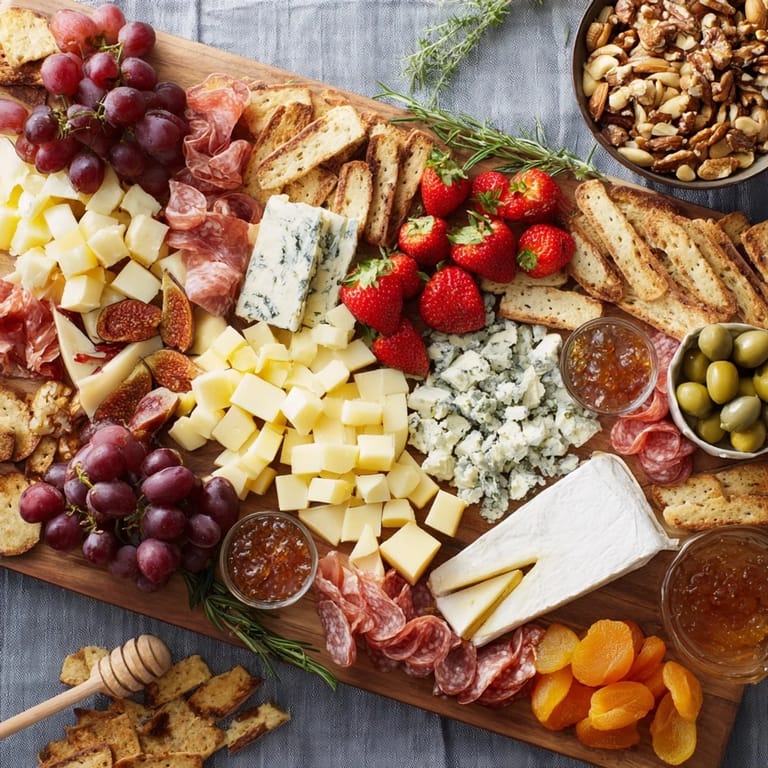 Save to Pinterest
 I remember my youngest reaching down to grab a piece of fallen cheese, completely unselfconsciously, and suddenly everyone else did the same. That's the moment I understood that the waterfall board isn't precious—it's permission to eat with your hands, to reach, to play, and to feel like you're at a party where the food itself is part of the entertainment.
Building Flavor Architecture
The secret to a grazing board that actually tastes exceptional rather than just looking good is balance. You need salty and sharp to play against sweet and creamy, crispy crackers to contrast with soft cheese, and bright fresh fruit to cut through the richness. I learned this the hard way by loading a board with only indulgent elements and watching guests graze for five minutes before wandering away hungry for something they couldn't name. The moment I added bracing acidity and texture variation, people stayed at the board, exploring different combinations and discovering their own flavor stories.
The Psychology of Presentation
There's something about abundance that changes the way people behave around food. A perfectly arranged, minimalist board looks impressive but can feel intimidating—like you're supposed to admire it rather than dive in. The waterfall board, by contrast, gives permission to be enthusiastic and exploratory. The fact that ingredients are literally spilling over the edge signals that generosity and abundance are the point, not restraint. I've watched this shift the entire energy of a gathering, making everyone feel welcome to take what they want without guilt.
Customization for Any Occasion
The beauty of this board is that it adapts to whatever story you want to tell or whoever you're feeding. For a vegan gathering, swap the cheeses and cured meats for plant-based versions and let the crackers, fruits, nuts, and preserves shine. For a dessert board, lean into dried fruits, candied nuts, chocolate pieces, and honeycomb. For wine pairing elegance, keep the cheeses and cured meats prominent and add some marcona almonds and quince paste. The structure stays the same; only the ingredients change.
- Pair with crisp white wine or sparkling rosé for maximum celebratory energy.
- Lay parchment or butcher paper under the table area before you start building for stress-free cleanup afterward.
- Remember that this board does more work as a visual anchor for your table than it does as a practical serving vessel—embrace that.
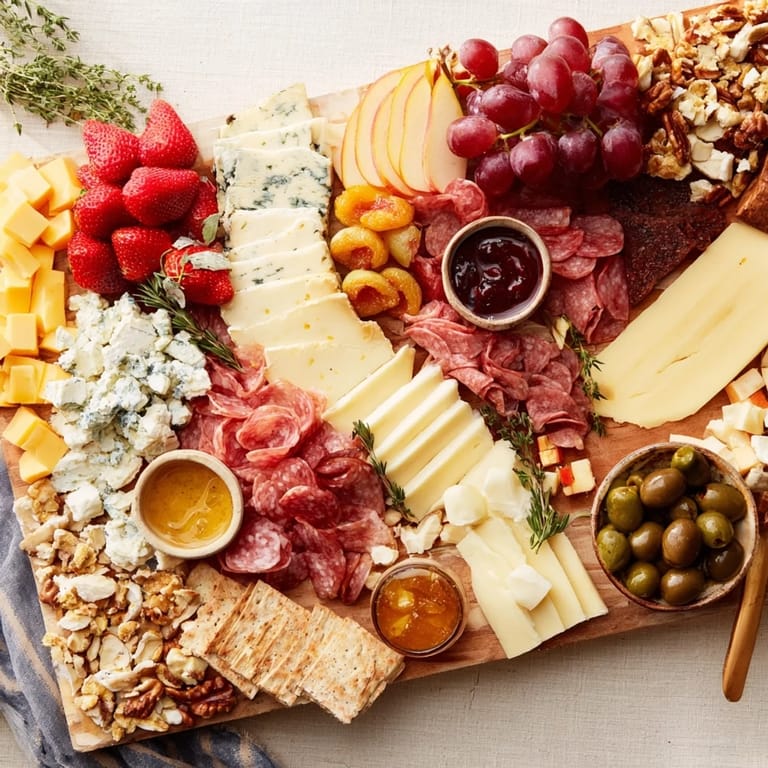 Save to Pinterest
 This board stopped being just food the moment someone took a photo of it and told me it felt like a celebration of abundance itself. That's the gift of the waterfall edge—it transforms a meal into a moment.
Recipe FAQs
- → How do I create the waterfall effect on the grazing board?
Arrange ingredients so some extend beyond the edge of the board, layering cheeses, fruits, and nuts to gently spill over, mimicking a cascading flow.
- → What are some suitable accompaniments for this board?
Use honey, fig jam, olives, and fresh herbs like rosemary or thyme to add flavor contrast and visual appeal.
- → Can this board be adapted for vegetarians or vegans?
Omit cured meats and substitute with plant-based cheeses to accommodate vegetarian or vegan preferences.
- → How should I serve the crackers and bread on the board?
Slice and toast the baguette, then arrange crackers and toast pieces both flat and vertically, some leaning to contribute to the cascading look.
- → What tools are essential for assembling this grazing board?
A large wooden or marble board, small bowls for spreads, cheese knives, and serving tongs help with neat and attractive assembly.